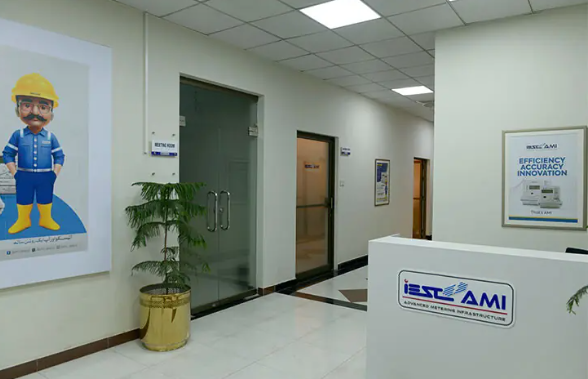
More than 1.2 million Advanced Metering Infrastructure (AMI) meters have been installed across the Rawalpindi City Circle, Rawalpindi Cantonment Circle and Taxila Division, covering domestic, commercial and industrial consumers, officials said.
The system allows Islamabad Electric Supply Company (Iesco) to remotely monitor consumer meters, transformers and medium-voltage (MV) feeders in the areas covered by the project.
The AMI project is being implemented with funding from the Asian Development Bank (ADB). The initiative was launched in 2016 after the ADB allocated $160 million for the installation of the advanced metering system. The project contract was signed in 2022, while implementation began in January 2023.
Under the project, industrial units and consumers using more than 500 kilowatts of electricity were shifted to the AMI system.
AMI Project Director Mohsin Raza Gillani said continuous monitoring had significantly reduced meter-tampering incidents, with only a few cases reported among approximately 1.2 million installed meters.
He said real-time monitoring had strengthened Iesco’s ability to detect, prevent and respond to unauthorised meter interference.
The system also enables consumers to track their hourly electricity consumption, while Iesco can monitor fluctuations in electricity supply and respond to technical issues more quickly.
Gillani said the project had achieved 99 per cent physical progress, including the installation of 1.2 million smart meters through the mass rollout programme.
He said the Head End System (HES) was fully operational, while integration and development of the billing system had also largely been completed.
A control room has been established to collect and store meter data, while a backup data centre in Gujar Khan has been set up to ensure data recovery in case of technical problems.
Data from the meters is transmitted to the control room through Power Line Communication (PLC), allowing Iesco to monitor electricity consumption remotely.
The system will also enable consumers to estimate their electricity bills based on usage. In addition, complaints related to power interruptions can be automatically generated and communicated to the power company.
According to the project director, AMI meters have been installed at transformers and consumer premises to monitor incoming and outgoing electricity loads. This allows Iesco to identify electricity theft, technical faults and line losses through real-time data and take corrective action.
The system continuously monitors meters for signs of tampering. When an unusual activity is detected, it automatically generates an alert, which is forwarded by the Project Implementation Unit (PIU) AMI team to the relevant Metering and Testing (M&T) teams for physical verification and further action.
Iesco spokesperson Raja Asim said line losses in the company’s service area had fallen to 7.6 per cent, the lowest level among power distribution companies in the country, attributing the improvement partly to the AMI metering system.
He said Iesco planned to expand the technology to additional areas. While industrial consumers across the Iesco region had already been shifted to the system, domestic and commercial consumers would also be gradually converted to AMI meters.