Chinese Foreign Minister Wang Yi has urged Iran and the United States to exercise restraint, return to the interim peace agreement reached in June and resume substantive negotiations.
“We urge all parties to take effective measures to reopen the Strait of Hormuz at an early date,” Wang said, stressing the importance of maintaining stability in international energy supplies and global supply chains.
He also said China did not want regional tensions to spread further into Yemen and the Red Sea.
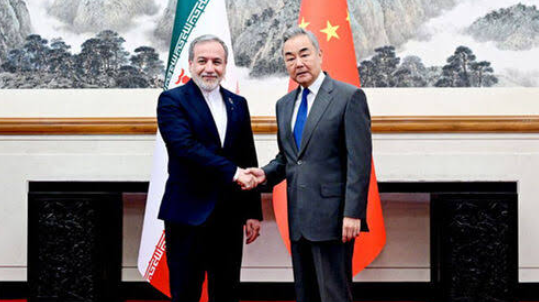
Wang made the remarks during talks with Iranian Foreign Minister Abbas Araghchi, who was on a one-day visit to Beijing. He called on Tehran and Washington to rebuild their negotiation mechanism based on agreements reached so far.
Araghchi said Iran welcomed diplomatic efforts that safeguard the country’s rights.
“Iran, while fully prepared to powerfully defend its sovereignty and territorial integrity and safeguard its security… against aggressors, welcomes diplomatic solutions that ensure the rights of the Iranian nation,” he said.
The talks took place a week before an expected meeting between Chinese President Xi Jinping and US President Donald Trump in Washington.
US Treasury Secretary Scott Bessent previously said Trump and Xi would continue discussions on Iran and China’s financial ties with Tehran, which Washington has sought to restrict from Western financial systems.
China, Iran’s main oil buyer, has repeatedly called for the restoration of safe and normal navigation through the Strait of Hormuz, while largely avoiding direct confrontation with Tehran over its threats to shipping.
Wang said the ongoing crisis had highlighted weaknesses in the existing security framework in the Middle East.
“The current situation once again demonstrates that the existing security architecture in the Middle East is inadequate and needs to be reformed and strengthened,” he said.
He added that China was prepared to support peace, fairness and justice in the region, while describing Beijing’s policy towards Iran as consistent and stable.
Meanwhile, images taken by US military personnel reportedly show extensive damage to American military facilities following Iranian strikes in the Middle East.
The images, obtained by CBS News, showed a destroyed aircraft, damaged tents and trailers at a base in Saudi Arabia and two facilities in Kuwait.
One US service member described the damage as significant and said the extent of destruction had not been widely communicated to the American public.
A report released earlier this week by the Pentagon’s inspector general said US Central Command (Centcom), which oversees American military operations in the Middle East, had reported widespread damage to facilities and equipment.
According to the report, Centcom said Iranian strikes had damaged or destroyed hundreds of buildings and structures at US bases in Kuwait, Bahrain, Qatar, the United Arab Emirates, Saudi Arabia, Iraq, Oman and Jordan.
The US Defence Department estimated the cost of the war at $33.4 billion as of June 29. However, the figure does not include expenses related to repairing damaged infrastructure, according to the inspector general’s report.