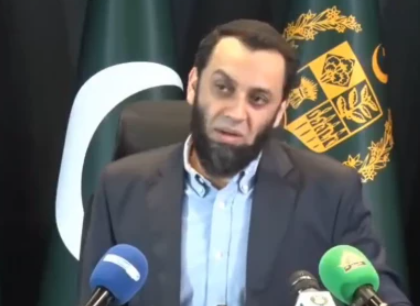
The government has warned that no violent group will be allowed to enter Islamabad or disrupt public movement during ongoing protests, stressing that maintaining law and order remains its responsibility.
Authorities said existing court directives regarding road closures and disruption of public movement would be enforced. Government roads in the capital would remain open, while protesters would not be permitted to enter Islamabad in a way that obstructs traffic or public movement.
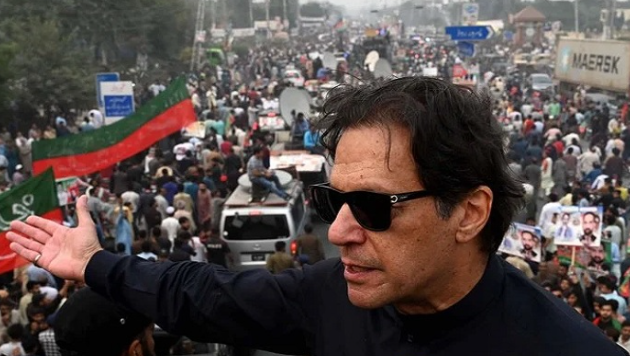
The warning comes as Jamaat-i-Islami (JI) continues its march towards Islamabad, with supporters travelling from different parts of the country by road and rail.
The party said its supporters had begun travelling towards the federal capital, with road caravans departing and train travel also getting underway. Mobilisation was reported in Punjab, Khyber Pakhtunkhwa and other areas.
JI said the march was aimed at highlighting the economic difficulties faced by low- and middle-income households, particularly the impact of rising petrol prices and increasing living costs.
The party has also raised concerns about household debt and alleged that powerful business interests were benefiting from the existing economic system. It has accused several sectors of operating in ways that place additional financial pressure on consumers.
JI has continued its nationwide protest campaign, including sit-ins in several cities. The party has maintained that street mobilisation is necessary to press for its demands.
The central demand of the campaign is the withdrawal of the petroleum development levy. The government and JI held several rounds of talks on the issue, but negotiations ended without an agreement. The government had sought a delay in the planned march, citing security concerns, while the party decided to proceed with its campaign.
The march was launched from Karachi, with participants travelling towards Islamabad by train and other means. The convoy is expected to reach the federal capital later in the week.
JI has said it does not intend to block roads during the march and has described the campaign as an effort to seek economic relief for the public.
Meanwhile, the government has introduced a fuel relief scheme to provide targeted assistance to consumers affected by higher international fuel prices.
The scheme covers motorcycles, Qingqi rickshaws, rickshaws and vehicles with engines of up to 800cc. Eligibility for motorcycles and three-wheelers was expanded to vehicles up to 20 years old.
Registration through SMS is free, while the previous five-litre limit per token has been removed. Motorcycle, Qingqi and rickshaw users can receive four fuel-relief tokens per month, with one token available each week. Each token provides Rs500 in fuel relief.
Vehicles with engines of up to 800cc are eligible for a Rs100-per-litre discount on up to 10 litres of petrol every 10 days, allowing up to three tokens per month.
The scheme is available at participating petrol stations across Pakistan, including Azad Jammu and Kashmir and Gilgit-Baltistan.
More than 2.2 million people had registered for the scheme, with the majority being motorcycle, Qingqi and rickshaw users. Around 1.9 million fuel tokens had been issued, including approximately 1.8 million for motorcycles and three-wheelers.
The government has also removed the vehicle ownership requirement for motorcycles, Qingqi rickshaws and rickshaws, allowing actual users to benefit from the programme.
Registration does not require a smartphone and can be completed through SMS using vehicle and identification details.
A digital monitoring system has been established to track registrations and token redemptions in real time. Petrol stations and oil marketing companies have been integrated into the system, while a control room is monitoring implementation.
Authorities said complaints related to the scheme were being addressed and awareness material had been provided at fuel stations to guide beneficiaries.
The implementation involves federal ministries, regulatory authorities and provincial governments, with the scheme being adjusted in response to public feedback.
JI, however, has maintained that the relief package does not meet its main demand for the abolition of the petroleum development levy and has continued its protest campaign.