
Sharks could help scientists improve hurricane forecasts Scientists at the University of Delaware are studying whether sharks can be used as mobile ocean-data collectors to improve hurricane forecasting. Researchers are attaching small CTD sensors to sharks’ dorsal fins to record ocean temperature, salinity and depth. The data is transmitted to satellites when the animals surface and can then be used in oceanographic, atmospheric and climate models. Scientists are particularly interested in the temperature of the ocean’s upper mixed layer, as warmer waters can provide more energy to hurricanes and increase their intensity. The project focuses on migratory species such as shortfin makos, blue sharks, smooth hammerheads and juvenile great white sharks, which are found widely in the North Atlantic and surface frequently enough for their sensors to transmit data. Researchers begin tagging sharks in May, when the animals move closer to the US East Coast. Working from vessels about 50-65 kilometres offshore, they attach the sensors in a process that typically takes less than five minutes. The tags are designed to detach naturally over time, while the sharks undergo health checks before being released. Scientists hope the data could improve forecasts of hurricane strength and provide coastal communities from North Carolina to Massachusetts with better information to prepare for increasingly powerful storms. Researchers say the project could also demonstrate how sharks, often viewed negatively, can contribute to scientific understanding and public safety.


Scientists study sharks to improve hurricane forecasting

Scientists at the University of Delaware are studying whether sharks can be used as mobile ocean-data collectors to improve hurricane forecasting.

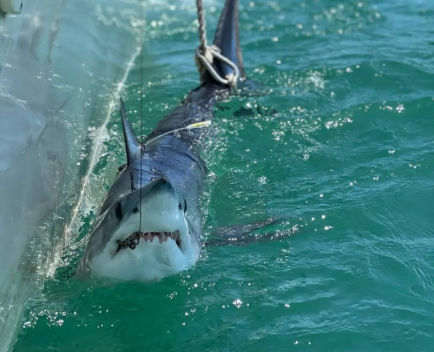
Researchers are attaching small CTD sensors to sharks’ dorsal fins to record ocean temperature, salinity and depth. The data is transmitted to satellites when the animals surface and can then be used in oceanographic, atmospheric and climate models.

Scientists are particularly interested in the temperature of the ocean’s upper mixed layer, as warmer waters can provide more energy to hurricanes and increase their intensity.

The project focuses on migratory species such as shortfin makos, blue sharks, smooth hammerheads and juvenile great white sharks, which are found widely in the North Atlantic and surface frequently enough for their sensors to transmit data.

Researchers begin tagging sharks in May, when the animals move closer to the US East Coast. Working from vessels about 50-65 kilometres offshore, they attach the sensors in a process that typically takes less than five minutes. The tags are designed to detach naturally over time, while the sharks undergo health checks before being released.

Scientists hope the data could improve forecasts of hurricane strength and provide coastal communities from North Carolina to Massachusetts with better information to prepare for increasingly powerful storms.

Researchers say the project could also demonstrate how sharks, often viewed negatively, can contribute to scientific understanding and public safety.

Leave a Reply

Your email address will not be published. Required fields are marked *