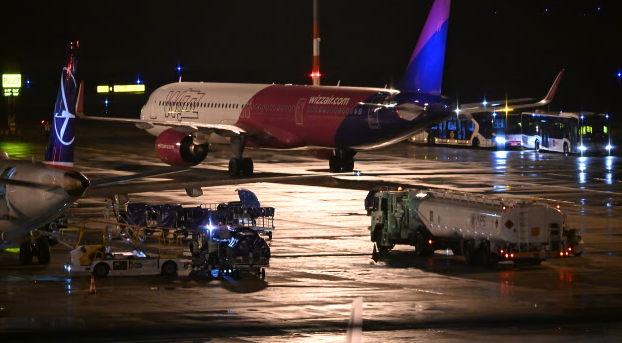
Operations at King Khalid International Airport in Riyadh, Saudi Arabia’s second-busiest airport after Jeddah, remain suspended as authorities carry out safety checks and assess the operational readiness of airport facilities.
The Saudi civil aviation authority said the suspension had been extended to allow the completion of procedures aimed at ensuring the safety of passengers and airport infrastructure.
The airport has remained closed since an attack on Saturday reportedly killed 13 people and injured more than 300, marking one of the deadliest incidents in Saudi Arabia in more than a decade. A further attack on Sunday killed a Pakistani national and injured nearly a dozen others.
The incidents have caused significant disruption to Saudi Arabia’s aviation sector, adding to the challenges facing airlines amid escalating conflict across the Middle East.
According to aviation analytics firm Cirium, 99.7 per cent of scheduled flights at the airport were cancelled on Sunday. Data from flight-tracking service Flightradar24 also showed no aircraft flying over Riyadh at the time.
The disruption has prompted airlines across Europe and Asia to suspend or extend the cancellation of services to Saudi Arabia. The United States Federal Aviation Administration also advised American carriers to exercise caution when operating flights to or over the kingdom.
Lufthansa Group has cancelled all flights to Riyadh until October 16, while Air France-KLM extended its suspension of services to and from the Saudi capital until the end of the month.
Abu Dhabi-based Etihad Airways also extended cancellations affecting approximately 20 flights to Riyadh, Jeddah and Dammam on Monday and Tuesday.
The escalating conflict has raised concerns about its wider economic consequences for Saudi Arabia. The kingdom’s real gross domestic product is projected to contract by 3.6 per cent this year, amid several economic pressures, including reduced oil-sector activity.
The attacks have also cast uncertainty over major events scheduled to take place in Riyadh this month, including the kingdom’s flagship investment conference and the WPC Energy Congress. Several senior oil executives have reportedly been removed from the congress programme.
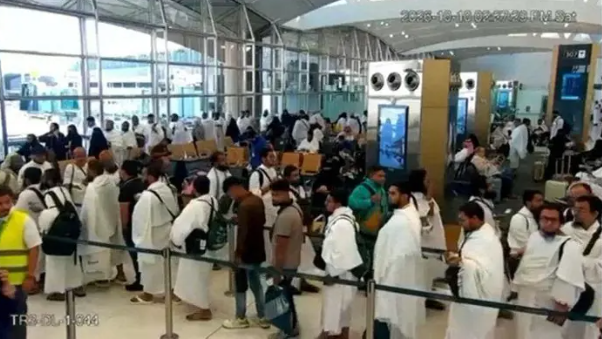
Saudi authorities have released security camera footage showing the moment a powerful explosion struck Riyadh’s international airport on Saturday, sending debris and pieces of the ceiling falling onto passengers.
The footage shows Muslim pilgrims dressed in white garments waiting for document checks when the blast occurs. Airport staff can be seen taking cover beneath desks as passengers attempt to flee the area.
Smoke and debris fill the scene, while several passengers appear momentarily stunned by the explosion. The footage suggests that some of those present may have been travelling to Makkah for Umrah pilgrimage.
Saudi authorities have warned that witnesses who publicly discuss the attacks could face legal consequences. Officials have also restricted media access to affected sites, limiting independent reporting on the extent of the damage.
The release of the footage marks a notable development, as Saudi authorities had previously provided limited public information about the impact of the attacks on the kingdom.
The Saudi Gazette said the footage highlighted the risks faced by civilian travellers, particularly religious pilgrims, and raised concerns about the threat posed by the attacks.