Initiatives to certify books as human-written are gaining momentum amid a series of controversies involving authors accused of using artificial intelligence (AI) without disclosing its role in their work.
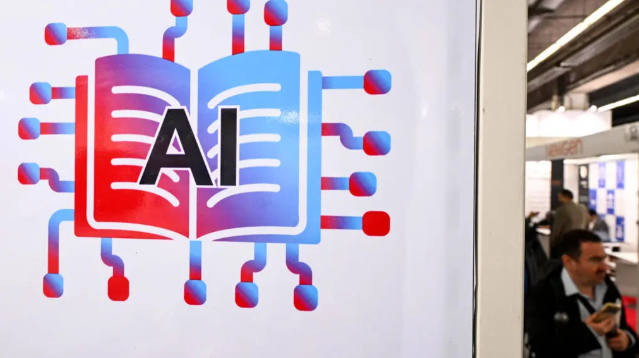
Several certification schemes from the United Kingdom, France and Germany were showcased at the Frankfurt Book Fair this week, where the impact of AI on the publishing industry emerged as a key topic of discussion.
One of the most prominent cases involves Haitian-Canadian author Thelyson Orelien, whose debut novel sparked controversy in the French-language literary community after allegations surfaced that AI had been used in its creation. Orelien has denied the accusations but was subsequently dropped from France’s leading literary prize.
Charlotte Allibert, co-founder of French self-publishing company and literary agency Librinova, described the controversy as a major shock to the country’s publishing industry.
Librinova operates a certification programme through which authors can have their books assessed and labelled as human-created for a fee. Around 200 books have received the designation so far. The process includes AI-detection software, an interview with an auditor and a manual review of the work.
Allibert said concerns about being wrongly suspected of using AI were increasing among writers, particularly those who self-publish their books.
In the United Kingdom, startup Books By People has introduced a certification mark for human-authored books, which it says has been registered with the country’s intellectual property office.
Under its “organic literature” standards, the writing must originate from the author, although limited AI use for tasks such as spelling and grammar checks is permitted.
The initiative’s co-founder, Esme Dennys, said the scheme aims to provide publishers and writers with a transparent and reliable framework. She added that the organisation had received growing interest from authors and publishers worldwide amid concerns over undisclosed AI use.
Publishers can join the programme for a fee and request certification for their authors’ books. The scheme began with five independent publishers, with further additions expected.
In the United States, the Authors Guild has also introduced a “human-authored” certification mark. The self-certification system requires writers to sign a licensing agreement, and approximately 6,500 titles have received the label so far.
The debate has intensified following other allegations involving AI-generated content in publishing. Earlier this year, publisher Hachette cancelled the US release of horror novel Shy Girl by Mia Ballard and withdrew it from sale in the United Kingdom over concerns about AI use.
Ballard denied personally using AI but said an acquaintance she hired to edit the originally self-published novel had used the technology.
Despite the growing popularity of certification schemes, some industry representatives remain sceptical about their effectiveness. Critics argue that permitted AI use, including research and grammar assistance, can be difficult to define consistently. They have also raised concerns about whether the verification processes can reliably distinguish human-written works from AI-generated content.
Sebastian Guggolz, head of the German Publishers and Booksellers Association, said the industry was still determining how best to respond to the challenge.
He argued that the issue required more than a simple distinction between books written with or without AI, calling for a broader discussion about transparency in publishing practices.