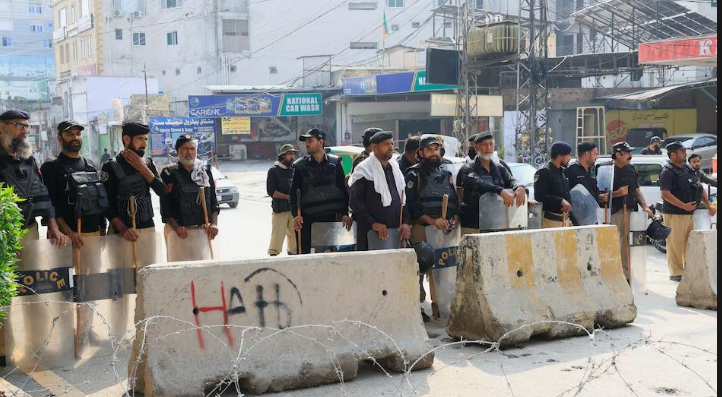
Bar associations and members of the legal fraternity have condemned the imposition of emergency and governor’s rule in Khyber Pakhtunkhwa (KP), with the Lahore High Court Bar Association (LHCBA) and Lahore Bar Association (LBA) announcing plans to challenge the decision before the Supreme Court.
Eight members of the Pakistan Bar Council (PBC) issued a statement urging the president to withdraw what they described as an unconstitutional proclamation of emergency and governor’s rule. They also called for the restoration of the elected provincial government and respect for provincial autonomy.
The signatories argued that the invocation of Articles 232 and 234 of the Constitution on the advice of the prime minister and federal cabinet was unlawful and unconstitutional.
They noted that Article 232 provides for the imposition of an emergency on grounds of internal disturbance beyond a provincial government’s control, subject to a resolution by the provincial assembly. According to the statement, no such resolution had been passed.
The statement further maintained that Article 234 allows governor’s rule when a provincial government cannot be carried on in accordance with the Constitution. The signatories argued that both the provincial government and assembly had continued to perform their constitutional functions.
The Islamabad High Court Bar Association (IHCBA) also strongly opposed governor’s rule in KP, describing the decision as an attack on the public mandate, democratic principles and provincial autonomy.
In a statement issued by its secretary, the association said it would resist attempts to undermine the people’s will through the use of administrative powers.
It emphasised that constitutional supremacy, parliamentary democracy and provincial autonomy were fundamental to Pakistan’s constitutional framework, adding that extraordinary constitutional measures should not be used to weaken an elected government.
Meanwhile, the LHCBA and LBA decided to file a constitutional petition in the Supreme Court challenging the emergency proclamation and governor’s rule.
The decision was taken during a joint general house meeting, where participants expressed concern over the country’s constitutional and political situation.
A resolution unanimously adopted at the meeting stated that the move would be challenged on constitutional and legal grounds to seek judicial review and protect the principles of constitutional supremacy, the rule of law, democracy and provincial autonomy.
The Karachi Bar Association (KBA) also called on the federal government to withdraw the emergency and restore the KP government.
Addressing a general body meeting, KBA President Aamir Nawaz Warraich warned that failing to oppose the decision could weaken the ability to resist similar measures in the future. He also described the emergency as a potential first step towards martial law.
The Khyber Pakhtunkhwa Bar Council (KPBC) expressed concern over the imposition of emergency under Articles 232 and 234 of the Constitution and announced a black day on Tuesday, alongside a boycott of court proceedings.
In a statement, the council described the proclamation as an extraordinary constitutional measure and said lawyers would refrain from appearing in courts in protest.
The All Pakistan Lawyers Action Committee (APLAC) also condemned governor’s rule in KP and the arrests of elected provincial leaders and parliamentarians.
APLAC Chairman Ali Ahmed Kurd criticised the emergency proclamation and the reported arrests of Chief Minister Sohail Afridi, Pakistan Tehreek-e-Insaf (PTI) provincial president Junaid Akbar and other members of parliament.
The developments have prompted widespread opposition from bar bodies, which have called for constitutional review, restoration of the elected provincial government and protection of democratic and provincial rights.