Saudi Arabia has vowed a “serious” response to escalating Houthi attacks that have killed 18 people in less than a week, targeting key infrastructure, including Riyadh’s international airport, and triggering the kingdom’s most significant security crisis in more than a decade.
“Energy security cannot be taken for granted,” Saudi Energy Minister Prince Abdulaziz bin Salman said at an energy conference in Riyadh, stressing that the recent attacks had tested the country’s infrastructure, institutions, people and resilience.
He said the seriousness of the situation required an equally serious response.
The attacks have increased pressure on the world’s largest oil exporter as it pursues an ambitious economic reform programme aimed at attracting foreign investment. Oil prices climbed above $105 per barrel on Monday.
The escalation comes amid renewed fighting in Yemen’s civil war, where a Saudi-led military coalition backs the internationally recognised government against the Houthi movement. The conflict has intensified alongside the wider confrontation between the United States and Iran, contributing to volatility in energy markets and instability across the Middle East.
On Saturday, Houthi strikes reportedly killed 13 people and injured more than 300 at King Khalid International Airport in Riyadh, marking the deadliest attack on Saudi territory in more than a decade.
Four people were killed in earlier attacks on Wednesday and Thursday, while another person died in a strike on Sunday that also injured 11 people, according to Saudi authorities.
Dammam airport in eastern Saudi Arabia was also targeted on Sunday evening, with one person killed and 11 others wounded, officials said.
The Saudi-led coalition announced on Monday that it had intercepted and destroyed a Houthi ballistic missile heading towards Khamis Mushait, a city in the south that hosts a major military base. It also reported responding to drone and missile threats around Riyadh, where residents reported explosions and authorities warned of continued security risks.
The coalition described Saturday’s attack as a “full-fledged war crime” and pledged a decisive response. United Nations human rights chief Volker Turk condemned the repeated attacks on Saudi Arabia while urging the parties to de-escalate.
A Houthi official warned on Monday that the United States would face a swift response if it joined military operations against the group in Yemen.
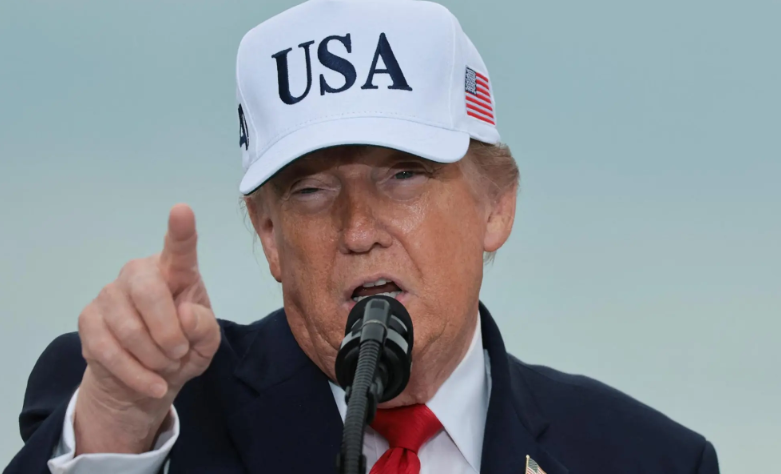
The warning followed US President Donald Trump’s remarks that he was considering joining Saudi strikes against the Houthis.
Mohammed al-Bukhaiti, a member of the Houthi political bureau, said any US involvement would prompt retaliation against American interests across the region.
He also warned employees and workers at Saudi oil facilities and airports to stay away from the sites, which he described as potential targets.
Al-Bukhaiti said the campaign was intended to demonstrate that Saudi Crown Prince Mohammed bin Salman could no longer conduct military operations against Yemen without facing security risks.
Trump condemned Saturday’s airport attack as “not acceptable” and said he would discuss the possibility of joining strikes against the Houthis with the Saudi crown prince.
Meanwhile, Houthi fighters have intensified their siege of Taiz in Yemen, where more than 60 people were reportedly killed within 24 hours, according to military sources from both sides.
A military source aligned with Yemen’s internationally recognised government said Houthi forces had blocked the city’s exits and launched several overnight attacks.
The reported fatalities included 22 pro-government fighters and at least 40 Houthi combatants. The Houthis continued their operations despite Saudi airstrikes and were reportedly sending reinforcements to the area.
Yemen’s health ministry warned on Sunday of a potential humanitarian catastrophe in Taiz, saying supplies of medicines, medical equipment and fuel were close to exhaustion.
Iran expressed concern over the intensifying attacks between Saudi Arabia and the Houthis and offered to help facilitate negotiations.
Foreign Ministry spokesman Esmaeil Baqaei said Tehran was prepared to use its diplomatic channels to support dialogue between the parties.
Anwar Gargash, diplomatic adviser to the UAE president, called for stronger security and defence cooperation among Gulf countries, arguing that collective regional security arrangements needed to be reinforced.
The United Arab Emirates also expressed full solidarity with Saudi Arabia despite longstanding differences between the two countries over Yemen.
China condemned attacks on Saudi airports and energy infrastructure, expressing concern over the growing conflict. Foreign Ministry spokeswoman Mao Ning urged all parties to avoid further escalation and resolve their disputes through dialogue.
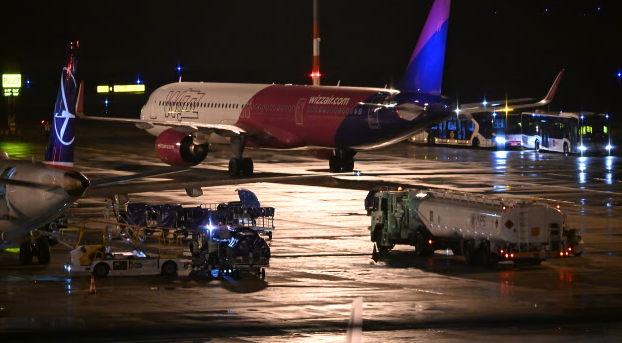
Saudi authorities have extended the suspension of operations at King Khalid International Airport in Riyadh until Saturday, with a notice to airmen indicating that the closure would remain in effect until 2100 GMT on October 17.
Airlines have cancelled or suspended services following repeated attacks. Flight-tracking data showed aircraft avoiding Riyadh on Monday, although flights continued through Saudi airspace towards Jeddah.
Aviation analytics firm Cirium reported that cancellations across Saudi airports had reached 46.4 per cent.
Etihad Airways cancelled flights to Riyadh, Dammam and Jeddah, while Gulf Air suspended services to Riyadh. Lufthansa and Air France-KLM also extended their flight suspensions.
Delta Air Lines postponed the launch of its planned Atlanta–Riyadh service, originally scheduled for October 23, until March 2027.
US aviation regulators advised airlines to exercise caution when operating flights to or over Saudi Arabia, while the American embassy warned US citizens about the security situation.
Mark Zee, founder of aviation safety organisation Opsgroup, described the sustained attacks on civilian aviation as unprecedented.