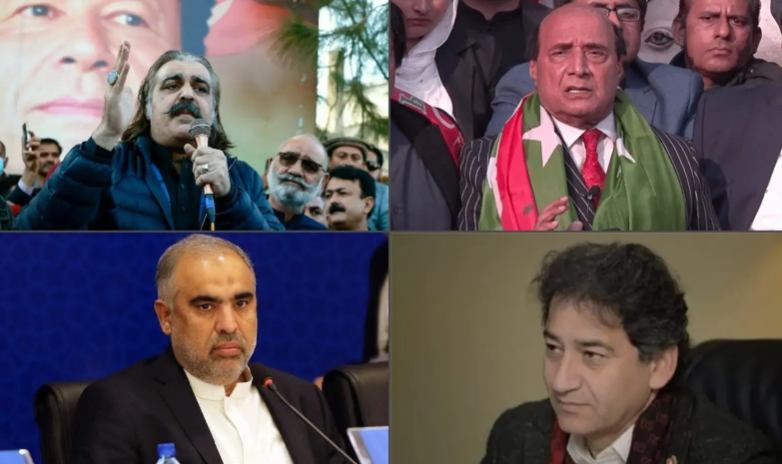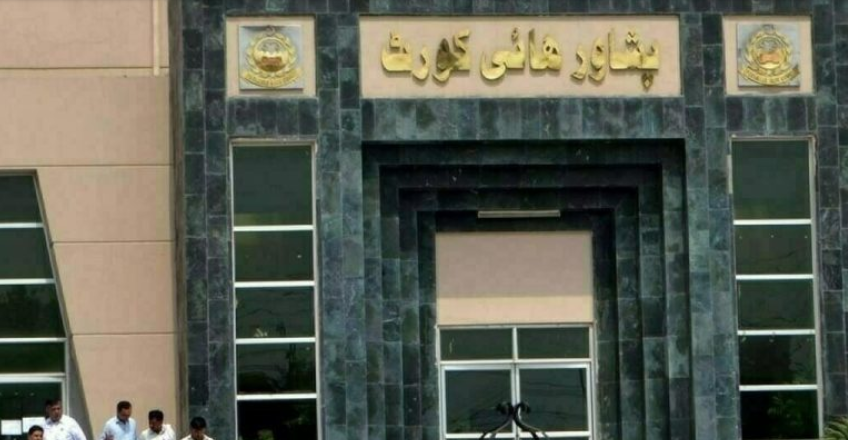
The Peshawar High Court (PHC) will hear on October 20 multiple petitions challenging the federal government’s decision to impose an emergency and governor’s rule in Khyber Pakhtunkhwa (KP), including a plea filed by Pakistan Tehreek-e-Insaf (PTI) Chairman Barrister Gohar Ali Khan.
The federal government imposed an emergency in the province on October 11, placing it under governor’s rule over what it described as the provincial government’s deliberate disengagement from the fight against terrorism.
The decision came amid weeks of political tensions between the Centre and the PTI, alongside negotiations aimed at resolving their differences. The party had announced a long march towards Islamabad to demand the release of its incarcerated founder, Imran Khan.
The opposition criticised the federal government’s move and vowed to challenge it at every forum, including the judiciary.
Gohar filed his petition on October 14 under Article 199 of the Constitution. His legal team includes Barrister Sameer Khosa, Salman Akram Raja, Ali Zaman, Sardar Haseeb Ahmad and Zainab Shahid.
The composition of the bench hearing the petition will be announced later.
In his petition, Gohar asked the PHC to declare the federal government’s decision to impose emergency and governor’s rule unconstitutional, unlawful and without legal effect, and to set aside the proclamation.
The respondents named in the petition include the Federation of Pakistan through the secretaries of the Cabinet Division and the ministries of law, interior and defence; the KP government; Governor Faisal Karim Kundi; the speaker of the KP Assembly; and the secretary of the KP Home and Tribal Affairs Department.
Former provincial chief minister Sohail Afridi, who ceased to exercise executive authority following the imposition of governor’s rule, was also included as a pro forma respondent.
Gohar challenged the legality of the October 11 proclamation, the deployment of army personnel in the province and all subsequent executive orders, notifications and bodies established under the decision.
These include the formation of the KP Advisory Council and what the petition described as the arbitrary detention and removal of Afridi and his provincial cabinet, whose executive powers were vested under Article 130 of the Constitution.
Following the imposition of governor’s rule, the federal government established an 11-member technocratic KP Advisory Council to assist Governor Kundi in administering the province on behalf of the Centre.
The petition also challenged the transfer of the KP Assembly’s legislative powers to Parliament under paragraph two of the proclamation. Gohar argued that the transfer was unconstitutional because the required prior resolution of the provincial assembly under Article 232(1) had not been passed.
He asked the court to restrain the federal government from introducing, considering or enacting provincial legislative business concerning KP in Parliament.
The petitioner further sought the annulment of executive orders, notifications and administrative bodies established under the proclamation, including the 11-member advisory council, the Area Development Secretariat (ADS) and the removal of the provincial advocate general, along with the purported appointment of a replacement.
The ADS was established across 12 districts to restore law and order, improve public security and promote governance and development. The districts include Dera Ismail Khan, Tank, Lakki Marwat, Bannu, Bajaur, Mohmand, Khyber, Kurram, Orakzai, North Waziristan, Upper South Waziristan and Lower South Waziristan.
Gohar also challenged the October 11 order deploying army personnel in KP under Article 245 of the Constitution.
He argued that the deployment could not be used to bypass the civilian executive or replace the province’s constitutional administration. He further contended that the measure could not be invoked without a lawful requisition from the provincial government headed by Afridi.
The petition asked the respondents, including the federal government and the KP governor, to submit the complete record and supporting material used to justify the emergency proclamation and subsequent orders.
This included Governor Kundi’s report and the summary presented to the federal cabinet.
Gohar also sought the immediate release of Afridi and members of the provincial cabinet and assembly from what he described as unlawful executive or preventive detention.
He requested that Afridi be produced before the high court and that the authorities be restrained from detaining him or members of his cabinet preventively or transferring them outside the court’s jurisdiction.
The petition maintained that the proclamation violated Pakistan’s federal structure, democratic principles, provincial autonomy and the constitutional division of legislative powers under Articles 1, 2A and 142.
Gohar argued that the measure was inconsistent with Article 232(1), which sets out the constitutional framework for declaring an emergency, and should therefore be set aside.
He further contended that the proclamation did not identify a grave emergency arising from war or external aggression, as required under the relevant constitutional provision. According to the petition, neither Pakistan nor KP faced such a threat.
The petitioner also argued that the government had failed to provide objective evidence demonstrating that the internal security situation justified the proclamation.
Citing the security situation in Balochistan, the petition questioned why an emergency had not been declared there despite what it described as a high number of terrorist incidents.
It alleged that terrorism and security concerns were being used as a pretext to target the PTI-led provincial government because of political differences with the Centre, including disagreements over Imran Khan’s release.
The petition also referred to the period between 2007 and 2015, arguing that an emergency had not been imposed anywhere in Pakistan even during years of intense terrorist violence.
Gohar separately challenged the invocation of Article 234, describing it as lacking lawful authority and a valid jurisdictional basis.
A separate petition filed by National Democratic Movement (NDM) central president Mohsin Dawar and provincial president Bushra Gohar has also been scheduled for hearing on October 20.
The petitioners argued that the emergency proclamation and governor’s rule contradicted the mandate given by the people of KP and should be declared legally ineffective.
They asked the court to set aside the presidential proclamation issued on October 11, 2026, as well as the appointments, directions and actions taken under it.
The petition also sought interim relief through suspension of the proclamation until the case was finally decided.
The petitioners maintained that the president had a constitutional obligation under Article 42, read with the Third Schedule, to preserve, protect and defend the Constitution.
They alleged that Governor Kundi had submitted a report to the president with mala fide intent and without proper jurisdiction, and that the authorities had failed to comply with the constitutional requirements set out in Articles 232 and 234 before issuing the proclamation.
The petition further claimed that the provincial government had not reported an emergency-level security situation beyond its control that would justify the action.
According to the petitioners, the proclamation lacked constitutional backing and violated the procedures and limitations prescribed for imposing an emergency in a province.
They urged the court to declare the decision unconstitutional and unlawful.
Separately, leaders of the Tehreek-i-Tahafuz-Ayin-i-Pakistan (TTAP) have also approached the PHC, seeking to overturn the emergency proclamation and governor’s rule in KP.
The constitutional petition was jointly filed by TTAP Chairman Mahmood Khan Achakzai, Vice Chairman Raja Nasir Abbas, Balochistan National Party-Mengal chief Sardar Akhtar Mengal and Sindh Taraqi Pasand Party leader Syed Zainul Abideen.
Filed through lawyers Muazzam Butt and Baseem Ahmad Siddiqui, the petition named the president and prime minister through their principal secretaries; the federation through the interior and defence secretaries; the speaker of the National Assembly; the KP governor through his secretary; the provincial government through its chief secretary; and the provincial inspector general of police as respondents.
The petitioners asked the court to declare the federal government’s move unconstitutional, beyond lawful authority and without legal effect.
They argued that the proclamation could not be used to remove or interfere with the constitutionally prescribed status of the elected chief minister and provincial cabinet unless a valid constitutional provision expressly authorised such action and all relevant conditions were met.
The petition also challenged the establishment and operation of the KP Advisory Council, the Area Development Secretariat and any parallel administrative structures to the extent that they exercised powers not granted by the Constitution or applicable laws, or sought to replace established provincial institutions.
The petition stated that the Constitution did not provide for unrestricted executive authority during an emergency. Instead, it prescribed the circumstances in which exceptional powers could be exercised, established procedures for their use and provided safeguards against the replacement of ordinary constitutional governance with temporary emergency measures.
The petitioners said their political and parliamentary roles gave them a direct and substantial interest in protecting representative government, parliamentary supremacy within the constitutional framework, federalism, provincial autonomy, independent constitutional institutions and fundamental rights.
They maintained that the challenged measures raised constitutional questions extending beyond an ordinary administrative dispute, as they concerned the legal framework governing the exercise of public authority by elected institutions.