
Astronomers using the James Webb Space Telescope (JWST) have identified an unusual cosmic object that appears star-like but emits an extraordinary amount of energy, lending support to the theory of a previously proposed “black hole star”.
The object, detected by a US-led team and described in a study published in Nature, dates back to about 660 million years after the Big Bang. Researchers said it appears roughly the size of our solar system but generates around 100 billion times more energy than the Sun.
Since JWST began operating in 2022, it has detected numerous extremely bright objects known as “little red dots” in the early universe. Their nature has remained one of the major mysteries of modern astronomy.
“What exactly these objects are has been one of the most debated topics of the JWST era,” said lead author Rohan Naidu of the University of Hawaii.
The researchers were initially investigating why JWST had detected unusually bright galaxies so early in the universe’s history, when such massive structures were not expected to have formed yet. While examining the telescope’s images, they identified another little red dot.
The team initially suspected that dust surrounding the object was responsible for its reddish appearance. However, further analysis showed that the object’s light disappeared at certain wavelengths, indicating that hydrogen gas, rather than dust, was causing the colour.
The finding still left the researchers with a major question: what was powering the object’s enormous energy output?
Naidu said the energy could not be explained by nuclear fusion, the process that powers conventional stars.
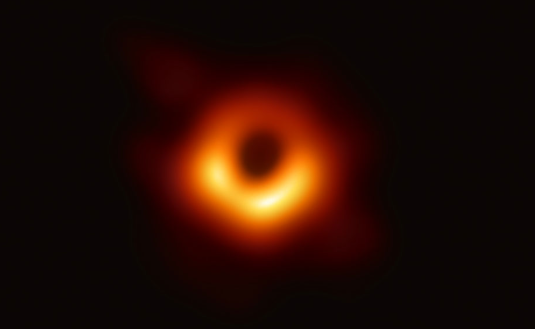
Computer modelling suggested the most likely explanation was a black hole at the object’s centre, surrounded by a dense cocoon of gas that makes it appear like a star.
The researchers named the object MoM-BH-1, with “BH” referring to a black hole star and “1” indicating that they suspect more such objects may exist.
Naidu said many of the little red dots detected by JWST could potentially be black hole stars.
What makes MoM-BH-1 particularly unusual, he said, is that the object’s brightness overwhelms that of its surrounding galaxy, allowing astronomers to observe what appears to be almost entirely the light from the black hole star itself.