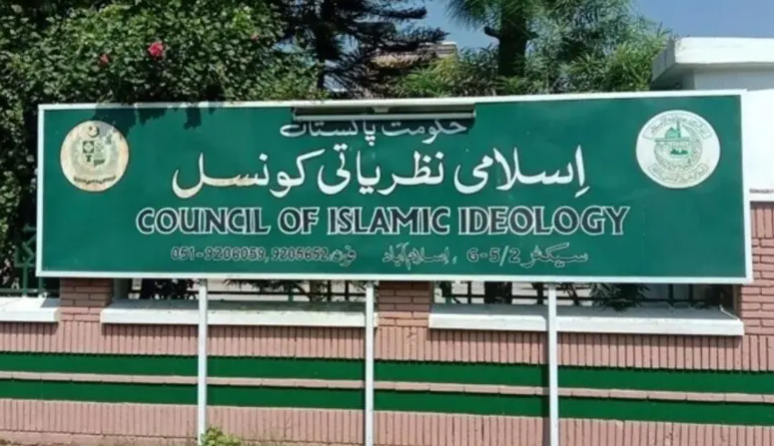
The Council of Islamic Ideology (CII) has expressed concern over Pakistan’s law and order situation, terrorism and unrest in the Middle East, while discussing several legal and national matters, including the licensing of religious television channels.
The meeting, chaired by CII Chairman Dr Muhammad Raghib Hussain Naeemi, also reviewed issues relating to maritime security, women’s inheritance rights, family laws and the religious implications of legal provisions.
During the meeting, the council voiced concern over disruptions to shipping and maritime traffic following the closure of the Strait of Hormuz amid the US-Iran conflict. Members also referred indirectly to Houthi involvement in the Bab al-Mandeb Strait in the Red Sea.
However, most members decided against naming a fellow Muslim country in the meeting’s official minutes. Saudi Arabia and Yemen’s Houthi movement have been involved in an intense conflict in recent weeks, with the Houthis reportedly disrupting traffic through the strategic waterway.
According to an official statement, the council expressed sorrow over the deaths of three Pakistanis in attacks by Somali pirates on the high seas and offered prayers for the deceased.
The meeting also approved ringtone-based public service messages promoting respect for flags and banners used during Muharram. The messages, subject to approval by the relevant telecommunications regulator, are intended to remind callers of the sanctity of the Islamic month.
The CII recommended that religious television channels be granted formal licences, like other broadcasters, rather than being issued only no-objection certificates (NOCs). It called for amendments to the relevant laws and regulations to facilitate the process.
The Pakistan Electronic Media Regulatory Authority (Pemra) currently does not have a separate category for religious channels.
A senior Pemra official said religious channels were not permitted under the existing framework because of concerns that they could create tensions. The official warned that sect-specific channels might fuel sectarian divisions, adding that a policy allowing satellite channels for non-Muslim communities could also face opposition from some Muslim religious leaders.
Following the Federal Shariat Court’s ruling against the customs of chaddar and parchi, the council called for the establishment of a special inheritance tribunal to expedite cases involving women’s property and inheritance rights.
In March 2025, the Federal Shariat Court ruled that the cultural and tribal practices of chaddar and parchi, which are used to pressure or force women to relinquish their ancestral inheritance, were un-Islamic and illegal.
The council also welcomed the “Muslim Family Laws (Father’s Maintenance) Amendment Bill 2026”, introduced by Senator Samina Mumtaz Zehri.
The meeting examined the Shariah status of applying Article 120 of the Limitation Act 1908 to claims seeking recovery of past maintenance payments for children and wives.
The CII held that the right to maintenance does not lapse merely because the prescribed limitation period for initiating legal proceedings has expired.
The council praised the Supreme Court’s decision to uphold the death sentence of Qaiser Ayub in a blasphemy case, stating that the ruling demonstrated that incidents of blasphemy were a reality.
The meeting was also attended by Allama Tahir Ashrafi, Dr Intikhab Ahmed Noori and other members.