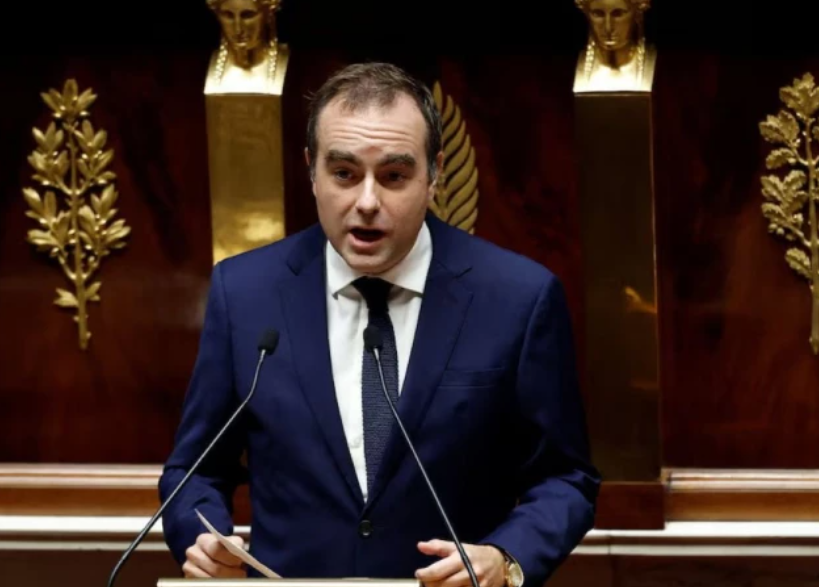
French Prime Minister Sébastien Lecornu has called for localised curfews to contain widespread unrest after violent demonstrations over the rising cost of living left businesses looted, public buildings damaged and thousands of people arrested.
Lecornu convened an emergency meeting with ministers after Interior Minister Laurent Nuñez acknowledged that police had lost control of the situation during the weekend’s demonstrations.
With the Yellow Vests movement calling for another round of protests next Saturday, the prime minister urged regional authorities to introduce partial curfews in areas where necessary to protect businesses and restore public order.
“I’m absolutely determined to restore public order,” Lecornu said, warning that the government was prepared to declare a state of emergency if the situation required it.
Saturday’s demonstrations drew approximately 500,000 people across France, initially protesting against the rising cost of living. However, the rallies descended into some of the country’s worst violence in years, with shops and town halls reportedly looted, damaged and set ablaze.
More than 2,500 people were arrested during the unrest, while nearly 1,000 security personnel were injured. Protesters also sustained injuries, including one demonstrator whose hand was reportedly blown off by a police crowd-control grenade.
Nuñez acknowledged shortcomings in the deployment of security personnel, saying authorities had failed to anticipate the scale of the violence. He estimated that around 60,000 law enforcement officers had been deployed nationwide on Saturday but said the response was insufficient to deal with the crowds involved in rioting and looting.
The interior minister said he believed it was appropriate to offer his resignation in light of the damage caused by the unrest.
However, President Emmanuel Macron rejected the offer, citing the need for continuity in law enforcement leadership.
Macron instead directed Nuñez to ensure transparency regarding intelligence and planning failures that contributed to the violence. He also instructed the minister to introduce improved operational procedures to help security forces respond more effectively to rioters and prevent further looting.
In a televised address on Sunday, Macron condemned what he described as uncontrolled violence. He said local authorities could prohibit certain demonstrations but stopped short of announcing more sweeping emergency measures.
Fresh incidents of looting were reported on Sunday, particularly in Paris. Mayor Emmanuel Grégoire said around 30 shops in the capital had been targeted, describing the scenes as unacceptable.
Nuñez reported that approximately 350 people had been arrested in Paris on Sunday and overnight.
Justice Minister Gérald Darmanin said more than 2,330 people had been taken into police custody nationwide over the weekend, around 70 per cent of them adults. Many of those detained were already known to law enforcement authorities.
Alain Di Crescenzo, president of the country’s chamber of commerce, estimated that more than 2,000 shops across France could have been affected, with the financial damage potentially reaching hundreds of millions of euros.
Authorities in Marseille announced a ban on public gatherings from noon until 8pm on Monday as officials sought to prevent further clashes.
The unrest has drawn criticism from across Europe. The European Union described the violence as unacceptable while emphasising that the right to peaceful protest must be protected.
Germany also condemned the disorder and updated its travel advice for France, warning that further demonstrations and possible outbreaks of violence could occur in the coming days.
The United Kingdom similarly stressed that the right to protest could not justify violent behaviour.
Public frustration showed little sign of easing on Monday, when demonstrators blocked the entrance to Paris’s Louvre Museum, one of the world’s most visited cultural attractions.
Rising living costs have fuelled public anger across France. Since March, diesel prices have increased by nearly 40 per cent and petrol prices by around 25 per cent, while food prices have risen by approximately 25 per cent since 2021.
The unrest comes just months before a crucial presidential election. Macron is constitutionally barred from seeking another consecutive term, while far-right National Rally candidate Marine Le Pen has been performing strongly in opinion polls.
Government ministers and Le Pen have accused far-left groups of encouraging the violence to improve the electoral prospects of left-wing leader Jean-Luc Mélenchon.
Lecornu also accused the far-left movement of attempting to organise widespread unrest. He warned that networks involved in the disturbances could seek to challenge not only public order but also the planned presidential election timetable.
France is not the only European country experiencing demonstrations linked to economic hardship and public dissatisfaction.
In Italy, clashes broke out during a cost-of-living protest in Milan over the weekend. Mayor Giuseppe Sala expressed concern that the unrest reflected a broader international trend.
Belgian police used tear gas and water cannons to disperse protesters in Brussels and Liège.
In Spain, hundreds of tents have occupied Madrid’s central Puerta del Sol square since September, following nationwide demonstrations triggered by the eviction of an 87-year-old woman from her long-time home amid soaring housing costs.
Similar encampments have also emerged in Lisbon and Porto, where protesters are highlighting the growing cost of housing in Portugal.