Pakistan and the European Union (EU) have agreed to strengthen cooperation on counterterrorism at multilateral forums, reaffirming their commitment to addressing evolving terrorist threats and promoting international collaboration.
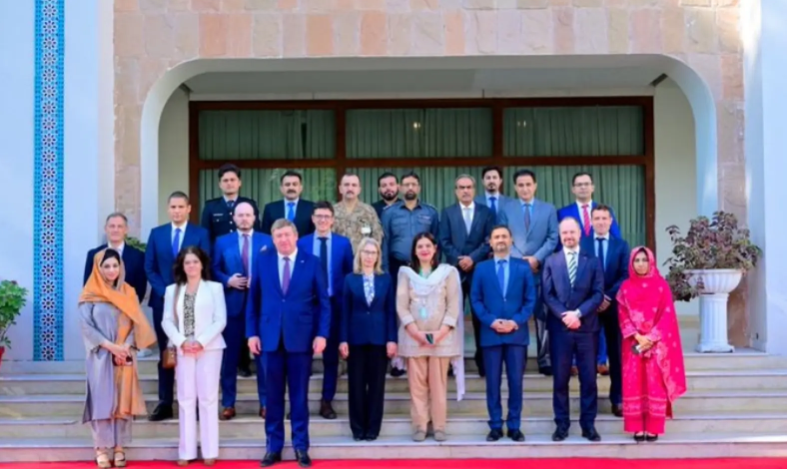
The understanding was reached during the 10th round of the Pakistan-EU Bilateral Counterterrorism Dialogue, held in Islamabad.
The Pakistani delegation was led by Dr Fareha Bugti, Director General for Counterterrorism, while the EU delegation was headed by Anna Strazska, the European External Action Service’s Special Envoy for Counterterrorism.
During the talks, both sides reviewed recent regional and international developments affecting the terrorism threat landscape and strongly condemned terrorism in all its forms. The EU also denounced recent terrorist attacks in Pakistan, expressed solidarity with affected civilians and acknowledged the country’s efforts to combat terrorism, according to a statement issued by Pakistan’s Foreign Office.
The two sides also discussed the security implications of the situation in Afghanistan, recognising each other’s contributions to the global fight against terrorism. They emphasised that effective multilateral cooperation remains essential to building a lasting international consensus against the threat.
The dialogue addressed emerging terrorist tactics, including the exploitation of cyberspace, information systems and energy resources to advance extremist objectives.
According to the Foreign Office, Pakistan and the EU exchanged best practices on preventing and countering violent extremism, tackling terrorist financing and addressing radicalisation in all its forms, with particular attention to the misuse of cyberspace by terrorist groups.
Both sides identified priority areas for future collaboration and reaffirmed their commitment to maintaining regular and institutionalised engagement on counterterrorism. The next round of the dialogue is scheduled to take place in Brussels next year on a mutually agreed date.
The talks come as Pakistan faces increasingly complex counterterrorism challenges, with militant groups adapting their recruitment and financing methods.
An international seminar organised by the Institute of Strategic Studies Islamabad earlier this week examined these changing tactics and the evolving security landscape.
Deputy Prime Minister and Foreign Minister Ishaq Dar has urged Afghan authorities to take concrete, verifiable and irreversible action against the banned Tehreek-i-Taliban Pakistan (TTP) and other militant groups operating from Afghan territory.
Information Minister Attaullah Tarar, who also addressed the seminar, cited United Nations assessments indicating that more than 6,000 TTP fighters were present in Afghanistan, while the overall militant presence exceeded 20,000.