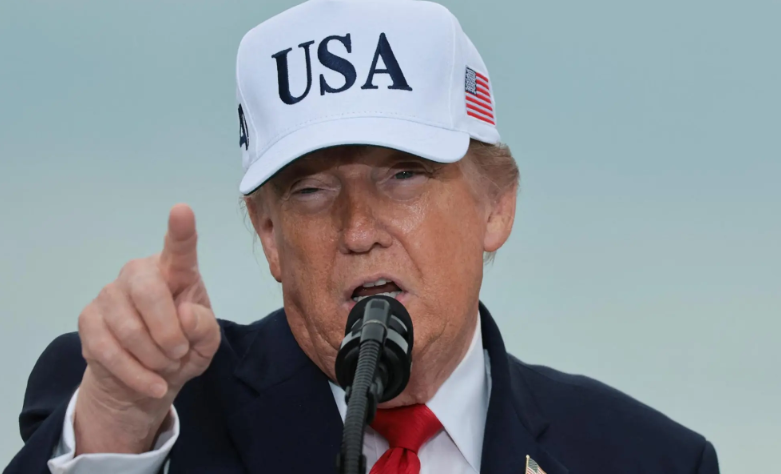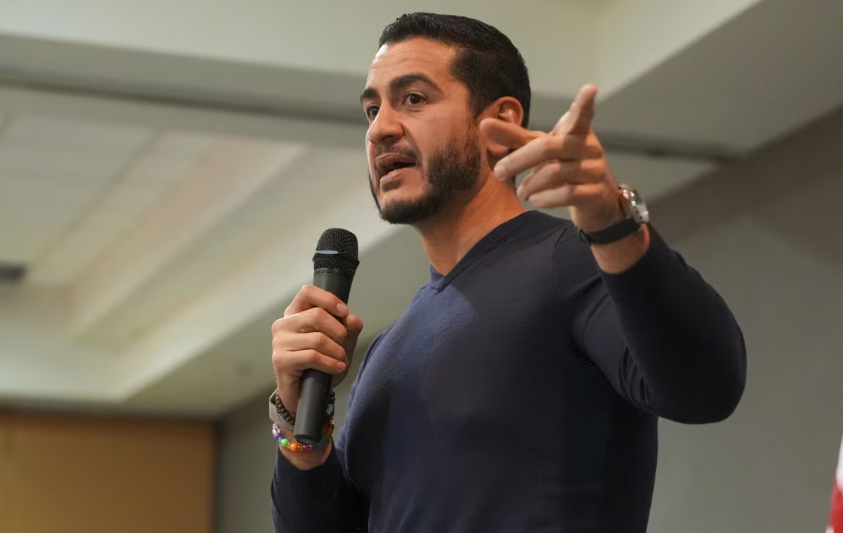
Republican attacks linking Democratic Senate candidate Abdul El-Sayed to the Muslim Brotherhood are aimed at weakening his support among Jewish and Black voters in the Detroit area, political strategists and pollsters say. The strategy could affect the outcome of a closely contested Senate race in Michigan.
Republican political consultant Dennis Darnoi said the allegations could make voters who supported El-Sayed’s primary rival, Haley Stevens, hesitant to back the Democratic nominee in the final days of the campaign. He argued that reduced Democratic turnout in the Detroit metropolitan area could benefit Republican candidate Mike Rogers.
El-Sayed and Rogers are competing for the Senate seat being vacated by retiring Democratic Senator Gary Peters. The result could prove crucial in determining whether Democrats can secure the four additional seats needed to take control of the Senate in next month’s election. Republicans currently hold a 53–47 majority.
El-Sayed has established a narrow lead in opinion polls by focusing his campaign on the cost of living, healthcare and reducing the influence of money in politics.
Rogers has sought to challenge El-Sayed’s support among Jewish voters by highlighting his criticism of Israel’s military offensive in Gaza and alleging that the Democratic candidate has longstanding family connections to the Muslim Brotherhood.
Political strategists say the focus on the organisation could also deepen existing economic and political tensions between Black voters and Michigan’s sizeable Arab-American community.
Rogers has cited old social media posts by El-Sayed’s half-sister, which reportedly claimed that their mother was involved with the organisation during the 1970s.
El-Sayed has rejected any association with the Muslim Brotherhood and said he was not raised by his mother. His parents divorced when he was three, and he was brought up by his father and stepmother.
Responding to the Republican campaign, El-Sayed’s spokesperson Alyssa Brouillet said the candidate’s positions on issues including prisons and the Muslim Brotherhood were alienating voters in Michigan.
Meanwhile, El-Sayed campaign spokesperson Roxie Richner accused Rogers of diverting attention from the economic consequences of President Donald Trump’s policies. She said independent fact-checkers had repeatedly challenged Rogers’ claims and accused his campaign of making politically motivated attacks on El-Sayed’s faith and family.
The allegations featured prominently during a televised debate this week, when Rogers questioned whether El-Sayed’s loyalties lay with the United States or overseas groups he described as terrorist organisations.
El-Sayed, the son of Egyptian immigrants, condemned the question as inappropriate and reaffirmed his patriotism and commitment to the US Constitution, including its protection of religious freedom. If elected, he would become the first Muslim to serve in the US Senate.
Rogers, a former congressman, US Army officer and FBI agent, also appealed directly to voters who had supported Stevens in the Democratic primary, suggesting they could support him if they considered El-Sayed too extreme.
It remains unclear whether the Republican strategy is influencing voters. Independent political analysts have classified the contest as a toss-up, while polling averages compiled by RealClearPolling show El-Sayed ahead by approximately 2.6 percentage points.
In recent weeks, El-Sayed has campaigned alongside prominent Black political figures, including Georgia Senator Raphael Warnock, Massachusetts Representative Ayanna Pressley and former Democratic presidential candidate Kamala Harris. Former president Barack Obama, who has endorsed El-Sayed, is also scheduled to campaign with him.
Keith Williams, chair of the Michigan Democratic Party’s Black Caucus, acknowledged that tensions between Black and Arab-American communities present a challenge. Although he supported Stevens during the primary, Williams is now working to mobilise support for El-Sayed.
Williams said Democrats needed to overcome their differences, arguing that the election carried broader implications for the direction of national policy under the Trump administration.
Some political observers believe the Republican attacks may have come too late to significantly alter the race. Others warn that the strategy could backfire if voters perceive the allegations as anti-Muslim.
Jim Zogby, a veteran pollster and co-founder of the Arab American Institute, said such claims might resonate with a limited segment of voters who already hold negative stereotypes about Arab Americans and Muslims.
A September poll conducted by Emerson College found that El-Sayed had the support of 81 per cent of Black voters, who account for approximately one-quarter of Michigan’s Democratic electorate.
Matt Taglia, senior director of Emerson College Polling, said the survey showed no evidence of declining Black support for El-Sayed at the time and suggested that the figures were unlikely to have changed substantially over the following month.
The same poll showed Democratic gubernatorial candidate Jocelyn Benson performing four percentage points better among Black voters, while Harris received 86 per cent of the Black vote in the 2024 presidential election.
Michigan pollster Steve Mitchell estimated that weaker support among Black and Jewish voters could cost El-Sayed as many as 20,000 votes. That figure is significant given that Rogers lost his 2024 Senate contest against Democrat Elissa Slotkin by a comparable margin.