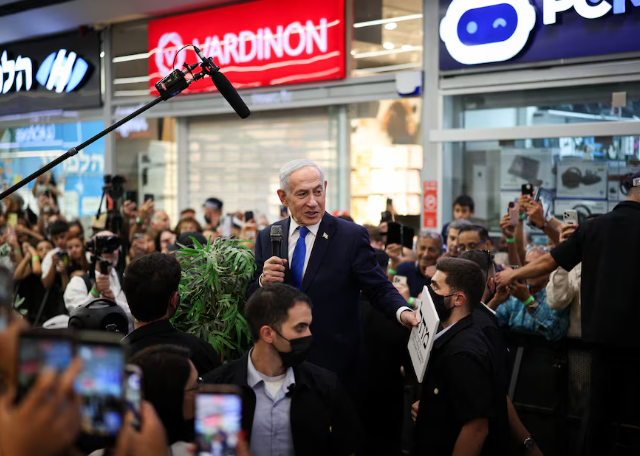
Two predominantly Arab political parties in Israel have joined forces with the shared goal of ending Prime Minister Benjamin Netanyahu’s government, describing it as discriminatory and far-right.
In interviews, the leaders of the two political lists outlined their common objective ahead of the October 27 elections, saying they wanted to bring an end to what they consider a racist government.
Arab Israelis, also known as Palestinian citizens of Israel, make up approximately 21 per cent of the country’s population. They are descendants of Palestinians who remained within Israel’s borders following its establishment in 1948 and have long raised concerns about discrimination by the country’s Jewish majority.
As Israel’s political landscape continues to shift towards the right, many Arab citizens are expected to vote in an effort to influence the country’s political direction and counter the growing influence of far-right parties. They will be represented by two separate political lists in Tuesday’s election.
The United Arab List, known by its Hebrew acronym Raam, is a moderate Islamist party led by Mansour Abbas. In 2021, the party joined a coalition of Netanyahu’s opponents, becoming the first Arab party to participate in an Israeli government.
The second bloc, the left-wing Joint List, is led by Yousef Jabareen and brings together three political parties with communist and Palestinian nationalist ideologies.
Both Abbas and Jabareen have indicated their willingness to cooperate with opposition parties under certain conditions, particularly with the bloc led by Gadi Eisenkot, Netanyahu’s main political rival. Opinion polls suggest that Eisenkot’s alliance is running neck and neck with the prime minister’s camp.
Depending on the election results and the number of parliamentary seats secured, support from the Arab-led parties could prove decisive in helping the opposition achieve a majority in Israel’s 120-member parliament.
Such an outcome could pave the way for a new governing coalition and potentially allow the Arab-led parties to participate in the next government, marking a significant development in Israel’s political landscape.