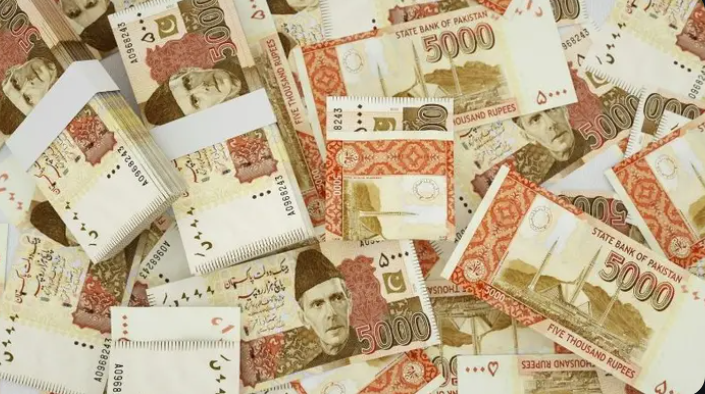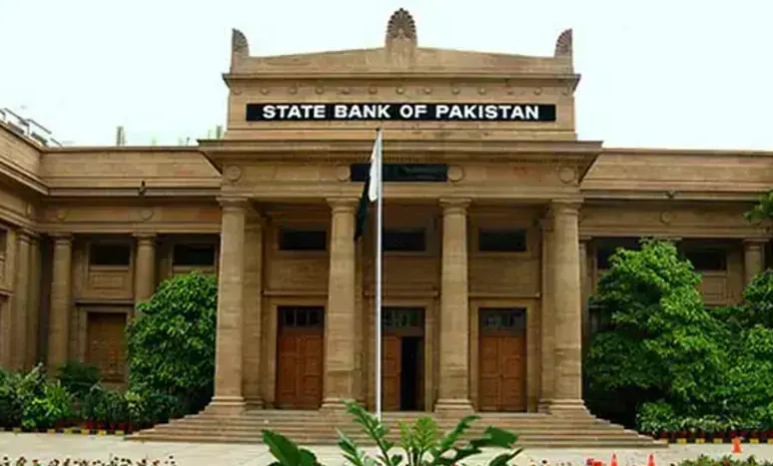
The State Bank of Pakistan’s (SBP) Monetary Policy Committee is scheduled to meet on Monday amid growing speculation in financial markets over a possible increase in the policy rate. Most financial experts expect the central bank to raise the interest rate by 50 basis points, while some believe a larger increase may be necessary to contain rising inflation.
Pakistan’s current policy rate stands at 11.5 per cent.
Analysts and banking professionals say the central bank faces a difficult balancing act between controlling inflation and supporting the economic recovery, which has yet to gain significant momentum.
Senior banker Rashid Masood Alam said he expected a 50-basis-point increase but argued that financial markets required a 100-basis-point hike to curb mounting inflationary pressures. He added that the possibility of US military action against Iran could further push up prices and strengthen the case for monetary tightening.
Inflationary pressures have intensified in recent months. Consumer Price Index (CPI) inflation reached 10.2 per cent during the first quarter of fiscal year 2026-27, compared with 4.3 per cent in the corresponding period last year.
Faisal Mamsa, chief executive officer of Tresmark, described a 50-basis-point increase as a reasonable compromise, saying it would acknowledge emerging economic risks without placing excessive pressure on growth.
He noted that a moderate increase could help maintain investor confidence and monetary stability. In contrast, a 100-basis-point hike would raise borrowing costs for both the government and private businesses, potentially discouraging investment without delivering substantially greater benefits than a smaller increase.
Global economic conditions are also adding to the pressure. Major central banks, including the Reserve Bank of India, have increased interest rates, while the International Monetary Fund (IMF) projects global inflation at 4.7 per cent in 2026 and 4.1 per cent in 2027. Inflation, experts say, is proving more persistent than previously anticipated.
Economists have cautioned that Pakistan’s efforts to shift from economic stabilisation towards sustainable growth could face significant challenges. Escalating regional tensions, higher international oil prices and rising shipping costs are threatening to increase expenses for exporters and importers alike.
They warned that a substantial interest rate increase could further restrict access to financing, raise production costs and discourage private-sector investment.
“Pakistan has become better at maintaining stability, but we also need to find a way to grow without losing it,” Mamsa said, highlighting the need to balance inflation control with economic expansion.
While financial market participants anticipate monetary tightening, industrial and business representatives are calling for lower interest rates to stimulate economic activity.
Saleem Mukati, chairman of the Pakistan Chemicals and Dyes Merchants Association, argued that raising interest rates solely to control inflation would be ineffective and would place additional pressure on traders and industrialists.
He maintained that businesses would bear the brunt of higher borrowing costs, potentially undermining industrial production and commercial activity.
The Korangi Association of Trade and Industry and the SITE Association of Industry have also urged the central bank to reduce the policy rate to single digits, arguing that cheaper financing is necessary to support industrial growth and investment.
The upcoming monetary policy decision is therefore expected to be crucial, as the SBP weighs the need to contain inflation against demands from businesses for measures to revive economic activity.