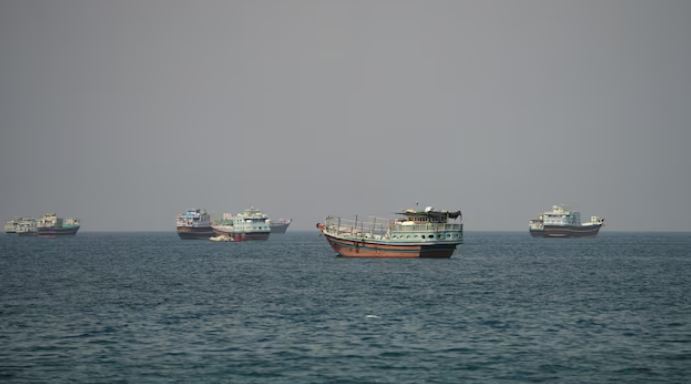
Iran said on Monday it was prepared to reopen the Strait of Hormuz within two days if the United States accepts its conditions, as diplomatic efforts to end the eight-month conflict continued. Meanwhile, Chinese President Xi Jinping warned against turning the Middle East into a battleground for competition among major powers.
US President Donald Trump also appeared to signal a possible diplomatic breakthrough, expressing uncertainty over whether he would resume threatened military strikes against Iran and saying an agreement with Tehran could be reached.
In a post on Truth Social, Trump said oil prices were falling sharply because of expectations that a new war with Iran could be avoided. He added that Tehran wanted a settlement as soon as possible and that an agreement was possible.
Diplomatic contacts between Washington and Tehran are continuing after discussions with Qatari mediators in Doha ended with revised proposals but no major breakthrough.
An official familiar with the negotiations said Iran’s delegation departed on Sunday, although the move was not linked to any difficulties in the talks. A draft proposal outlining a possible agreement with the United States is currently being circulated.
Iranian Foreign Minister Abbas Araghchi said consultations were taking place intensively given the sensitivity of the situation. He stressed that progress would depend on Washington’s political judgment.
Araghchi also said Qatar and Pakistan were playing an active role in facilitating negotiations. Iranian President Masoud Pezeshkian said Supreme Leader Mojtaba Khamenei had granted the government the necessary authority to conduct the talks
.The negotiations are based on a seven-point proposal presented by Iran in September, which has now been condensed into a plan that could be implemented within two days.
The proposal calls for an end to the war on all fronts, the lifting of the US blockade on Iranian ports, exemptions allowing Iranian oil sales, the release of frozen Iranian assets and the removal of recent sanctions.
It also demands a reduction in US military deployments across the region and acceptance of a new transit arrangement between Iran and Oman.
Foreign Ministry spokesman Esmaeil Baqaei described the possibility of implementing the plan within two days as evidence of Iran’s willingness to pursue a diplomatic solution.
He said that meeting Tehran’s demands could help restore security in the Strait of Hormuz and allow negotiations to resume within a short period.
Baqaei, however, warned that any military attack against Iran would trigger a powerful, immediate and comprehensive response.
The diplomatic efforts are unfolding ahead of Tuesday’s US midterm elections, with rising fuel prices creating political pressure for Republicans. Oil prices fell by more than six per cent on Monday amid optimism over a possible resolution.
Despite the signs of diplomatic progress, Iranian sources indicated that they still considered a renewed US attack more likely than an agreement.
As concerns grow over a possible resumption of hostilities following US and Israeli strikes against Iran on February 28, China and Russia have urged restraint and opposed further military escalation.
During a meeting with Omani Sultan Haitham bin Tariq in Beijing, Xi called on Washington and Tehran to pursue diplomacy and work towards a ceasefire.
He warned that the Middle East Gulf region should not become an arena for rivalry among major powers or geopolitical confrontation.
Chinese Foreign Minister Wang Yi also called for dialogue during separate meetings in Beijing with Saudi National Security Adviser Musaed bin Mohammed al-Aiban and Ali Bagheri Kani, deputy secretary of Iran’s Supreme National Security Council.
Wang stressed the importance of protecting regional energy supplies and maritime security. He also reaffirmed China’s support for Iran in safeguarding its sovereignty and security, urging all sides to prioritise a political settlement over renewed military confrontation.
Meanwhile, Russian President Vladimir Putin discussed the conflict in a telephone conversation on Monday with Rezaei. Moscow also expressed serious concern over reports of possible renewed military action.
Addressing the regional situation in Abu Dhabi, United Arab Emirates Energy Minister Suhail al-Mazrouei said the course of the US-Israeli conflict with Iran remained uncertain.
He added that the UAE would be better prepared to deal with the consequences of any further escalation, following an attack on a Qatari liquefied natural gas tanker on Friday.