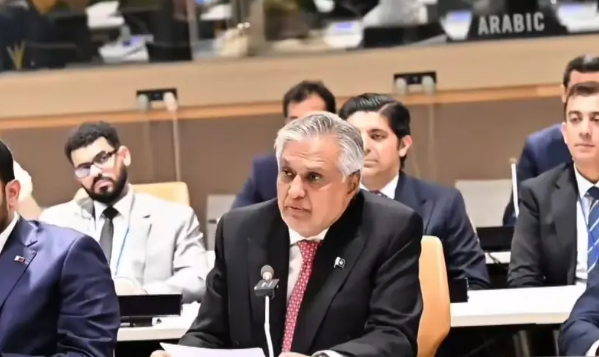
Pakistan has called for continued international attention to the situation in Afghanistan, warning that instability and the presence of militant groups in the country could have serious implications for regional peace and security.
The call was made during a meeting of the Organisation of Islamic Cooperation’s Contact Group on Afghanistan on the sidelines of the 81st session of the United Nations General Assembly in New York.
Pakistan recalled the political changes in Afghanistan following the withdrawal of US forces in August 2021 and the return of the Taliban to power. Islamabad said it had supported efforts to address Afghanistan’s humanitarian crisis and sought greater backing from Muslim countries and the wider international community.
Pakistan said expectations that the Taliban administration would meet its international obligations, prevent terrorism and promote an inclusive political system had not been fully met.
It urged the Taliban to create conditions that would enable Afghanistan to strengthen ties with the international community and improve living conditions for its people.
Pakistan also called for concrete and verifiable measures to prevent Afghan territory from being used for terrorist activities against neighbouring countries, particularly Pakistan.
Concerns were raised over the presence of more than two dozen militant groups in Afghanistan and their potential impact on regional and international security. Pakistan said its security forces continued to face attacks linked to militant groups operating from Afghan territory.
The discussion also referred to a recent attack in Kohat, Khyber Pakhtunkhwa, which killed more than 20 people and injured around 100 others. Eight militants were killed during a subsequent security operation.
Pakistan acknowledged mediation efforts by Qatar, Turkiye and Saudi Arabia aimed at encouraging the Taliban to pursue peaceful solutions and called for greater involvement by the OIC in addressing Afghanistan’s security and humanitarian challenges.
The OIC was urged to press the Taliban to take comprehensive action against militant groups, honour international commitments and prevent support or safe havens for terrorist organisations.
Pakistan also called for the removal of restrictions on women and girls that it said were inconsistent with Islamic principles and social norms, along with greater protection of fundamental freedoms for Afghan citizens.
The country further advocated an inclusive political process in Afghanistan and called for measures to facilitate the return, resettlement and reintegration of Afghan refugees and returnees.
Greater international funding was also sought to address Afghanistan’s humanitarian needs and support economic and social development.
Pakistan reiterated that it wanted a stable and peaceful Afghanistan but stressed that progress would require mutual respect, political will and concrete action by the Taliban administration.
Relations between Pakistan and Afghanistan have remained strained, with repeated cross-border clashes and continued concerns over militant activity.
Pakistan has repeatedly called on the Taliban administration to take verifiable action against militant sanctuaries in Afghanistan, particularly those associated with the banned Tehreek-i-Taliban Pakistan (TTP).
Islamabad has also stated that it may take measures in self-defence against terrorist threats originating from Afghanistan, in accordance with international law.
Pakistan has maintained that meaningful progress in bilateral relations depends on effective action against the TTP and other militant groups operating from Afghan territory.
A recent UN Security Council-mandated monitoring assessment reported that continued Taliban support for the TTP had contributed to an increase in the frequency and lethality of militant attacks in Pakistan, while also noting some initial measures by Kabul to restrict the group.
The assessment further highlighted operational and facilitation links among the TTP, Al Qaeda, Islamic State-Khorasan and the Baloch Liberation Army.