The Gulf Cooperation Council (GCC) has urged the international community to designate Yemen’s Houthi militia as a terrorist organisation, calling for measures to prevent the group from obtaining missiles and unmanned aerial vehicles (UAVs).
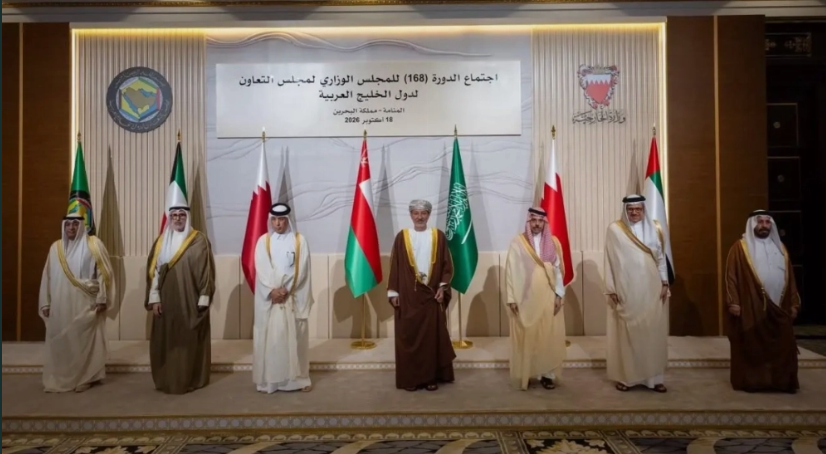
The call was made in the final communiqué issued after the 168th session of the GCC Ministerial Council, held in Manama on Sunday. The council said the Houthis should be treated in line with international efforts against groups that threaten regional security, peace, development and prosperity.
The meeting was chaired by Bahraini Foreign Minister Dr Abdullatif Al Zayani, who is leading the council’s current session.
The council strongly condemned repeated Houthi attacks against Saudi Arabia, including strikes targeting the Two Holy Mosques and nearby areas, civilian airports and critical infrastructure. It said the attacks had caused civilian deaths and injuries and violated international law and international humanitarian law.
The council extended condolences to the families of those killed and wished a speedy recovery to the injured.
It reaffirmed the GCC countries’ full solidarity with Saudi Arabia and their support for measures taken by the kingdom to protect its sovereignty, security and national interests.
The council stressed that the security of GCC members is indivisible and that an attack on one member constitutes an attack on all, in accordance with the bloc’s Joint Defence Agreement. It also reiterated the member states’ right to individual and collective self-defence under Article 51 of the United Nations Charter.
The GCC Ministerial Council urged the United Nations and the international community to ensure full implementation of Security Council resolutions concerning Yemen, the Houthi rebellion and attacks on shipping in the Red Sea.
It called for strict enforcement of the arms embargo imposed on the Houthi militia and urged the Security Council, particularly its permanent members, to fulfil their responsibilities in maintaining international peace and security.
The council also stressed that freedom of maritime and aerial navigation is a shared international interest that should be protected consistently.
It welcomed a unanimous UN Security Council presidential statement adopted on October 15 condemning escalating Houthi attacks on Saudi Arabia, including strikes against Aramco facilities. The statement also reaffirmed Saudi Arabia’s right to self-defence under international law and condemned threats against commercial vessels operating in the Red Sea and Bab Al Mandeb Strait.
The council highlighted the need to fully implement the arms embargo established under UN Security Council Resolution 2216.
The GCC reaffirmed its commitment to Yemen’s sovereignty, unity and territorial integrity, while backing efforts to resolve the country’s prolonged crisis through dialogue and political negotiations.
It called for a settlement based on three established frameworks: the outcomes of Yemen’s Comprehensive National Dialogue Conference, the GCC Initiative and relevant UN Security Council resolutions.
According to the council, a peaceful political solution remains essential to meeting the Yemeni people’s aspirations for stability, security and lasting peace.
The ministerial council also condemned Iranian missile and drone attacks against GCC countries and Jordan, whether carried out directly or through regional allies and proxy groups.
It said the attacks had targeted civilian infrastructure, public service facilities, residential areas and diplomatic missions, causing substantial material damage and threatening the safety of residents and citizens.
The council held Iran responsible for the attacks and their consequences, rejecting Tehran’s stated justifications. It demanded an immediate and unconditional end to all attacks, provocations and threats, alongside full compliance with UN Security Council Resolution 2817.
The GCC further called on the United Nations and the international community to ensure the resolution’s implementation, hold those responsible accountable and require Iran to compensate for the damage caused, citing UN Human Rights Council Resolution 61/1.
The council underscored the global importance of the Strait of Hormuz, the Bab Al Mandeb Strait and the Red Sea, describing them as critical routes for international trade and the movement of energy, food and medical supplies.
It warned that closing these waterways, obstructing shipping, attacking commercial vessels or their crews, laying mines, or imposing unlawful transit fees and restrictions could threaten international peace and security.
The council rejected attempts to make transit passage dependent on prior authorisation or imposed routes, saying such measures would conflict with the 1982 UN Convention on the Law of the Sea and customary international law.
It also called on the International Maritime Organization to continue its work to protect maritime navigation and seafarers.
The GCC stressed the need to restore maritime security and freedom of navigation in the Strait of Hormuz and return conditions to those that existed before February 28, 2026. It said this should be achieved in accordance with international law, the UN Convention on the Law of the Sea and the maritime boundary and continental shelf agreement signed by Oman and Iran on July 25, 1974, while respecting coastal states’ sovereignty and the rights of relevant parties.
Despite its strong condemnation of the attacks, the council called for renewed dialogue and diplomatic engagement to contain the crisis and safeguard regional stability.
It welcomed mediation efforts and diplomatic initiatives led by regional countries and international partners, warning that further escalation would undermine the interests of both the Middle East and the wider international community.
The council said any future agreements should address all outstanding concerns related to Iran, including its nuclear and missile programmes, drone capabilities and support for regional proxy groups.
It emphasised that negotiations must be guided by respect for national sovereignty, good-neighbourly relations and non-interference in domestic affairs. The GCC also insisted that member states should be involved in any negotiations or arrangements that could affect their security and interests.