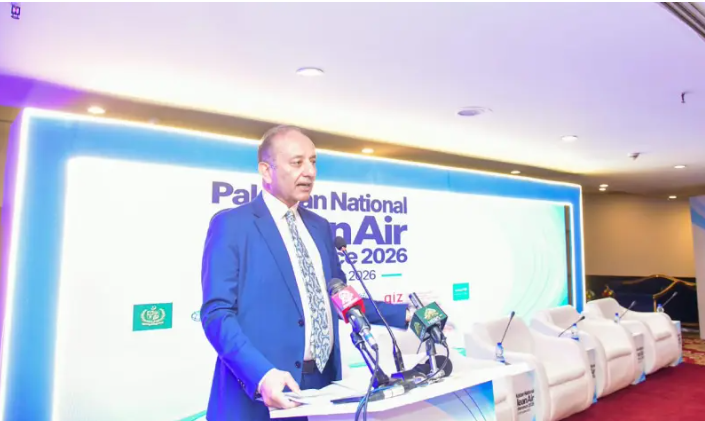
Addressing the Pakistan National Clean Air Conference 2026, Dr Malik highlighted the unequal impact of air pollution, noting that affluent households could afford air purifiers and other protective measures, while children, street vendors, farmers and daily-wage workers remained vulnerable to polluted air.
He estimated that air pollution costs Pakistan the equivalent of 6.5 per cent of its gross domestic product (GDP), largely due to illness, hospitalisation and the financial strain on affected families.
Highlighting the challenges faced by patients suffering from chronic obstructive pulmonary disease (COPD), Dr Malik pointed to their dependence on oxygen and medication. He also referred to a UNICEF report outlining the damaging effects of air pollution on children’s lung health and development.
The minister said schoolchildren travelling through polluted streets and people working outdoors faced persistent exposure to harmful air. Street vendors and farmers, he added, often had little choice but to continue working in polluted environments to sustain their livelihoods.
He also discussed the issue of crop-residue burning, stressing that efforts to curb the practice must consider farmers’ financial circumstances alongside environmental protection.
Describing air pollution as a result of human activities and policy decisions rather than an unavoidable natural disaster, Dr Malik called for practical measures to reduce industrial emissions and address other major sources of pollution.
Referring to the construction of the Karakoram Highway through challenging mountainous terrain and the efforts to control dengue, he said determined planning and action could help overcome complex problems.
He also cited Beijing and Shanghai as examples of cities that had made progress in tackling air pollution, while highlighting China’s growing role in exporting solar technology.
According to the minister, Pakistan could also improve air quality through effective policies, technological innovation and collaboration with international development partners.
Dr Malik said the government had decided to establish a proposed $10 million clean-air startup fund using its limited resources after seeking support from development partners. The fund’s board was expected to approve the initiative the following day.
He described the fund as an investment in the well-being of future generations rather than a grant or loan, adding that the government remained committed to pursuing clean-air initiatives even without external financial assistance.
Acknowledging the contributions of the World Bank, Asian Development Bank, UNICEF and German development agency GIZ to climate-related programmes, he emphasised that tackling air pollution required engineering expertise, effective policymaking and sustained financial investment.
The government would continue cooperating with international partners to reduce emissions, improve air quality and safeguard public health, he added.