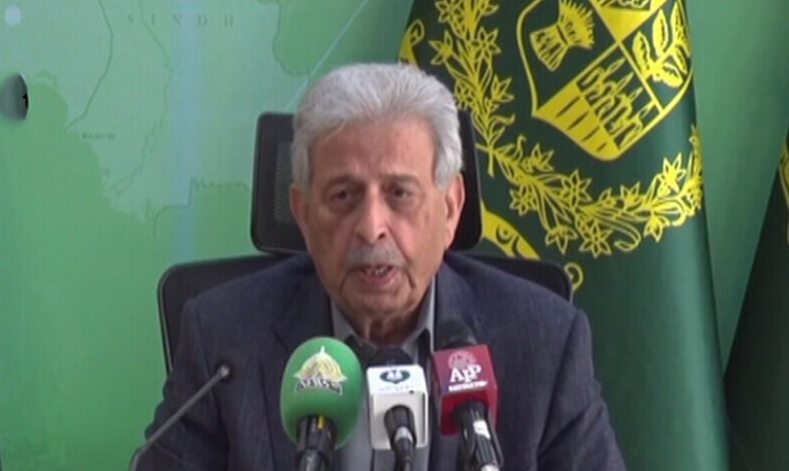
The federal government plans to maintain wheat reserves of up to six million tonnes to ensure an uninterrupted supply of the staple commodity and protect the country from potential market disruptions, the minister for national food security and research said.
Speaking at a press conference in Islamabad, the minister said the government was taking measures to maintain adequate stocks, stabilise domestic prices and prevent artificial shortages.
The announcement comes days after Prime Minister Shehbaz Sharif set the indicative wheat price for 2027 at Rs4,500 per 40 kilogrammes, marking an increase of Rs1,000 compared with the previous year.
The minister said the support price had been determined after extensive consultations with provincial governments. He added that the revised rate was intended to protect farmers’ interests, maintain stability in the domestic market and create opportunities for wheat exports next year.
He explained that imported wheat would also cost approximately Rs4,500 per 40kg, making domestic procurement a more practical option. The government, he said, would prioritise locally produced wheat rather than depend unnecessarily on imports.
Providing details of existing supplies, the minister disclosed that more than 1.3 million tonnes of wheat had been released to the provinces from stocks held by the Pakistan Agricultural Storage and Services Corporation (Passco).
He added that arrangements could be made to import up to 550,000 tonnes of wheat, depending on provincial requirements and market demand.
Addressing recent fluctuations in wheat prices, the minister described the increase as artificial and attributed it to manipulation by certain market participants. He maintained that sufficient stocks were available nationwide and expressed confidence that prices would stabilise within days.
He said the government was closely monitoring market conditions and would take appropriate action against artificial shortages, speculative activities and unjustified price hikes.
The minister further stated that the federal government, under Prime Minister Shehbaz Sharif, was pursuing measures to strengthen agricultural production, improve market regulation and ensure the availability of essential food commodities across the country.
Highlighting broader agricultural reforms, he said policies concerning seeds, olive cultivation and biotechnology had also been developed to modernise the sector, increase crop yields and encourage innovation.
He emphasised that access to quality seeds, the adoption of modern farming technologies and stronger regulatory systems were essential to improving agricultural productivity and lowering farmers’ production costs.
Describing agriculture as a key pillar of Pakistan’s economy, the minister said sustainable development in the sector was vital for economic stability, rural prosperity and long-term food security.
Meanwhile, Pakistan Kissan Ittehad President Khalid Mahmood Khokhar welcomed the government’s decision to set the indicative wheat price at Rs4,500 per 40kg. He expressed satisfaction with the consultation process and stressed the importance of offering farmers a predictable and reasonable return on their produce.
Last month, the farmers’ association had demanded a support price of Rs5,000 per 40kg, warning that delays in announcing agricultural policies could discourage farmers from cultivating wheat in the next season.
The association had also highlighted farmers’ difficulties in meeting production costs, particularly their limited ability to purchase and use balanced fertilisers when crop earnings fail to cover expenses.