The growing number of security agreements across the Gulf and wider Middle East is reshaping regional defence cooperation, but differing strategic priorities and levels of military commitment are creating a fragmented security landscape rather than a unified regional defence system.
Countries across the region are increasingly seeking additional partners, strengthening bilateral ties and exploring defence production initiatives. However, these arrangements vary significantly in their objectives, ranging from industrial cooperation and technology transfers to formal commitments to defend one another against armed attacks.
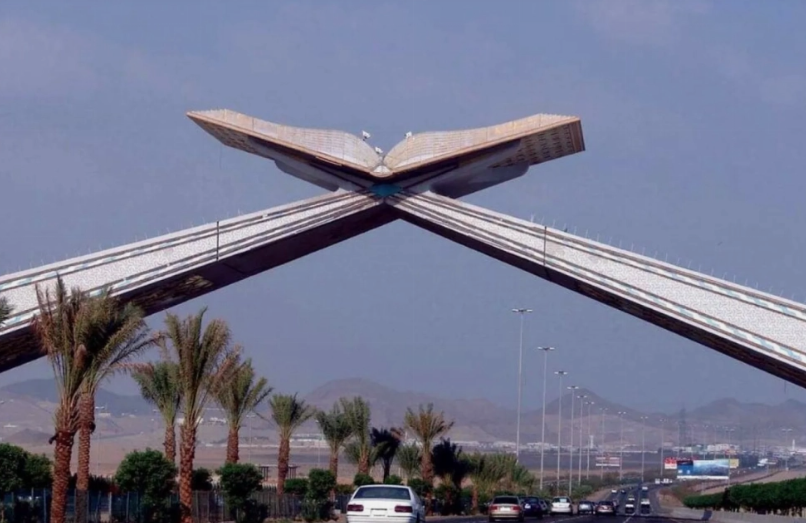
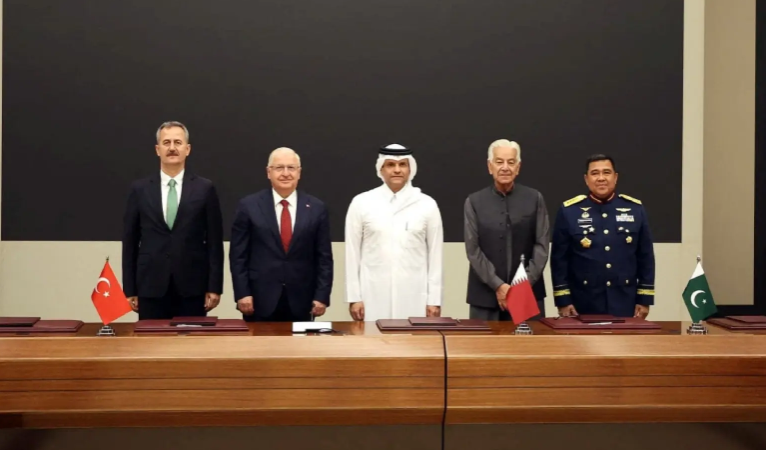
Two prominent examples illustrate this difference: the Badr framework, which focuses on defence manufacturing, research, technology transfer and training, and the Makkah Joint Defence Agreement, signed by Saudi Arabia, Pakistan and Turkiye in August. The latter stipulates that an armed attack against one participating country will be treated as an attack against all members.
The Makkah agreement builds on the bilateral Strategic Mutual Defence Agreement signed by Pakistan and Saudi Arabia in September 2025. While the Makkah framework establishes a collective defence commitment, Badr is primarily intended to strengthen the participating countries’ defence industries without imposing the same mutual military assistance obligations.
The expansion of these initiatives has accelerated following the US-Israel war with Iran, which highlighted concerns about the reliability of existing security arrangements during a major regional conflict. Gulf countries have increasingly considered whether their established partnerships can adequately protect their interests amid escalating geopolitical tensions.
Rather than abandoning the United States, whose military capabilities remain important to regional security, these countries are pursuing additional partnerships, investing in domestic defence production and adopting more selective military commitments.
The search for greater strategic autonomy also reflects longstanding limitations within the Gulf Cooperation Council’s (GCC) collective defence arrangements. Its Joint Defence Agreement, signed in 2000, stipulates that aggression against one member constitutes aggression against all. However, differences in military equipment, command structures and national priorities have hindered the development of an integrated regional force.
Challenges surrounding the operational effectiveness of the Peninsula Shield Force have further demonstrated the difficulties of translating collective defence commitments into a coordinated military response.
Newer security agreements partly reflect lessons drawn from this experience. Although regional states want closer defence cooperation, they remain reluctant to surrender their freedom to make independent strategic decisions. Consequently, an expanding network of partnerships is emerging that may complement existing arrangements without establishing a common regional defence structure.
Pakistan’s growing defence relationships with Gulf countries illustrate both the opportunities and the limitations of this emerging security landscape.
Islamabad’s partnership with Saudi Arabia has acquired a more formal military dimension through the bilateral agreement signed in 2025 and the subsequent Makkah framework. Cooperation with Turkiye also offers opportunities for closer military coordination and collaboration in defence manufacturing.
Egypt, another influential regional actor, has remained outside the Makkah framework while exploring defence cooperation with Saudi Arabia. This approach reflects Cairo’s interest in protecting its regional priorities without necessarily committing itself to a broader military confrontation.
Pakistan’s other Gulf partnerships remain more limited in scope. Kuwait has strengthened defence cooperation with Islamabad through the Protocol Agreement 2026, which covers military training, capacity building and border management.
Bahrain maintains close military links with Pakistan through the presence of Pakistani personnel in its National Guard and Coast Guard, alongside cooperation in training and logistics. However, these relationships do not include the same mutual defence obligations associated with Pakistan’s partnership with Saudi Arabia.
Relations between Pakistan and the United Arab Emirates have followed a more complex course amid political and financial differences, Islamabad’s closer alignment with Riyadh and Abu Dhabi’s expanding defence ties with India. Nevertheless, the two countries continue to cooperate in military training, personnel exchanges, counterterrorism and joint exercises.
Qatar has pursued defence industrial cooperation involving Pakistan and other partners, while Oman has maintained selective military ties with Pakistan and Turkiye. Muscat has also sought to preserve its broader security relationships and avoid binding mutual defence commitments, consistent with its emphasis on neutrality and diplomatic engagement, particularly regarding Iran and the Strait of Hormuz.
These varying arrangements make it difficult to characterise Pakistan’s expanding defence relationships as a single, unified regional alliance. The obligations attached to each partnership depend on the interests and strategic calculations of the countries involved.
For Islamabad, the challenge is to strengthen security cooperation while managing its military resources and avoiding involvement in conflicts that may not align with its national interests.
Saudi Arabia is strengthening its partnerships with Pakistan and Turkiye while continuing to rely on Western military capabilities, maintaining ties with Egypt and exploring defence industrial cooperation with China.
The UAE, which has not joined either the Makkah or Badr frameworks, has expanded security cooperation with Israel, including in air defence and counter-drone systems. Abu Dhabi also maintains longstanding security relationships with the United States, France and India.
Qatar is seeking to broaden its defence industrial partnerships through the Badr framework while continuing to host US forces at Al Udeid Air Base.
Bahrain remains closely aligned with Saudi Arabia and the GCC’s collective defence arrangements, whereas Kuwait continues to prioritise bilateral military cooperation with Pakistan alongside its substantial security relationship with Washington.
Oman, meanwhile, maintains a distinct approach centred on neutrality, mediation and diplomatic engagement rather than binding collective defence commitments.
These differences extend beyond the selection of military partners. Regional countries have varying assessments of the threat posed by Iran, the role of Israel in regional security and the extent to which they should commit themselves to defending one another.
As a result, emerging partnerships are being shaped not only by the desire to improve collective capabilities but also by the determination of individual states to preserve strategic flexibility.
The growing number of security agreements does not automatically translate into military independence. Many Gulf countries continue to rely heavily on Western-origin aircraft, air defence systems and other advanced military platforms that require specialised maintenance, software support, spare parts and replacement ammunition.
New partnerships may help diversify procurement sources and expand domestic production, but they cannot necessarily replace established suppliers on the required scale.
Introducing additional military systems can also complicate logistics and interoperability unless participating countries invest in common procedures, joint training and secure communication systems.
Defence industrial initiatives such as Badr will therefore depend on whether they produce funded manufacturing programmes, meaningful technology transfers and sustainable local capabilities.
Similarly, the credibility of mutual defence agreements will rest on the ability of their members to share intelligence, conduct joint planning and establish clear procedures for responding to military crises.
The number of agreements signed is consequently less significant than the actual military capabilities, operational coordination and obligations they create.
The expansion of regional defence partnerships may present a challenge to Washington, but it does not indicate that the United States is being replaced as a major security partner.
The US remains deeply embedded in the region through military bases, intelligence cooperation, arms sales and longstanding defence relationships.
However, the evolving arrangements could strengthen the bargaining position of regional governments in negotiations with established military suppliers. Gulf states are increasingly seeking domestic manufacturing, technology partnerships and greater control over maintenance and supply chains.
Rather than replacing the existing security system outright, the emerging partnerships appear to reflect an effort by regional countries to manage uncertainty arising from geopolitical developments and concerns about the future scope of US involvement.
The central challenge remains the gap between the desire for greater security and the willingness of individual states to reconcile their differences over regional threats and collective military obligations. Until these differences are addressed, the expanding network of partnerships is more likely to remain a collection of overlapping arrangements than a unified Gulf defence architecture.