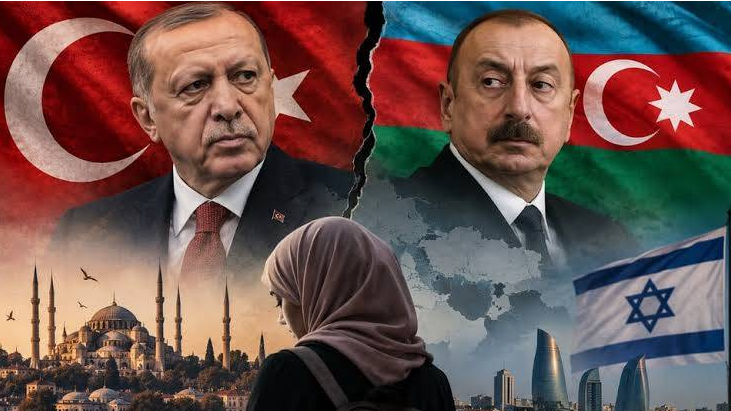
Public disagreements have emerged between Azerbaijan and Türkiye, two traditionally close allies whose relationship is often described by the slogan “One nation, two states”, reflecting their shared linguistic and cultural ties.
Although leaders of both countries have maintained relatively measured public positions, senior officials have exchanged increasingly sharp remarks over recent developments.
On Monday, Oktay Saral, chief adviser to Turkish President Recep Tayyip Erdogan, criticised Azerbaijan’s decision to revise school uniform regulations, which prohibit clothing that deviates from standard uniforms or conflicts with the secular principles of education.
“The headscarf is not an obstacle; it is a requirement of faith! The right to education cannot be sacrificed to any ideological imposition!” Saral wrote on X, urging Baku to reverse the decision.
The following day, Azerbaijan’s ruling Yeni Azerbaijan Party (YAP) issued a strongly worded response, condemning Saral and members of Erdogan’s Justice and Development Party (AKP) for what it described as “populist and irresponsible statements”.
The party also accused critics of conducting an increasingly aggressive and misleading campaign against Azerbaijan.
The exchange has exposed differences between Azerbaijan, one of the Muslim world’s more secular states, and Türkiye’s political leadership.
However, the dispute extends beyond religious clothing regulations, highlighting broader tensions over Azerbaijan’s expanding relationship with Israel and Ankara’s increasingly hostile stance towards the Israeli government.
Azerbaijan strengthened its ties with Israel following the 2020 war over Nagorno-Karabakh with Armenia. Israel supplied Baku with drones and other military equipment during the conflict.
Türkiye’s relations with Israel, meanwhile, have deteriorated significantly. Erdogan has accused Israel of committing genocide in Gaza, while Turkish authorities have continued to publicise high-level meetings with Hamas leaders. The Palestinian group’s October 2023 attack on Israel triggered Israel’s subsequent military campaign in Gaza.
Turkish pro-government media outlets have also weighed in on the dispute. The newspaper Yeni Safak criticised Azerbaijan’s school uniform regulations, portraying the move as a possible gesture towards Israel.
Azerbaijan’s ruling party rejected attempts to portray its relationship with Israel as exceptional or use those ties as grounds for political accusations against Baku.
The strong response reflects Azerbaijan’s growing confidence as a regional power increasingly willing to defend its policy choices, even when they differ from those of its closest ally.
According to independent political analyst Fuad Shahbazov, the evolving geopolitical landscape across Eurasia has allowed Azerbaijan to adopt a more pragmatic foreign policy and resist pressure from outside actors, including Türkiye.
Despite the public exchange, Turkish officials have signalled a preference for resolving the disagreement through diplomatic channels.
On Friday, Kursad Zorlu, deputy head of Türkiye’s AKP, said the two countries understood how to manage disputes “within the family”, in what appeared to be a call for restraint.
Turkish Foreign Minister Hakan Fidan also highlighted the enduring relationship between the two countries’ leaders during a regional summit in Baku on Thursday, acknowledging that their partnership had faced difficult tests.
Analysts believe the extensive strategic and economic links between Azerbaijan and Türkiye make a serious breakdown in relations unlikely.
Ivan Klyszcz of Estonia-based International Centre for Defence and Security (ICDS) told AFP that tensions with Moscow and the conflict involving Iran make it difficult for Azerbaijan to risk alienating an important regional partner.
He also emphasised the importance of energy cooperation, which predates the current disagreement and remains a major shared interest.
For Türkiye, Azerbaijan serves as a strategic gateway to Central Asia, a region that Ankara considers increasingly important to its geopolitical ambitions.
Despite having a population significantly smaller than Türkiye’s, Azerbaijan holds considerable strategic advantages through its energy resources and access to Central Asian markets.
Shahbazov said the future of the Baku-Ankara partnership would depend on Türkiye’s willingness to restore diplomatic engagement and manage the dispute quickly. He also noted that Azerbaijan’s energy resources and regional connections give it considerable leverage over its ally.
These advantages are particularly important for Türkiye as it seeks to strengthen its position as a major transit corridor connecting Europe and Asia.
Nevertheless, disagreements continue to emerge on other fronts.
On Friday, Azerbaijani authorities announced that they had issued an international arrest warrant for Celal Ciftci, a Turkish journalist working for the Sanliurfa Olay newspaper.
Prosecutors accused Ciftci of calling for a coup in Azerbaijan and promoting religious extremism, adding another point of friction between the two countries.