Jordan’s air force has carried out strikes against militant groups in Syria following a deadly attack on a church in southern Jordan, with officials saying several terrorist positions were destroyed and numerous suspected militants were killed or injured.
Syrian authorities reported civilian casualties from the air raids. Health officials in Daraa province said six people, including three children and a woman, were killed. Syria’s civil defence agency reported seven fatalities in total, with six deaths in Daraa and one in neighbouring Sweida province.
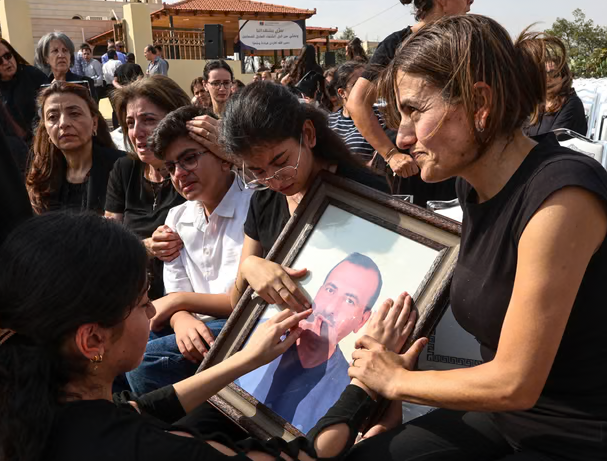
The strikes followed Friday’s attack on a funeral service at the Greek Orthodox St George’s Church in the village of Hammoud, in Jordan’s southern Karak governorate. Gunmen killed nine people during the gathering.
Karak has a significant Christian community. Christians account for an estimated two to three per cent of Jordan’s predominantly Muslim population.
Jordan’s Director of Public Security, Major General Abdullah al-Maaytah, identified three detained suspects on Monday as Hazza Zaidan Mohammed, Meshal Zaidan Mohammed and Ahmad Sami Hussein.
According to authorities, two of the suspects are brothers, while the third is related to them by marriage. Security forces tracked them to an abandoned house, where they had barricaded themselves and opened fire on officers.
Jordan’s state broadcaster Al-Mamlaka reported that one suspect was in critical condition. No security personnel were reported injured or killed during the operation.
Authorities also seized several weapons and a substantial quantity of ammunition from the suspects, according to the Public Security Directorate.
“This country must remain an oasis of security and stability,” Maaytah said, reaffirming that Jordan would not tolerate attempts to threaten its security.
Under Jordanian law, murder can carry the death penalty by hanging.
King Abdullah II said security forces had pursued the suspects and vowed that those responsible for terrorism would face justice.
In a statement posted on X, the king said the authorities would not allow individuals promoting extremist ideologies to undermine national unity.
The monarch had earlier visited victims injured in the church attack at a hospital, where he vowed a strong response against those responsible.
Interior Minister Mazen al-Faraya said the attackers were all Jordanian nationals and had been hiding in a building in a village near the scene of the incident. He added that there was no indication of contact or cooperation with foreign parties.
Government Communications Minister Mohammad al-Momani also warned that the authorities would respond firmly to anyone attempting to threaten Jordan’s security.
Attacks on places of worship are uncommon in Jordan. In 2016, an attack targeting a security centre and police patrols in Karak killed 10 people.
Following Friday’s church attack, Prime Minister Jafar Hassan announced three days of national mourning. Flags were ordered to be flown at half-mast at government offices and public institutions.
Eight of the nine victims were buried on Sunday near the church, with a large crowd attending the funeral under heavy security. The ninth victim, Mohammed al-Qasous, was laid to rest in southern Amman on Monday.