A series of figures from the 2026 US midterm elections highlights the scale of the Democratic Party’s victory, with record voter participation, unprecedented campaign spending and significant shifts among key voter groups contributing to the party’s strong performance.
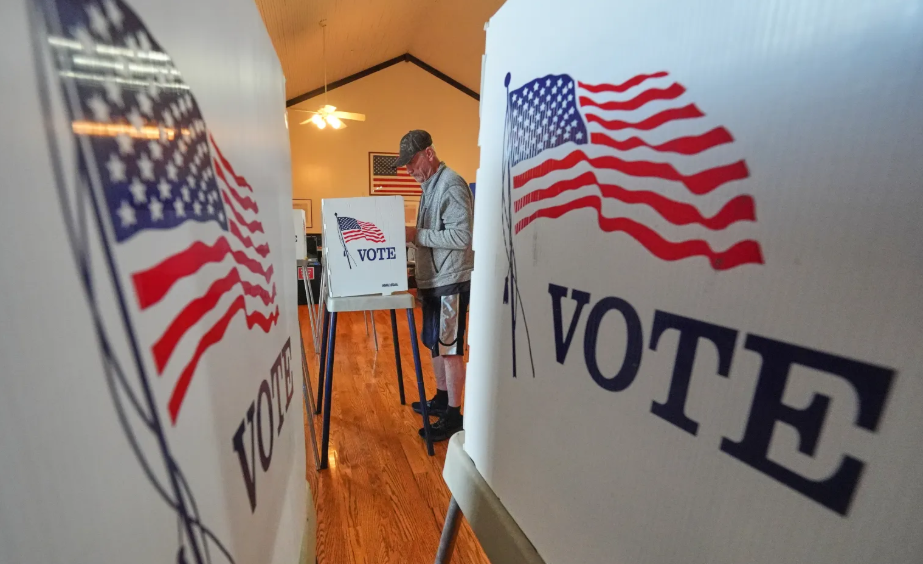
Although final turnout figures were not yet available, more than 61.7 million Americans had cast their ballots before Election Day, according to data from the University of Florida’s Election Lab. The figure marked a record for early voting in a US midterm election.
The high early turnout is considered to have benefited Democrats, whose supporters traditionally vote early in greater numbers than Republican voters.
Participation was particularly strong among African Americans, young voters and other demographic groups that generally favour Democratic candidates. Their increased turnout contributed to the party’s gains across major races, helping it secure control of both chambers of Congress.
Total spending during the 2026 midterm elections reached an unprecedented $11.9 billion, significantly exceeding the $8.9 billion recorded in 2022, according to OpenSecrets, a non-partisan organisation that tracks political spending in the United States.
Campaign fundraising and advertising expenditure increased substantially, driven in part by spending from outside political action committees. Such groups, including those backed by billionaire Elon Musk, spent approximately $360 million more in support of Republicans.
Democratic candidates, however, demonstrated strong fundraising capabilities of their own. Candidates contesting House and Senate seats spent a record $3.7 billion from their campaign funds, with Democrats spending around $800 million more than their Republican counterparts.
In Texas, Democratic Senate candidate James Talarico raised a record $145 million, far exceeding the $22 million collected by his Republican opponent, Ken Paxton, who relied heavily on outside groups to finance his campaign.
The election also delivered significant breakthroughs for Democrats in states where the party had struggled for decades.
In Kansas, Adam Hamilton defeated Republican incumbent Roger Marshall, marking the first Democratic Senate victory in the largely rural and conservative state since 1932. Hamilton, a pastor at a Methodist megachurch, had been registered as a Republican until recently.
Texas also witnessed a major political shift as Talarico secured an upset victory, giving Democrats their first Senate win in the state since 1988.
In South Carolina, Democrat Annie Andrews defeated Darline Graham, who had been appointed earlier in the year to occupy the seat left vacant following the death of her brother, Lindsey Graham. The result marked the first time since 1998 that a Democrat had won a Senate election in the state.
Exit polls indicated a significant shift among young men and Latino voters, two demographic groups that had played an important role in President Donald Trump’s electoral success.
Latino voters, who had supported Trump in the 2016 and 2024 presidential elections, appeared increasingly dissatisfied with his administration. Several voters had expressed frustration in recent weeks, saying they felt let down by the president.
The shift was reflected in election-day polling, which showed Latino voters backing Democratic candidates by 62 per cent to 35 per cent over Republicans.
Young voters also demonstrated strong support for Democrats. Exit polls indicated that voters aged 18 to 29, including both men and women, favoured Democratic candidates by a margin of 72 per cent to 25 per cent.
The figures represent a significant change from the 2024 presidential election, when younger voters were divided between Trump and Democratic candidate Kamala Harris.