
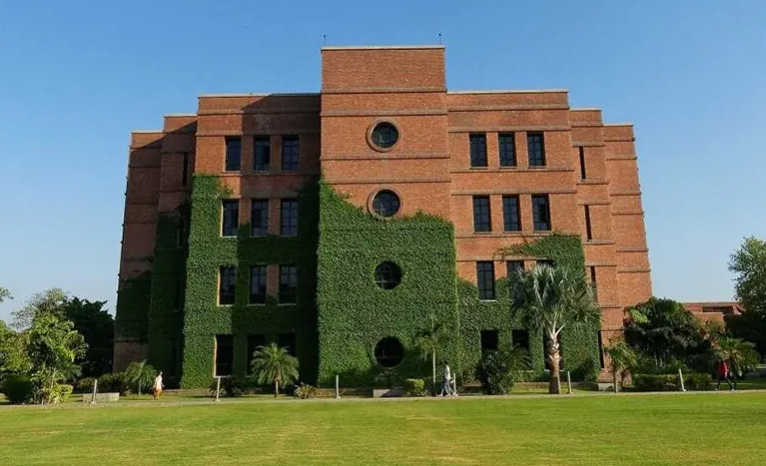
The Lahore University of Management Sciences (LUMS) has secured a major legal victory after the Lahore High Court ruled that property tax could not be imposed or recovered on its buildings for periods preceding a 2023 amendment to the Cantonments Act, 1924.
A division bench comprising Justice Hassan Nawaz Makhdoom and Justice Khalid Ishaq announced the verdict while allowing petitions filed by LUMS and the National Management Foundation (NMF), the non-profit organisation under which the university was established. The petitions challenged orders issued by the Director General of Military Lands and Cantonments, Rawalpindi.
LUMS has operated from its Lahore campus since 1993. However, the Cantonment Board first issued a property tax demand against the university in 2007.
The university challenged the levy, arguing that its educational buildings qualified for exemption under Section 99(2)(b) of the Cantonments Act, 1924. Its statutory appeal was dismissed in 2011, followed by the rejection of a revision petition in 2017.
In its petition, LUMS highlighted that it had more than 5,000 students enrolled across five schools and had provided approximately Rs13.3 billion in financial assistance since its establishment. It also maintained that it was recognised as a non-profit institution under the income tax framework.
The university argued that Section 99(2)(b), before its amendment in 2023, separately covered buildings used for educational purposes and public libraries. According to its interpretation, the conditions relating to public access and the absence of income applied to playgrounds and dharamsalas, rather than educational buildings.
LUMS further maintained that charging tuition fees or retaining a financial surplus did not automatically turn an educational institution into a commercial enterprise, provided its funds remained dedicated to educational objectives and were not distributed among founders, trustees, members or individuals controlling the institution.
Opposing the petitions, the respondents’ counsel defended the earlier decisions, arguing that the conditions concerning public access and income applied to the entire category of properties listed in the provision.
The counsel also referred to Section 64 of the Act, which provides for the valuation of educational buildings, and argued that LUMS generated substantial receipts through tuition fees and investments.
The respondents further alleged that the university’s use of certain buildings and halls for rental purposes amounted to commercial activity, making the properties liable to taxation.
Justice Khalid Ishaq, who authored the verdict, said the central question was how Section 99(2)(b) should be interpreted in its form before the 2023 amendment.
After examining the provision before and after the legislative change, the judge concluded that the amendment introduced a substantive change. The amended wording, he observed, could not be applied retrospectively to deny exemptions for assessment periods preceding the amendment.
The court held that collecting fees and retaining a surplus did not, by themselves, establish a commercial or profit-making purpose, provided the institution did not distribute funds among its promoters, trustees or controlling individuals.
The bench declared the 2011 and 2017 orders legally invalid and ruled that property tax demands relating to the period before the 2023 amendment could neither be sustained nor recovered.
Regarding the period following the 2023 amendment, the court clarified that the amended provision did not automatically make LUMS liable for property tax. Instead, it empowered the relevant Cantonment Board to decide whether an exemption should be granted, subject to the conditions specified in the law.
The bench directed that any future assessment must be supported by a reasoned order examining the actual use, income and public-access status of the particular buildings concerned.
It further ruled that the mere collection of tuition fees could not, on its own, be treated as evidence that a university was using its buildings for commercial purposes.