French President Emmanuel Macron has criticised foreign leaders for using the recent unrest in France to advance their political agendas, indirectly targeting US President Donald Trump and possibly Israeli Prime Minister Benjamin Netanyahu without naming either leader.
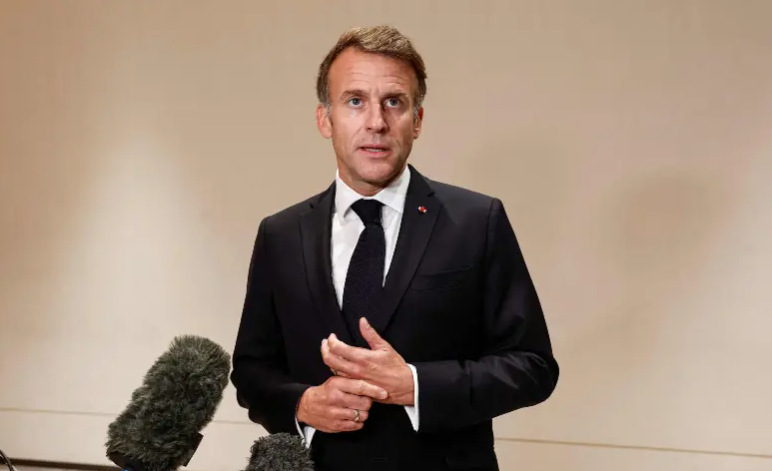
Speaking to reporters during a visit to Qatar, Macron suggested that leaders campaigning for elections were making irresponsible remarks about France’s situation for political benefit.
“Some people are campaigning at France’s expense — leaders who are in campaign mode, whether in this region or across the Atlantic,” Macron said in Doha.
His comments came as the French president and his government faced mounting pressure over a crisis that has damaged France’s international image and unsettled financial markets, six months before presidential elections to choose his successor.
The French government has acknowledged losing control during a wave of street violence that erupted last weekend, when masked youths clashed with police, looted businesses and vandalised public buildings.
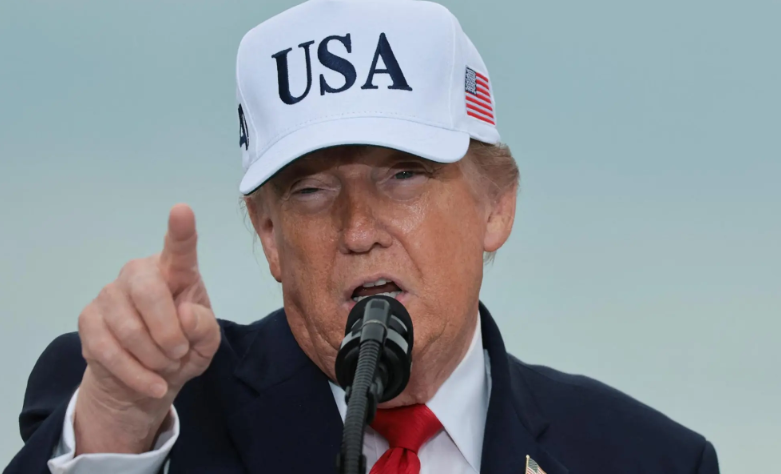
Trump has linked the unrest in France to migrants, jihadists and communists while campaigning for his Republican Party in the United States, reiterating his anti-immigration stance.
On Tuesday, Trump also praised French far-right leader Marine Le Pen, who shares several of his political positions. Opinion polls have placed Le Pen among the leading contenders in France’s upcoming presidential election.
Meanwhile, Netanyahu, who is also facing a challenging electoral contest, claimed on Tuesday that France was experiencing an “invasion of extremist Islam”.
Several analysts have rejected claims that migrants were driving the protests.
The unrest has overshadowed nationwide demonstrations against the rising cost of living, with more than half a million people taking to the streets on Saturday. The rallies followed four weeks of student protests that led to the closure of numerous schools across France.
Following some of the country’s worst rioting in years, the government has warned that further violence will not be tolerated ahead of another round of demonstrations scheduled for Saturday.
Authorities in Paris and several other cities imposed overnight curfews on Monday and Tuesday in areas considered vulnerable to protests, looting and vandalism.
Macron announced that he would chair a meeting with senior ministers and intelligence officials on Thursday to receive a detailed briefing on the previous weekend’s violence.
Prime Minister Sébastien Lecornu, who met with trade union leaders organising the demonstrations on Wednesday, has promised a substantial police deployment for fresh protests called by the Yellow Vest movement against rising inflation.
The crisis has heightened concerns about France’s economic stability, as investors remain wary of the country’s rising public debt and budget deficit.
France, the European Union’s second-largest economy after Germany, has witnessed increased pressure on its financial markets amid the political uncertainty.
Yields on French government benchmark 10-year bonds continued to climb, surpassing five per cent on Wednesday as investors demanded higher returns amid concerns over the country’s fiscal position. Rising bond yields generally indicate falling bond prices.
The Paris stock market also declined.
Credit rating agency Moody’s was expected to announce a decision on France’s sovereign debt rating on Friday, amid growing concerns over the country’s financial outlook.
France’s fragmented political landscape has also complicated efforts to secure parliamentary support for a cost-cutting budget that must be adopted before the end of the year.
An opinion poll conducted by Ifop following the unrest indicated that Le Pen could lead the first round of voting by a significant margin, with far-left politician Jean-Luc Mélenchon emerging as a potential rival in a runoff.
Meanwhile, neighbouring Italy and Belgium have also experienced smaller episodes of unrest. Italy’s government has ordered the deployment of 500 troops to Milan in an effort to curb street violence.
Macron rejected calls for a state of emergency, which would allow the military to reinforce police forces against rioters. He said existing measures, including curfews, provided authorities with sufficient tools to manage the situation.
Although partial curfews have helped ease tensions in Paris and other cities, they have disrupted late-night travel, particularly for commuters relying on urban rail services after 11pm local time.
One Paris commuter, identified only as Louis, described the disruption as unsettling but said the restrictions could be justified if they prevented further vandalism.
The Yellow Vest movement formally notified authorities on Wednesday of its plan to hold a march in Paris on Saturday, starting from Bastille Square. The group has also announced plans for further nationwide demonstrations on November 5.
Images of the violence have prompted several countries, including the United States, China and Germany, to issue travel advisories for their citizens visiting France.
The continuing unrest has placed Macron’s government under mounting political and economic pressure as it attempts to restore public order ahead of the presidential election campaign.