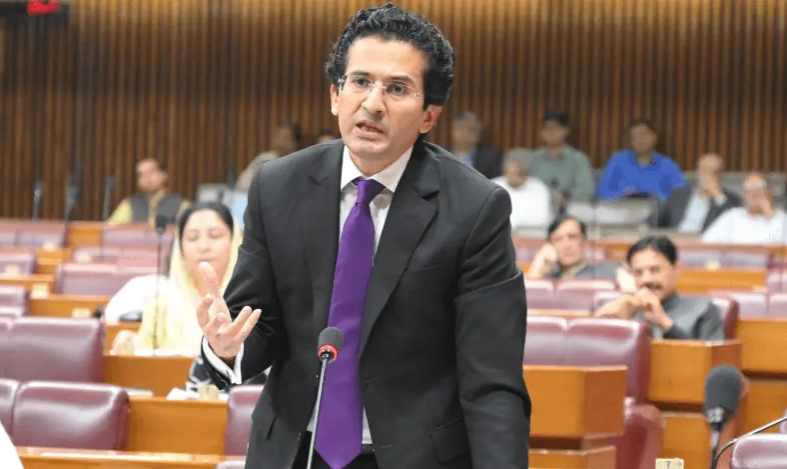
Federal Minister for Petroleum Ali Pervez Malik has attributed the sharp increase in liquefied petroleum gas (LPG) prices to the closure of the Pakistan-Iran border, saying the government is exploring alternative supply routes, including imports by sea.
Speaking in the National Assembly in response to a calling-attention notice, Malik said the government was working to secure fuel supplies from other international sources amid disruptions to existing supply channels.
The notice, jointly submitted by Aliya Kamran, Shahida Begum and Naeema Kishwar Khan, highlighted the steep rise in LPG prices, describing the situation as a matter of urgent public concern.
During the discussion, Aliya Kamran said LPG was being sold at between Rs700 and Rs800 per kilogram in remote and northern parts of the country, despite the Oil and Gas Regulatory Authority’s (Ogra) official price of Rs280 per kilogram.
LPG is a major source of energy in remote areas where piped natural gas is unavailable. Demand for the fuel typically increases during winter, often putting additional pressure on prices.
Naeema Kishwar Khan questioned the government’s decision to suspend cross-border trade with Iran. In response, the petroleum minister said that around 50 to 60 per cent of LPG supplies had been imported from Iran, while the remaining requirement was met through Qatar.
He added that LPG supplies from Qatar had also been disrupted amid the conflict between the United States and Iran, further complicating the country’s supply situation.
Malik said the government was reviewing the existing supply mechanism and considering options to obtain gas from alternative international sources.
The minister acknowledged that Ogra had fixed the official LPG price at Rs280 per kilogram. However, concerns were raised that the fuel was frequently being sold above the notified rate, even when supplies were sufficient.