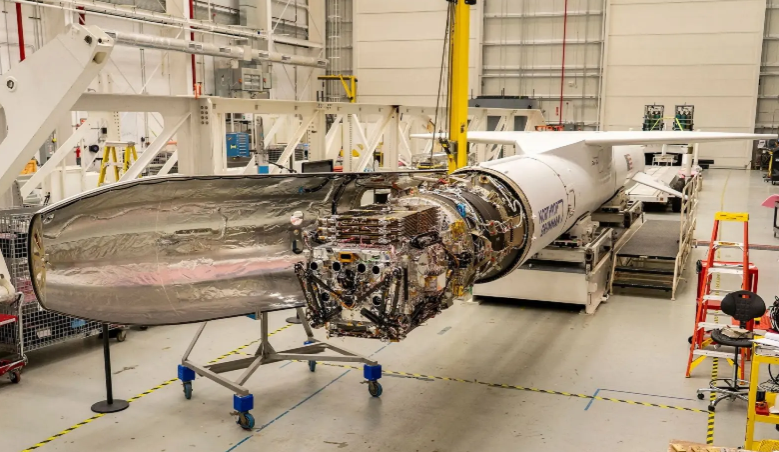
NASA’s Neil Gehrels Swift Observatory, weighing approximately 3,200 pounds (1,452 kilograms), is expected to re-enter Earth’s atmosphere and burn up after more than two decades in orbit. The spacecraft is projected to come down over a tropical region, with any surviving debris considered unlikely to pose a threat to populated areas.
According to NASA, the US Space Force has estimated the probability of the falling satellite causing harm to anyone on Earth at one in 2,100.
NASA initially projected the re-entry at around 3:30am EST (0830 GMT). However, estimates from other organisations and tracking specialists suggested different timings. The Aerospace Corporation projected a re-entry window beginning at 5:19am EST, with a margin of two hours on either side.
Astrophysicist Jonathan McDowell, an honorary professor at Durham University’s Space Research Centre, cited updated US Space Force data indicating that the spacecraft was most likely to re-enter at approximately 7:45am EST.
He explained that the satellite was travelling in a relatively circular orbit close to the upper atmosphere, with the precise moment of its break-up depending on when atmospheric friction generated enough heat.
The $500 million Swift Observatory, launched in 2004, was designed as a multi-wavelength space telescope to study gamma-ray bursts and other powerful cosmic events.
Equipped with three telescopes, the observatory has spent more than two decades examining some of the universe’s most energetic phenomena.
The spacecraft, which does not have its own propulsion system, has gradually descended towards Earth’s atmosphere over recent months. It travels around the planet at approximately 17,000 miles per hour (27,359 kilometres per hour).
Astronomers had hoped to extend the mission by moving the satellite into a higher and more sustainable orbit.
In July, NASA partnered with Arizona-based startup Katalyst to launch a specially designed spacecraft named LINK. The mission aimed to approach Swift, attach itself to the observatory and push it into a higher orbit.
However, LINK began spinning uncontrollably shortly after reaching space. Mission managers abandoned the rescue attempt by mid-August, leaving Swift on its expected path towards atmospheric re-entry.
The unsuccessful operation was the first US mission of its kind and attracted considerable attention because of its potential implications for future satellite servicing and orbital maintenance.
The technology was also considered strategically important amid growing competition between the United States and China in space. Its potential applications included military space operations, making the mission an important test of emerging orbital grappling capabilities.
Katalyst described the project as a major technological undertaking, saying the LINK spacecraft had been designed, developed and tested within an unprecedented nine-month period under a $30 million NASA contract.
Swift was originally launched to investigate gamma-ray bursts, among the most powerful explosions known in the universe. These bursts of high-energy radiation originate from distant galaxies and provide scientists with valuable insights into extreme cosmic events.
Although the observatory was initially designed for a primary mission lasting just two years, it continued operating far beyond its original lifespan.
Over the years, its observations expanded to include a wide range of astronomical objects and phenomena, including galaxies powered by supermassive black holes, stars producing intense X-ray flares, and comets and asteroids travelling through the solar system.
After 22 years of scientific observations, the observatory is now approaching the end of its mission as it prepares for its final descent into Earth’s atmosphere.