Fresh attacks targeting Saudi Arabia and commercial vessels in the Gulf heightened tensions across the Middle East on Sunday, as damage to a key Saudi oil pipeline and advances by Yemen’s Houthis raised concerns over further disruptions to global energy supplies.
Oil traders expect crude prices to rise when markets reopen on Monday following the weekend developments, which have put supplies from Saudi Arabia, the world’s largest oil exporter, at greater risk.
The British maritime security agency UKMTO said a vessel travelling through the Strait of Hormuz was struck by a projectile, triggering a fire and forcing its crew to evacuate. Iran separately reported that one person was killed and four crew members were injured after an Iranian commercial vessel was hit off its coast.
In southern Saudi Arabia, state media released footage showing damage to homes and a mosque following what it described as a cross-border attack by the Houthis in Jazan province. The Houthis also claimed to have targeted a Saudi military base in a nearby province.
Saudi Arabia’s southern cities have faced repeated security alerts since last week. Drone strikes on Friday damaged the country’s roughly 1,200-kilometre East-West pipeline, a critical route for transporting Saudi oil to the Red Sea while bypassing the Strait of Hormuz.
On the same day, Houthi forces claimed control of Perim Island, located in the Bab el-Mandeb Strait, a strategic waterway connecting the Red Sea with the Gulf of Aden.
Crude prices climbed above $100 a barrel last week for the first time since July, while US diesel prices reached a record high of more than $6.20 per gallon on Sunday, adding to concerns over the impact of the conflict on consumers.
Oil traders and Saudi buyers said Riyadh has enough crude stored at its Red Sea port of Yanbu to sustain exports for only around five to seven days if the damaged pipeline remains out of service.
If the pipeline stays offline beyond that period, up to 4 per cent of global oil supplies could be put at risk, in addition to the millions of barrels already affected by disruptions to shipping through the Strait of Hormuz.
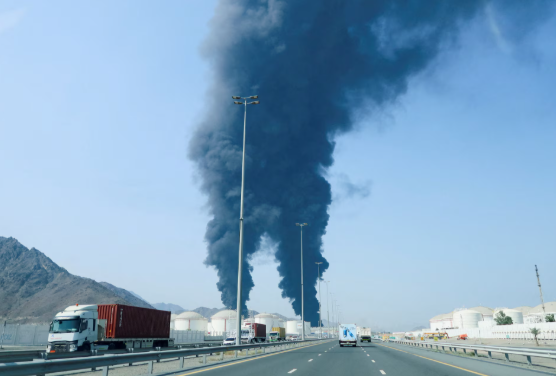
Saudi authorities have not disclosed the full extent of the pipeline damage or provided a timeline for repairs. Estimates from sources have varied from several days to several weeks, while satellite imagery has shown large plumes of smoke rising from areas along the pipeline.
Meanwhile, the United States has yet to achieve the objectives President Donald Trump announced for “Operation Epic Fury”, launched in February. The operation was aimed at curbing Iran’s nuclear programme, limiting its ability to attack neighbouring countries and creating conditions for political change inside Iran.
Iran, despite suffering military and economic losses during the conflict, has sought to strengthen its position and could potentially gain greater leverage over maritime traffic through the Strait of Hormuz.