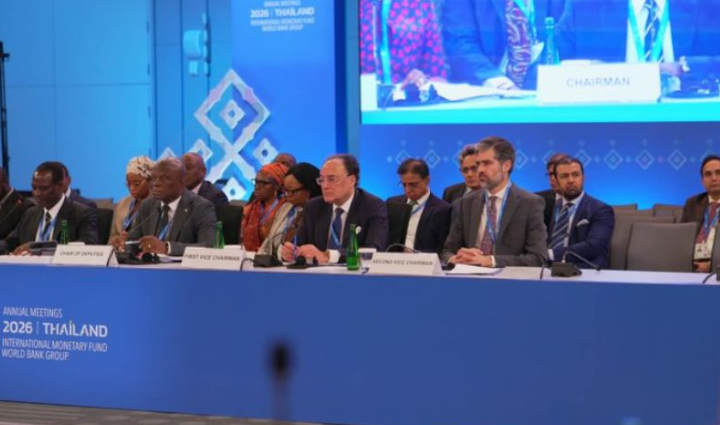
Pakistan has assumed the chairmanship of the Group of 24 (G-24), a coalition of developing countries, reaffirming its commitment to promoting a more equitable international financial system and strengthening the economic interests of developing nations.
The intergovernmental group, established in 1971, brings together developing countries to coordinate their positions on international monetary and financial matters.
Finance Minister Muhammad Aurangzeb described Pakistan’s new role as a significant responsibility, emphasising the need for stronger international cooperation, effective multilateral institutions and collective efforts to address climate-related challenges, development financing shortages and global economic fragmentation.
He said the future of developing economies was central to the global economic system, highlighting their potential to drive investment, innovation, entrepreneurship and sustainable economic growth.
Outlining Pakistan’s priorities during its G-24 chairmanship, Aurangzeb identified three key areas: placing development at the centre of global economic policymaking, strengthening multilateral cooperation and promoting a development-focused international financial structure.
On the first priority, the finance minister stressed that macroeconomic stability was essential for encouraging investment, improving productivity, generating employment and ensuring shared prosperity.
He said developing and low-income countries should be supported in moving beyond recurring economic crises towards sustainable and long-term growth.
Regarding multilateral cooperation, Aurangzeb said Pakistan would advocate for fairer global governance, greater representation in international decision-making and reforms to ensure that institutions established under the Bretton Woods framework respond more effectively to the changing needs of their member countries.
He further said Pakistan would prioritise accessible and timely development financing, sustainable debt management solutions, stronger global financial safety mechanisms, climate resilience and increased mobilisation of public and private investment.
Aurangzeb stressed that developing economies should not be held back by an international financial system that has yet to adapt fully to changing global economic realities.
He also highlighted Pakistan’s experience in economic stabilisation, structural reforms and resilience, saying the country would use these lessons to support efforts aimed at aligning financial stability with long-term development objectives.
The finance minister added that Pakistan’s chairmanship would follow the G-24’s established principles of consultation, consensus and collective advocacy. The country would work closely with members from Africa, Asia, Latin America and the Caribbean, alongside the International Monetary Fund (IMF), World Bank and other international partners.
Aurangzeb acknowledged Nigeria’s contribution as the outgoing chair and expressed his commitment to building on the group’s achievements.
He emphasised that the success of collective leadership should be measured through practical improvements in development outcomes rather than statements and commitments alone.
The minister reiterated Pakistan’s resolve to strengthen the G-24’s influence in international economic discussions and translate its collective priorities into meaningful progress.
President Asif Ali Zardari welcomed Pakistan’s appointment as chair of the G-24 and congratulated Finance Minister Muhammad Aurangzeb and his team on the achievement.
In a statement, the president described the development as an important opportunity for Pakistan to strengthen the representation of developing countries in global economic affairs.
He said the chairmanship would enable Pakistan to contribute to discussions on development financing, climate-related challenges and international financial cooperation.
Prime Minister Shehbaz Sharif also welcomed the development, describing it as a significant diplomatic milestone for the country.
He expressed hope that Pakistan’s leadership of the group would help advance reforms in the global financial system, promote fair financial assistance for addressing climate change and expand sustainable development opportunities for emerging economies.
The prime minister also appreciated the finance minister and his team for their diplomatic efforts, professional capabilities and continued engagement with international financial institutions.
He further praised Pakistan’s participation in the recent annual meetings of the World Bank and IMF, saying the country’s engagement had strengthened its position in economic discussions involving developing nations.