Pakistan has urged the international community to ensure equitable and non-discriminatory access to civilian nuclear technology, stressing that restrictions on peaceful nuclear cooperation should not deprive developing countries of technologies essential for economic growth and sustainable development.
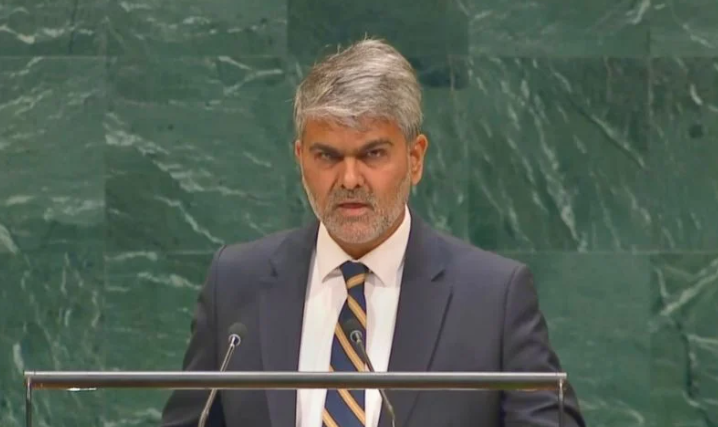
The statement was delivered by Pakistan’s Counsellor Syed Atif Raza during a plenary discussion on the International Atomic Energy Agency (IAEA) report at the United Nations General Assembly.
Raza reaffirmed Pakistan’s support for the IAEA’s mandate, emphasising its role in promoting the safe, secure and sustainable use of nuclear science and technology for peaceful purposes. He called for a balanced implementation of the agency’s responsibilities, including the promotion of civilian nuclear applications.
The Pakistani representative said concerns regarding compliance with international obligations should be addressed through the IAEA’s established technical mechanisms, without politicisation and in accordance with the rights and responsibilities of the parties concerned.
He also highlighted Pakistan’s longstanding partnership with the IAEA, noting that the country had been a member of the agency since its establishment in 1957. Pakistan has contributed to and benefited from the IAEA’s Technical Cooperation Programme through training, technical assistance and capacity-building initiatives.
According to Raza, Pakistan’s cooperation with the agency covers several sectors, including nuclear safety, healthcare, water management, agriculture and human resource development.
Pakistan operates six nuclear power reactors, all under IAEA safeguards. These facilities contribute approximately 20 per cent of the country’s energy needs and account for around one-third of its low-carbon electricity generation, he said.
Raza stressed that removing barriers to civilian nuclear cooperation was essential to ensuring equal opportunities for all countries to benefit from peaceful nuclear technology, provided they meet their international legal obligations.
Meanwhile, IAEA Director General Rafael Grossi told the General Assembly that global nuclear power capacity could more than triple by 2060. He attributed the projected expansion to increasing electrification, the growing energy requirements of artificial intelligence data centres and technology companies’ demand for reliable, low-carbon electricity.
Grossi said more than 400 nuclear reactors operating across over 30 countries generated approximately 10 per cent of global electricity in 2025 and one-quarter of the world’s low-carbon electricity. More than 60 additional reactors are currently under construction, while projections for future nuclear power capacity have increased significantly.
He described nuclear energy as an increasingly important component of national energy security, particularly as countries seek dependable electricity supplies to support emerging technologies and rising consumption.
The IAEA chief also addressed international nuclear security challenges, including Iran’s nuclear programme. He said the technical groundwork for a diplomatic agreement had been completed and urged the parties involved to resume negotiations.
Grossi emphasised that the IAEA’s verification role was indispensable to any sustainable agreement and called for inspectors to return to Iran promptly to carry out their monitoring responsibilities.
Raza, meanwhile, warned that destabilising rhetoric and actions could intensify tensions and increase the risk of conflict. He called for outstanding disputes to be resolved through diplomacy to safeguard regional and international peace and security.
Grossi also expressed concern over North Korea’s expanding nuclear programme, which operates without IAEA oversight. He said the situation underscored the consequences of disregarding United Nations Security Council resolutions prohibiting the development of nuclear weapons.
On Ukraine, the IAEA chief described conditions at the Zaporizhzhia nuclear power plant, Europe’s largest, as precarious. He cited repeated disruptions to external electricity supplies, limited backup diesel reserves and military activity that continues to pose risks to the facility and its personnel.