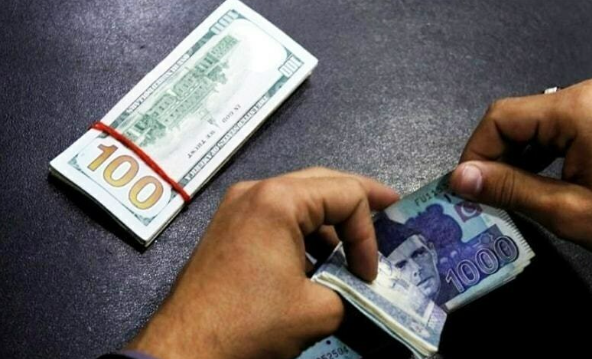
Pakistan’s current account deficit (CAD) narrowed significantly in August, signalling an improvement in the country’s external balance, although a widening trade gap and higher oil prices continue to pose risks to the external sector.
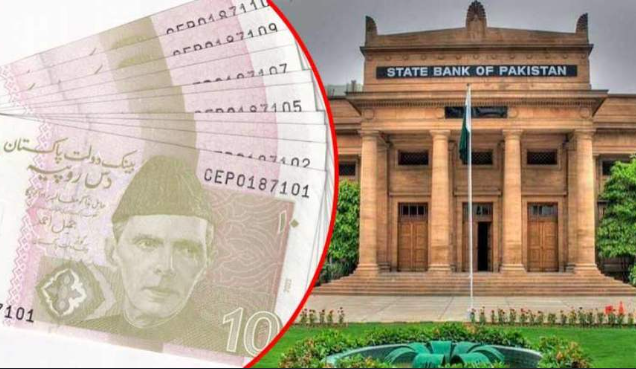
The State Bank of Pakistan (SBP) reported on Wednesday that the current account deficit stood at $98 million in August, compared with $342m during the same month of the previous fiscal year.
The August deficit was also substantially lower than the $445m recorded in July, the first month of FY27. If the trend continues, Pakistan could record a current account surplus in September.
During the first two months of FY27, the current account deficit stood at $543m, compared with $853m during the corresponding period of the previous fiscal year.
However, developments in the region remain a concern for Pakistan as higher global oil prices could increase pressure on developing economies.
Oil prices have climbed above $100 per barrel and could rise further amid the ongoing regional conflict. Saudi Arabia, the Middle East’s largest oil exporter, is also facing challenges in exporting crude due to disruptions affecting regional shipping routes.
The increase in oil prices has added to Pakistan’s external-sector pressures. The government is considering measures to manage the impact, including possible targeted lockdowns. Private-sector representatives said they had not been consulted before the policy was announced.
Pakistan’s trade deficit widened by 18.1 per cent year-on-year during July-August of FY27 to $7.12 billion, mainly due to imports increasing at a faster pace than exports.
SBP data showed goods exports reached $5.445bn during the first two months of FY27, up from $5.238bn in the same period last year. Imports rose to $11.635bn from $10.449bn.
The deficit in the services trade balance, meanwhile, improved during the period, falling to $562m from $753m a year earlier.
Prime Minister Shehbaz Sharif has directed government departments to remove obstacles to exports, underscoring the importance of improving the country’s external position.
The economic slowdown in Gulf countries has also raised concerns for millions of Pakistanis working in the region, which accounts for around 55 per cent of the country’s total remittance inflows.
So far, remittances have remained higher during the first two months of the current fiscal year, helping Pakistan maintain stability in its balance of payments, exchange rate and foreign exchange reserves.
Foreign direct investment (FDI) inflows increased by 80.5 per cent year-on-year to $315.9 million in August, compared with $175m in the same month last year, according to SBP data.
Although overall FDI remains relatively modest, inflows increased despite regional uncertainty and concerns over the potential economic impact of the Gulf conflict.
FDI rose 24 per cent to $494.5m during the first two months of FY27, compared with $398.6m during the corresponding period last year.
China remained the largest source of investment in August, contributing $113m, followed by Canada with $50m and the UAE with $48m.
Chinese investment during the first two months of FY27 reached $176m, compared with $120.7m in the same period a year earlier.