More than 20 countries have introduced or announced measures to limit children’s access to social media as governments seek to address concerns over the impact of online platforms on minors.
At least seven countries already have restrictions in place or are preparing to implement measures targeting children below the age of 15 or 16.
Australia became the first country to impose a nationwide social media ban on children under 16 at the end of 2025. However, data released in August indicated that many teenagers had found ways to bypass the restrictions.
California has also introduced tighter rules aimed at protecting minors from potentially harmful online features.
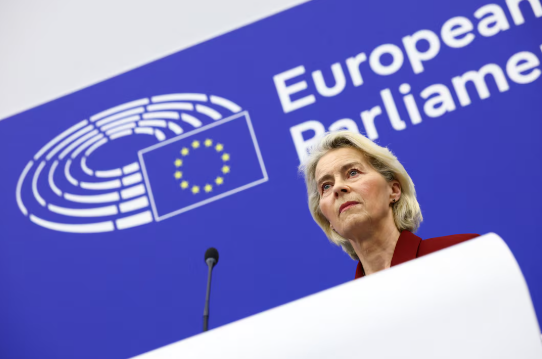
Under plans announced on Wednesday by European Commission President Ursula von der Leyen in the European Parliament, the European Union is considering restricting social media access for younger children while allowing limited and supervised use until the age of 15.
The proposals come after months of discussions over measures to protect children from platform features designed to encourage prolonged engagement.
Australia’s ban on social media access for under-16s came into effect in December 2025, although reports suggest significant numbers of teenagers have circumvented the restrictions.
Brazil began implementing measures in March requiring social media platforms to link accounts belonging to users under 16 to their parents’ accounts and verify users’ ages.
China has progressively tightened restrictions on minors’ use of online platforms since 2019. Initial measures focused on time limits and curfews for online gaming, while similar restrictions were extended to social media and streaming services in 2023.
Indonesia has also banned social media access for users under 16 since March.
Malaysia introduced legislation in June restricting access to major social media platforms for users under 16.
Turkiye passed legislation in April barring children under 15 from social media, with the law expected to take effect towards the end of 2026.
The United Arab Emirates announced last month that it would ban social media access for children under 15, with implementation expected within about a year.
In the United States, California Governor Gavin Newsom signed around a dozen laws on September 10 aimed at strengthening online protections for children. One of the measures prohibits platforms from offering certain addictive features to users under 16 and is scheduled to take effect in early 2027.
Within the 27-member European Union, Greece announced in April that it plans to restrict social media access for children under 15 from January 2027.
Germany is also considering tighter controls. Chancellor Friedrich Merz has backed restrictions or a possible ban for children, while an expert commission has proposed either gradual age-based restrictions or rules targeting specific platforms.
Austria and Slovenia are preparing legislation that would restrict social media access for children under 14 and 15, respectively.
Sweden is also debating restrictions after a government commission proposed banning social media access for under-15s by early 2028.
In Denmark, the government announced in October 2025 that it would propose restrictions on access to “several social media platforms” for children under 15.
Ireland has warned that it could introduce national legislation if no EU-wide agreement is reached.
Outside the EU, Norway’s government plans to introduce legislation by the end of the year to restrict social media access for users under 16.
The United Kingdom is also considering a ban on social media for under-16s by early 2027 under plans announced by former prime minister Keir Starmer.