Saudi Arabia’s King Khalid International Airport in Riyadh came under renewed attack on Sunday, a day after a deadly strike killed and injured dozens of people, marking a significant escalation in the ongoing conflict involving Yemen’s Houthi movement.
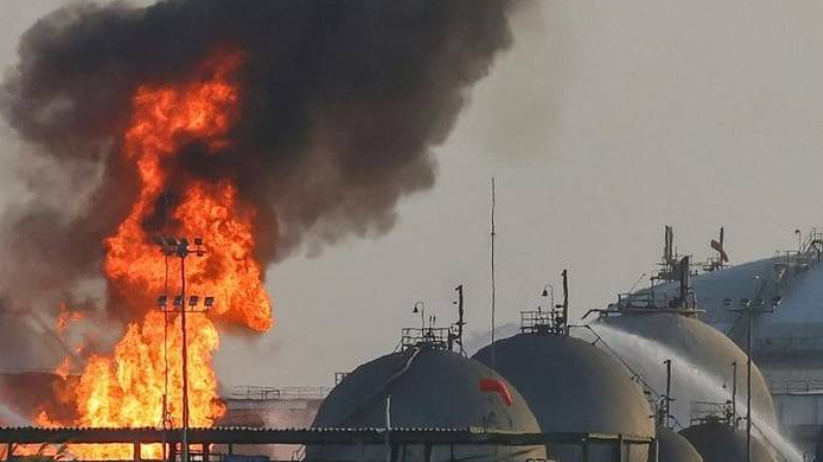
The Houthis claimed responsibility for multiple attacks carried out over the preceding 24 hours, including strikes targeting Riyadh airport, Dammam airport and two facilities operated by Saudi state oil giant Aramco. The group also threatened further attacks on the kingdom’s major transportation hubs, describing them as potential targets for its military operations.
Houthi military spokesperson Yahya Saree said the group had conducted four operations using ballistic missiles, cruise missiles and drones.
Hours later, the Saudi-led coalition fighting the Houthis confirmed that a projectile had struck King Khalid International Airport, triggering a fire. Air defence systems also intercepted a missile in the surrounding area, according to the coalition.
Saudi aviation authorities reported an unspecified number of injuries and said an assessment was underway to determine the extent of the damage. Residents and journalists in Riyadh reported hearing several loud explosions across the capital.
A resident of the Al-Aarid neighbourhood in northern Riyadh described the impact of the blasts, saying the house shook and birds reacted to the noise.
The latest incident follows a series of Houthi attacks targeting Riyadh airport and other strategic locations across Saudi Arabia, the world’s largest crude oil exporter.
Despite Saudi Arabia’s substantial investment in its defence capabilities, some Houthi attacks have continued to penetrate its air defences.
Thomas Juneau, a security analyst at the University of Ottawa, said Saudi Arabia’s vast territory made it difficult to intercept every incoming missile and drone, even though its air defence systems had successfully neutralised some attacks.
The Saudi-led coalition condemned Saturday’s strike as a serious violation of international law, describing it as a potential war crime and promising a strong response.
Meanwhile, Houthi media reported that Saudi forces carried out two airstrikes in the Sanaa governorate, which remains under Houthi control.
The deadly attack prompted condemnation from the United Nations and several international leaders. US President Donald Trump said Washington was considering joining Saudi military operations against the Houthis.
Israeli Prime Minister Benjamin Netanyahu also condemned the attack, despite the absence of diplomatic relations between Israel and Saudi Arabia.
Saudi aviation authorities reported that Saturday’s attack killed citizens from several countries, including Saudi Arabia, Bangladesh, the United States, Egypt, Jordan, Syria, Palestine and Sudan. Hundreds of people were reported injured.
India’s embassy in Saudi Arabia also confirmed that an Indian national who had been wounded in the previous day’s attack died on Sunday.
A Western diplomat based in Riyadh suggested that the official injury figures might not account for every casualty, particularly people who sustained minor injuries.
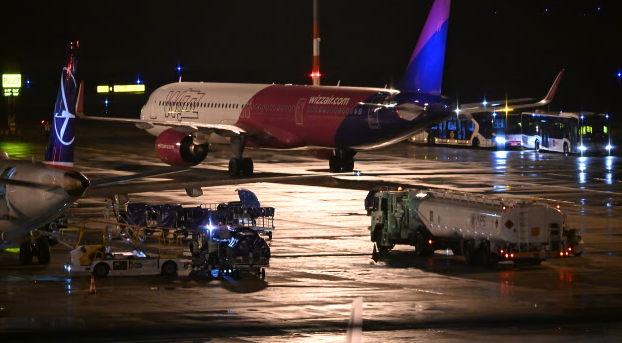
Airport operations remained suspended on Sunday following the attack, according to aviation sources. Flight-tracking service Flightradar24 reported that the closure had been extended until 21:00 GMT on Sunday, equivalent to 2am Pakistan time on Monday.
Another aviation source said operations had been halted until further notice. Damage to radar and communications equipment was reported, while airport authorities were expected to assess the condition of the runways before resuming services.
Witnesses described scenes of panic following Saturday’s strike, with passengers fleeing affected areas and injured people being carried to safety.
A Riyadh resident told international media that people from Terminal 3 were running towards others for assistance, with some suffering severe injuries and covered in blood.
Medical authorities reportedly activated an emergency call-up of doctors to respond to the large number of casualties.
The United States, Canada, Germany and Spain issued warnings advising their citizens to avoid Riyadh airport. Australia also urged its nationals in Saudi Arabia to remain indoors and take shelter.
The Houthis separately claimed to have targeted Dammam airport, where the airport’s website showed delays affecting numerous arriving and departing flights.
The latest airport strike comes as Saudi Arabia prepares for a busy period of international events, tourism and entertainment activities.
October also marks the beginning of a busier season for Umrah pilgrimage, when millions of Muslims from around the world travel to Makkah.
The attacks have raised concerns about aviation security and potential disruptions to international travel in the kingdom.
Saudi Arabia has led a military coalition supporting Yemen’s internationally recognised government since 2015. Its campaign has included efforts to control Yemeni airspace and restrict access to Sanaa airport, which is under Houthi control.
According to Juneau, the Houthis are seeking to change the strategic balance by imposing similar disruptions on Saudi Arabia in response to restrictions affecting their own territory.
The latest escalation comes as Saudi-backed Yemeni government forces reportedly advanced in a counter-offensive against Houthi fighters near the Bab al-Mandab Strait, a strategically important shipping route connecting the Red Sea with the Gulf of Aden.
Military sources said the government forces had launched operations in the area, while the Houthis claimed to have repelled the advance.
The competing claims could not be independently verified amid rapidly changing conditions on the ground and limited access for journalists.