Pakistan’s economic debate largely focuses on measurable indicators, while one of the country’s most significant productive sectors remains largely overlooked because its work is unpaid.
Every morning, long before offices open and markets become active, millions of Pakistanis are already engaged in productive work. Farmers and livestock owners begin their day early, while others help run family farms, shops, workshops and small businesses without receiving wages.
At the same time, millions perform unpaid household tasks, including cooking, cleaning, childcare, caring for elderly relatives, collecting water and looking after livestock. Despite their economic value, much of this work remains outside Pakistan’s official economic statistics.
The country’s economic debate largely focuses on GDP growth, exports, investment and employment. While these indicators are important, they primarily capture paid and formally recognised economic activity, leaving a significant share of unpaid labour largely unaccounted for.
Pakistan’s unpaid economy broadly consists of two forms of work: unpaid market labour and unpaid non-market household work.
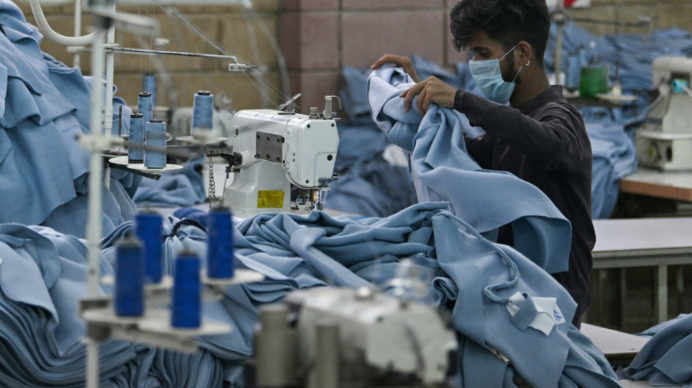
Unpaid market labour includes people working in family businesses, farms, livestock operations, shops and workshops without receiving direct wages. According to the 2024 Labour Force Survey (LFS), around 5.9 million men and 8.8 million women are engaged in unpaid market work. Nearly half of working women contribute to family economic activities without pay.
The second category covers unpaid household work performed for families rather than for the market. The LFS identifies 14 such activities, including cooking, cleaning, childcare, elderly care, water collection and livestock management.
A study by the Pakistan Institute of Development Economics (PIDE) found that although about three-quarters of working-age women remain outside formal economic activity, 76 per cent perform unpaid domestic work each week. Women spend significantly more time than men on such tasks 2.1 times more on care work and nine times more on cooking, cleaning and household management.
When unpaid market and domestic work are combined, nearly 78pc of women are involved in productive activity, challenging the perception that women who are outside formal employment are not working.
The findings also highlight a major factor behind Pakistan’s low female labour-force participation despite rising levels of education. Marriage, childcare and household responsibilities often leave women with limited time and flexibility to enter paid employment.
Experts argue that overlooking unpaid labour carries economic costs. Family businesses dependent on unpaid workers can be excluded from productivity policies, while childcare, water supply, transport and rural infrastructure are often treated solely as social welfare measures rather than investments that can improve labour participation and productivity.
Pakistan could address the gap by incorporating unpaid work into satellite national accounts and improving labour statistics to identify unpaid family workers more accurately. Policies providing affordable childcare, reliable water access, better rural infrastructure and flexible employment opportunities could also reduce the burden of unpaid care work and enable more women to participate in paid employment.
The central issue is not whether unpaid work has economic value, but whether it is properly measured. Millions of Pakistanis contribute to production without receiving wages, making their contribution statistically invisible rather than economically irrelevant.
Recognising and measuring this hidden economy would give policymakers a more complete picture of Pakistan’s productive capacity and help shape more effective labour, productivity and economic-growth policies.