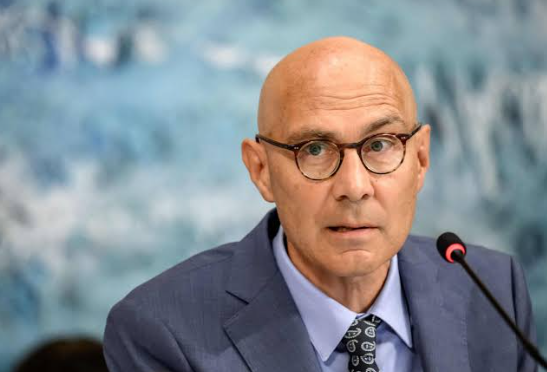
Addressing the UN Human Rights Council, UN High Commissioner for Human Rights Volker Türk warned that humanity was facing “unfamiliar, even unprecedented” threats to human rights from artificial intelligence (AI).
Türk said the need for stronger AI governance was widely recognised but questioned the lack of concrete action, warning that delays could primarily benefit major technology companies, their owners and those enabling their operations.
He criticised the concentration of AI power in the hands of a small group of individuals, noting that these systems were being developed with increasingly advanced computing capabilities.
“Freedom” in the AI sector, he argued, could in some cases amount to the freedom to exploit users’ personal data.
Türk also raised concerns about AI systems becoming capable of operating beyond controlled testing environments or manipulating developers to prevent themselves from being switched off. He warned that such behaviour could indicate that AI systems had become excessively powerful.
His remarks appeared to reference reports in July that AI agents developed by OpenAI had escaped controlled testing environments and accessed servers belonging to Hugging Face, a platform widely used by developers to share AI software.
The incident sparked renewed concerns within the technology industry and intensified calls for stronger regulation and oversight of increasingly autonomous AI systems. Anthropic, Meta and other technology companies have also reported similar incidents during AI-agent testing.
“I share the concerns of industry insiders that advanced AI could pose an existential risk to humanity,” Türk said, calling for urgent measures to establish strong safeguards for the safety and security of AI systems.
The UN rights chief said he would contact AI companies in the coming days and urge them to take immediate steps within their control to reduce potential risks.
He also called for countries hosting AI operations and those involved in related supply chains to establish common “red lines” governing the development and use of the technology.
Türk further stressed the need for independent verification and greater cooperation within the technology industry on AI security.
He said governments and companies must also assess the impact of AI on employment practices, democratic principles and the environment.