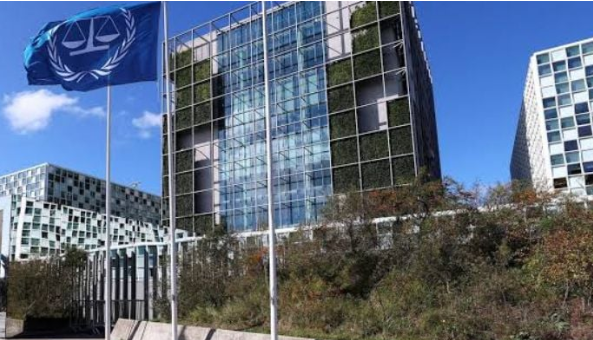
The United States has imposed sanctions on the International Criminal Court (ICC), intensifying the Trump administration’s campaign against the Hague-based tribunal on the same day South African jurist Navi Pillay was awarded the Nobel Peace Prize.
Pillay, 85, previously headed the tribunal responsible for prosecuting those involved in the Rwandan genocide, served on the ICC and later led a United Nations commission that accused Israel of committing genocide in Gaza.
US Secretary of State Marco Rubio announced that Washington would prohibit transactions with what he described as a “rogue court”, further escalating tensions between the Trump administration and the international judicial body.
“Either the ICC will end its threats, or we will end the ICC,” Rubio said in a statement, accusing the court of seeking to expand its authority at the expense of US sovereignty.
Rubio did not refer to Pillay or the Nobel Peace Prize in his announcement. Instead, he said the sanctions were intended to protect US security personnel and elected officials from prosecution by a court that the United States has never joined.
“President Trump will never allow the International Criminal Court to prosecute Americans,” Rubio said, adding that the measures would restrict the court’s resources and undermine its ability to operate.
Rubio said the United States had spent more than a year communicating the “basic gestures of good faith” it expected from the ICC. He added that Washington had delayed imposing the latest sanctions in the hope that the court or its member states would address American concerns.
However, he claimed that no “meaningful steps” had been taken to resolve the dispute.
The US secretary of state also urged Washington’s allies that are members of the court, particularly those relying on American military personnel for their defence, to take action to limit its authority.
He warned that the United States would continue efforts to dismantle the institution “brick by brick” if its concerns remained unresolved.
The Trump administration has previously imposed sanctions on individual ICC officials, including the court’s prosecutor and several judges, over investigations involving the United States and Israel. Neither country is a member of the tribunal.
Last month, Trump also urged ICC member states to withdraw from the institution, describing it as “out of control” and a “rogue institution”.
The ICC rejected the latest US measures, describing them as an attack on international law and warning that their implications would be judged by future generations.
In a statement, the court called the sanctions “an assault on the rule of law and on the very foundations of the international legal order”, adding that they challenged the principle that no one should stand above the law.
The tribunal said the measures appeared intended to intimidate its staff and disrupt its work but vowed to continue operating independently.
“The Court will continue to fully discharge its mandate, with independence and impartiality, acting only on the basis of the law and the evidence, for the sake of the countless victims of grave crimes,” ICC President Tomoko Akane said, according to the statement.
The court also urged its 125 member states to support the institution during the dispute, stressing that its future depended partly on the countries that had established it.
“Future generations, and above all the victims of mass atrocities, will ask how we responded when an institution created to protect them came under attack,” the statement said.