The World Bank has rated progress towards achieving the development objectives of Khyber Pakhtunkhwa’s Hydropower and Renewable Energy Development Project as “moderately unsatisfactory”, despite describing its overall implementation progress as “moderately satisfactory”.
According to the Washington-based lender’s latest assessment, the project’s overall risk level remains “substantial”. Several financing components were approved in 2020, with the project initially scheduled for completion by November 30, 2027.
The World Bank identified moderate risks associated with political and governance conditions, as well as technical design. However, it highlighted substantial risks linked to macroeconomic conditions, institutional capacity, financial management and accountability, and environmental and social considerations.
The bank assesses project risks using a four-tier scale: high, substantial, moderate and low. These ratings reflect the likelihood of risks materialising and the potential severity of their consequences.
The World Bank also said the project had undergone restructuring at the government’s request to bring its scope and financing arrangements in line with implementation priorities.
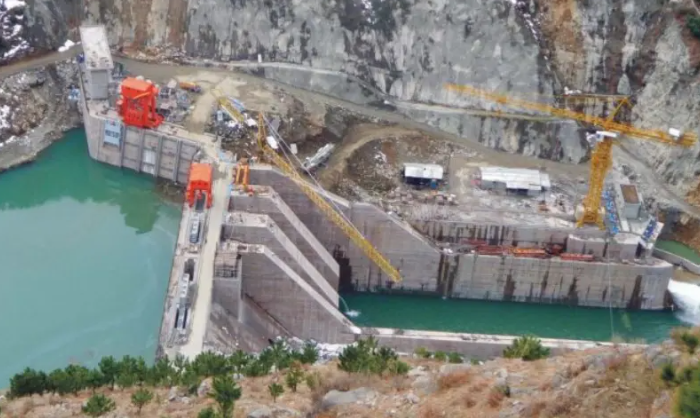
Despite concerns over development objectives, the lender reported improvements in implementation, particularly under the Gabral-Kalam Hydropower Project. Key developments include the commencement of civil works, progress on land acquisition and advancement in the procurement of electromechanical equipment.
The bank said the project would continue to prioritise timely execution, effective contract management and compliance with environmental and social safeguards.
The original financing package, approved on September 24, 2020, included approximately $594 million for hydropower development and renewable energy, $59 million for environmental and social management, and $55 million for institutional strengthening and project implementation support. An additional $15 million was allocated for financial charges associated with the bank loan.
The $200 million market-based loan became effective in September 2020, but disbursements have reached only $3.95 million so far, representing less than two per cent of the total amount.
Similarly, the concessional development loan of $240 million became effective around the same time, with approximately $34 million disbursed to date, equivalent to around 14 per cent of the financing.
The KP Hydropower and Renewable Energy Development Project was designed to strengthen institutional capacity and support the province in harnessing its substantial renewable energy resources.
The programme comprises four components, including public-sector investment in hydropower and renewable energy infrastructure. A key initiative is the 88-megawatt Gabral-Kalam Hydropower Plant, a run-of-river facility expected to generate approximately 339 gigawatt-hours of electricity annually.
Another component focuses on developing a cascade of hydropower projects across river basins, including the proposed 157-megawatt Madyan Hydropower Project and other facilities along the Swat River and surrounding basins.
The Swat River Basin has an estimated hydropower potential exceeding 2,000 megawatts. Several potential projects have already been identified, while further sites require assessment.
The programme also envisages installing floating or land-based solar photovoltaic systems on hydropower assets to expand renewable energy generation and improve the use of available infrastructure.