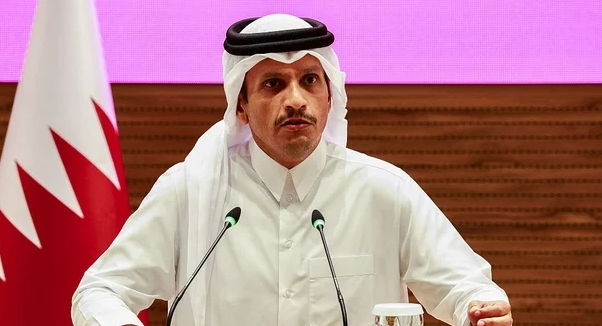
Qatar, a Gulf neighbour of Iran and a US ally, has been acting as a key back-channel mediator between the two sides and played a direct role in securing the June ceasefire that temporarily halted hostilities.
The Qatari prime minister’s visit to Tehran comes as the conflict approaches its sixth month, with fighting largely subdued but diplomatic efforts yet to produce a breakthrough. Iran and the United States remain divided over the Strait of Hormuz, a vital global oil shipping route that Tehran has used as leverage.
The visit follows similar diplomatic efforts by Pakistan’s Chief of Defence Forces Field Marshal Asim Munir and Omani Foreign Minister Badr Al-Busaidi.
The Islamabad Memorandum of Understanding later collapsed, partly due to disagreements over the narrow waterway between Iran and Oman. Before the conflict began on February 28, the strait carried around one-fifth of global oil supplies.
Fighting has largely subsided, with the US military’s Central Command reporting no attacks on Iran for nearly a month. Washington, meanwhile, appears to be increasing economic pressure on Tehran through plans to tighten sanctions and restrict Iran’s access to trading partners.
Oil flows through the Strait of Hormuz have also declined sharply. Ship-tracking data showed that only around 5 million barrels per day passed through the waterway on Monday, compared with roughly 20 million barrels per day before the war.
Iran’s Revolutionary Guards said on Wednesday that Tehran and Muscat had reached an understanding on the management of the waterway and its revenues. However, a senior Iranian official later said negotiations were still under way and details had yet to be finalised.
Despite heavy aerial bombardment during the conflict, which significantly weakened Iran’s conventional military capabilities, Tehran retains sufficient missile and drone capacity to threaten Gulf states hosting US military bases and disrupt tanker traffic through the strait.
The UN’s International Maritime Organization has recorded 70 incidents in the Strait of Hormuz since February 28, resulting in the deaths of 19 seafarers.
Thousands of people, mainly in Iran and Lebanon, have been killed since the United States and Israel launched attacks on Iran. Washington and Israel said their objectives included preventing Iran from developing a nuclear weapon, supporting efforts to remove its government and degrading its missile capabilities.
Qatari Prime Minister Sheikh Mohammed bin Abdulrahman Al Thani will discuss Qatar’s mediation efforts and wider regional developments during his visit to Tehran on Thursday, Iranian Foreign Ministry spokesperson Esmaeil Baghaei said.
Qatar’s Foreign Ministry said Sheikh Mohammed would also raise the issue of freedom of navigation in the Strait of Hormuz and call for a return to the situation that existed before February 28. He is also expected to discuss measures to reduce tensions and create conditions for renewed dialogue.
The waterway was open to international navigation before the war, but Iran has since sought to retain control over the strait, using it as both political leverage and a source of revenue. Tehran has proposed charging ships a commission, a move opposed by Washington.
A senior Iranian source said an agreement between Iran and Oman on the Strait of Hormuz had not yet been finalised, despite earlier claims by an Islamic Revolutionary Guard Corps spokesperson that the two countries had reached mutually acceptable arrangements on managing the waterway and its revenues.
The IRGC official said the strait would remain closed until the United States met Tehran’s conditions under the interim ceasefire agreement signed in June. These conditions include lifting the US blockade on Iranian ports, providing compensation and removing sanctions.
Iran and Oman have been holding intermittent talks for weeks on regulating traffic through the strait. Meanwhile, Tehran and Washington have each sought to exert control over the strategic waterway through separate blockades.