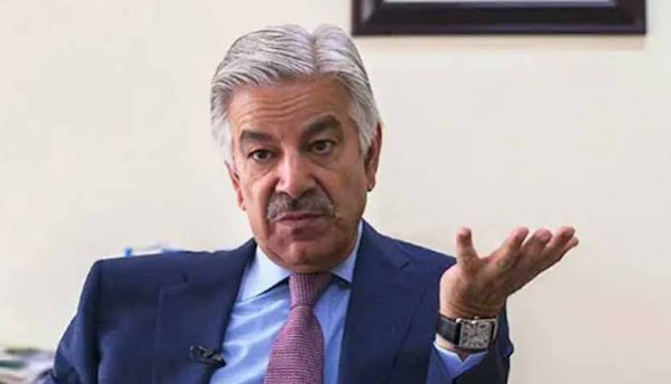
Federal Defence Minister Khawaja Asif has said that devolution of power is “inevitable”, while accusing the Pakistan Peoples Party (PPP) of adopting contradictory positions on the creation of new provinces.
In a post on X late Friday, Asif said the PPP appeared to support the idea of a Saraiki province in Punjab while showing a different position when proposals for multiple provinces or administrative units beyond the existing four were discussed.
He also referred to the recent controversy over the “Sindhudesh movement”, saying he saw “something else” behind what he described as the PPP’s “dual policy”. Asif added that he would discuss the matter in greater detail “when the time comes”.
Emphasising the principle of devolution, Asif said Pakistanis were “first and foremost” citizens of the country and argued that the 18th Amendment had established devolution as a constitutional principle that had not been properly implemented.
He said the concentration of power had rendered the existing system outdated and needed to be addressed.
“Provinces or administrative units, whatever label you want to apply,” Asif said, suggesting that the country’s 36 divisions could be used as a basis for a new administrative structure or that another administrative-geographical framework could be developed.
His remarks came as the PPP, a key ally of the PML-N-led coalition government, has sought Prime Minister Shehbaz Sharif’s position on the ongoing debate over the creation of new provinces.
The PPP has previously maintained that any move to create additional federating units must follow the constitutional procedure. However, the Sindh Assembly, under the PPP-led provincial government, recently passed a resolution opposing any further division of the country’s four existing provinces.
The debate over new provinces has intensified in political circles over the past few months, although the government has not officially announced any specific proposal or plan. Several ruling-party leaders and federal cabinet members have, however, expressed support for the creation of additional administrative units in different forums.
Media reports have cited proposals ranging from eight to as many as 30 provinces, but no formal plan has been presented.
PPP Parliamentarians Secretary General Nayyar Hussain Bokhari told Dawn on Friday that Prime Minister Shehbaz Sharif should clarify his position on the matter.
Bokhari said that if the government was serious about increasing the number of provinces, the issue should first be taken up by the federal cabinet. He added that the prime minister would then need to consult political parties and other stakeholders before proceeding.
Recalling the constitutional process, Bokhari said political parties had held extensive consultations during the drafting of the 1973 Constitution, while discussions preceding the passage of the 18th Amendment continued for more than a year.
He stressed that the consent of the provinces would be essential for creating new federating units. Such a move would also require a constitutional amendment approved by a two-thirds majority in both the National Assembly and Senate.
The PML-N-led government currently relies on PPP support for its two-thirds majority in the National Assembly, meaning the government would not be able to pursue the proposal without the PPP’s backing.
On the issue of local governments, Bokhari said any changes would also have to comply with the Constitution, particularly Article 140-A, which requires provinces to establish local government systems.
Meanwhile, PML-N leader and Adviser to the Prime Minister on Political Affairs Rana Sanaullah reiterated on Friday that no preparations were currently under way to create new provinces.
Speaking to a private television channel, Sanaullah said no bill or resolution concerning the creation of new provinces had been introduced in parliament.
He said political parties would first need to reach consensus through consultations before any such legislation could be brought before parliament.
Sanaullah also said there was currently no discussion regarding the division of any of the existing provinces.