Defence Minister Khawaja Asif and Interior Minister Mohsin Naqvi have clarified that a recent meeting involving Pakistan and other regional countries in Tehran was not related to defence matters, responding to criticism from Jamiat Ulema-i-Islam-Fazl (JUI-F) chief Maulana Fazlur Rehman.
Asif said his participation was therefore unnecessary, while Naqvi explained that he had attended the meeting on the prime minister’s instructions to help address the ongoing regional crisis.
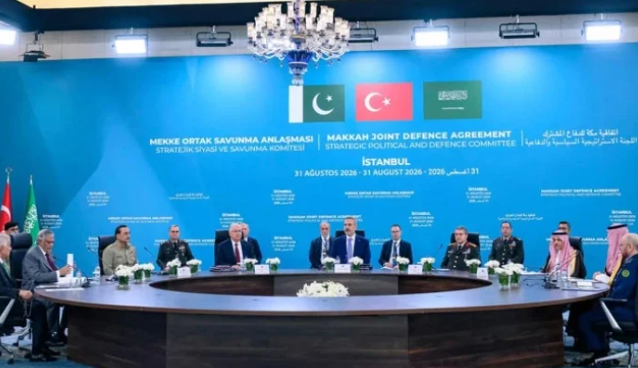
The meeting brought together senior officials from Iran and countries associated with the Makkah Defence Alliance. Pakistan was represented by Chief of Defence Forces and Chief of Army Staff Field Marshal Asim Munir, while Saudi Defence Minister Prince Khalid bin Salman and Turkish intelligence chief Ibrahim Kalin also attended.
Iranian participants included President Masoud Pezeshkian, Supreme National Security Council Secretary Mohsen Rezaei and Foreign Minister Abbas Araghchi.
According to reports, the participants agreed to continue dialogue to strengthen cooperation among the four regional countries, particularly on regional peace and security.
Addressing the National Assembly on Wednesday, Fazl referred to the Tehran meeting and questioned why the defence minister was not participating in a gathering that he believed was connected to a developing defence arrangement.
“A defence pact is taking shape in Iran, a meeting is under way (there), and the defence minister is sitting here,” he remarked.
Amid laughter and desk-thumping in the House, the JUI-F chief also questioned the presence of Interior Minister Naqvi at the meeting.
Taking a swipe at Asif, Fazl repeated a phrase previously used by the defence minister against the PTI: “Koi sharam hoti hai, koi haya hoti hai” (have some shame, show some modesty).
Responding in the National Assembly on Thursday, Asif rejected the suggestion that a new defence pact was being negotiated in Tehran. He said the discussions were not focused on Pakistan’s defence or matters falling under the Defence Ministry’s jurisdiction.
Asif said Field Marshal Munir had assumed a role in promoting peace and dialogue in the region following last year’s military confrontation between Pakistan and India.
He noted that Pakistan had subsequently signed two defence-related agreements: the Makkah Defence Pact and the Badr Memorandum of Understanding.
“I was involved in those pacts as I am the defence minister,” Asif said, adding that the Tehran meeting did not fall within his ministry’s mandate.
He described the army chief’s participation as part of Pakistan’s diplomatic efforts to prevent further escalation and create opportunities for dialogue.
According to Iranian Foreign Ministry spokesman Esmaeil Baghaei, Munir had proposed holding the Tehran meeting during an earlier visit.
Asif maintained that his presence was not required at the gathering and credited the military leadership with helping avert a potential confrontation.
He also referred to tensions involving Saudi Arabia and Yemen, suggesting that diplomatic discussions could produce progress towards peace in the coming days or weeks.
The defence minister urged Fazl to exercise restraint and described his criticism as misplaced. He added that Pakistan’s diplomatic role and the efforts of its military leadership deserved recognition regardless of political differences.
In the Senate, Naqvi also responded to Fazl’s criticism, prompting heated exchanges with JUI-F Senator Kamran Murtaza.
The interior minister said he had travelled to Tehran alongside Field Marshal Munir to help manage the ongoing crisis involving Iran.
Addressing the question of why Asif had not attended, Naqvi said the JUI-F chief had misunderstood the purpose of the visit.
Naqvi explained that he had travelled on the prime minister’s specific instructions and had been assigned responsibilities connected to the regional crisis and the war involving Iran.
He also criticised JUI-F leaders over statements they had allegedly made about state institutions several months earlier. Senator Murtaza objected to his remarks, after which the presiding officer ordered the word “disgusting” to be removed from the official record.
During his address, Asif accused Fazl of inconsistency in his political positions and questioned his criticism of government officials.
The defence minister challenged the JUI-F chief to reflect on his own political record, arguing that he had held positions of influence under successive governments while publicly advocating certain political principles.
Asif also referred to Fazl’s previous offer to mediate between Pakistan and Afghanistan, questioning the basis of his involvement in the diplomatic process. He alleged that the initiative was intended to strengthen Fazl’s political standing and increase his leverage with the government.
The defence minister noted that Fazl had worked with different political administrations, served as opposition leader and headed the parliamentary Kashmir Committee. He argued that the position required strong credentials because of its role in raising Kashmir-related issues internationally.
Asif also criticised Fazl for targeting the government’s diplomatic efforts, saying Pakistan’s achievements abroad had not received sufficient acknowledgment.
Using a phrase commonly displayed on Pakistani buses and trucks, the defence minister advised the JUI-F chief: “Mehnat kar, hasad na kar” (work hard and do not envy others).
He further alleged that Fazl’s criticism was linked to political grievances following the imposition of emergency measures and governor’s rule in Khyber Pakhtunkhwa. Asif suggested that the JUI-F chief’s response might have been different had his party received a greater role in the province’s governance.
Asif described Fazl’s address as an attempt to pressure the government and cautioned against pursuing political influence through compromises.
He argued that remaining in opposition would be more dignified than joining political arrangements in which parties sought to exert pressure for personal or political gain.
The defence minister urged senior parliamentarians to promote politics based on constitutional principles and national security rather than personal rivalries.
He called on lawmakers to work collectively towards resolving the country’s challenges instead of allowing political disagreements to descend into confrontation.