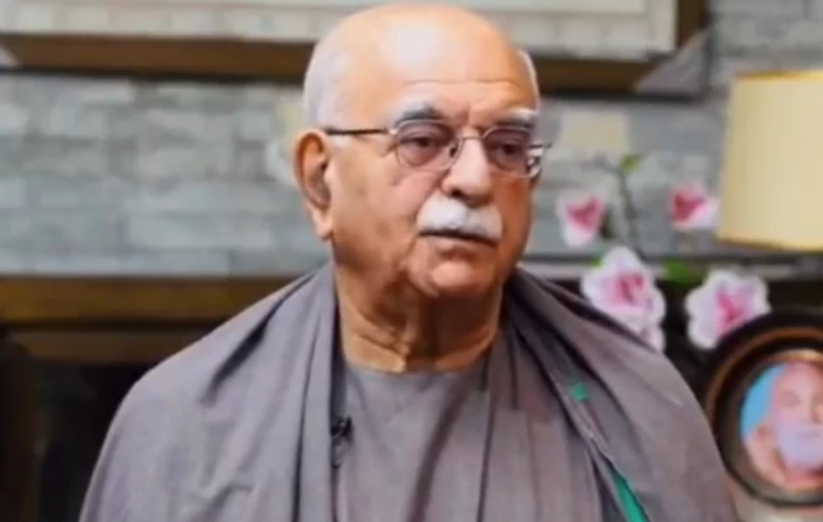
Opposition Leader Mehmood Khan Achakzai has warned that Sindh could be the next province to face governor’s rule, alleging that disputes over water and mineral resources could be used to justify federal intervention.
He made the remarks during a National Assembly session in which lawmakers passed a resolution endorsing the imposition of governor’s rule in Khyber Pakhtunkhwa (KP) on Sunday. The federal government justified the move by accusing the PTI-led provincial administration of “deliberate disengagement” from counterterrorism efforts.
Political tensions between the Centre and opposition parties, particularly the Pakistan Tehreek-e-Insaf (PTI), had intensified in the preceding weeks after the party announced a long march to demand the release of its incarcerated founder, Imran Khan. The planned march towards Islamabad remained largely confined to KP before losing momentum following the imposition of governor’s rule in the province.
Addressing the National Assembly, Achakzai said KP’s alleged mistake was that it had defended itself through the support of its people. He compared the current political situation in the province with the circumstances surrounding the creation of Bangladesh.
The opposition leader also criticised the government for depriving the PTI of its election symbol ahead of the February 2024 general elections.
He argued that PTI workers had contested the polls using approximately 200 different electoral symbols and had nevertheless managed to challenge the government’s political position.
Achakzai questioned whether the party and the country’s 240 million people were now being punished for that electoral outcome.
He also defended former KP chief minister Sohail Afridi, whose role as provincial chief executive became non-functional following the imposition of governor’s rule. Achakzai said Afridi had led the PTI’s protest campaign without resorting to violence or abusive language.
The opposition leader warned that any attempt to undermine the provinces’ right to self-determination and the public’s right to vote would prompt resistance across the country.
“When you try to snatch our right to self-determination, our right to vote, we all will stand against you. All of us, all provinces,” he said.
Referring to the Pakistan Peoples Party (PPP), which governs Sindh, Achakzai expressed disappointment over its participation in the parliamentary process supporting the federal government’s decision on KP.
He warned that Sindh could face a similar move over disputes concerning water distribution and control of mineral resources.
The opposition leader said the federal government might next impose governor’s rule in Sindh over what he described as the “occupation of water, mines and streams”.
He urged the government to reconsider its decisions, warning that failure to correct its course could have serious political consequences.
Achakzai called for Parliament to be restored as the central institution of power, arguing that strengthening democratic institutions was essential to safeguarding Pakistan.
He cautioned that when the state turned against its own citizens, people could be driven to seek alternatives outside the established political system.
Achakzai also criticised the government over the country’s economic difficulties, accusing those in power of exploiting national resources while ordinary citizens continued to face mounting challenges.
He said Pakistan was suffering because of political and governance failures, adding that the country could only be stabilised through adherence to the Constitution, parliamentary supremacy and a functioning democratic system.
The opposition leader further complained that Parliament had not been adequately consulted on important foreign policy decisions. He also expressed concern over Pakistan’s strained relations with several neighbouring countries.
Addressing the continued restrictions on meetings with Imran Khan, Achakzai questioned the constitutional basis for preventing the PTI founder from meeting his family members and political associates.
He asked which provision of the Constitution authorised restrictions on meetings with what he described as the country’s most popular political leader.
Achakzai offered to meet Imran Khan to assess his health and help resolve the ongoing political dispute. He assured the government that the opposition would approach such a meeting constructively and would not disclose its details publicly.
Urging the government to exercise restraint and resume negotiations, he said dialogue remained necessary to resolve the political impasse.
Concluding his address, Achakzai declared that the imposition of emergency and governor’s rule in KP was unjustified and called for the government to reverse its decision.