KATHMANDU: A WhatsApp group created by engineers before a massive flash flood struck Nepal’s Trishuli valley has become an important tool in ongoing efforts to locate people believed to be trapped inside tunnels at damaged hydropower plants.
The messaging group was established before torrents of water, mud and rocks swept through the valley on August 26. Since then, engineers and other experts have been using it to provide technical guidance to rescue teams working alongside helicopters and heavy machinery.
Authorities hope that some of the nearly 900 people reported missing from six hydropower projects may have survived by entering or remaining inside tunnels during the disaster. At least three of the affected plants were under construction.
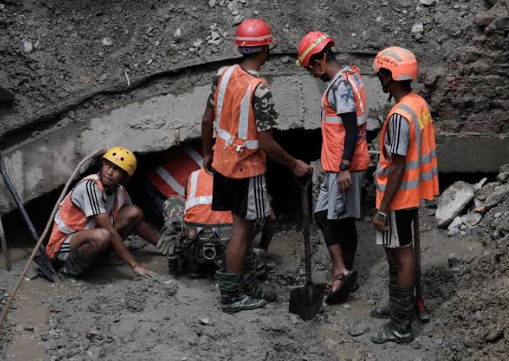
The first major breakthrough came on Friday, when rescue workers brought two people alive from a tunnel associated with the Upper Trishuli 3A hydropower project, nine days after the disaster. One of the rescued workers said there could be other survivors inside the tunnel network.
However, locating tunnel entrances has proved difficult because the flood deposited an estimated 2.2 million tonnes of mud and debris across the valley.
The WhatsApp group has been expanded to include additional experts assisting the rescue operation.
During the search at the Chilime hydropower project near Nepal’s border with China, a government official asked members of the group to provide layout drawings of the facility. Within minutes, an engineer shared plans showing the powerhouse and access tunnels.
Nepal’s Independent Power Producers’ Association said at least eight people could be trapped at Chilime. At the Rasuwagadhi hydropower project, a Nepal Electricity Authority official estimated that as many as 46 people could be trapped.
The scale of the destruction has complicated rescue efforts, with tunnels affected by mud, rocks and other debris. Nepal Army spokesperson Raja Ram Basnet said the flood had altered the terrain surrounding the tunnels and changed their internal structures.
“This is not a normal closure of tunnels,” he said.
Images from Chilime showed a tunnel entrance partially filled with flood debris reaching close to the ceiling.
The disaster killed more than 1,200 people, while thousands remain missing, including people who may have sought refuge inside tunnels.
Rescue teams are searching six hydropower facilities in the valley, part of Nepal’s expanding electricity-generation network. The disaster destroyed an estimated 10 per cent of the country’s power-generation capacity.
At the Rasuwagadhi hydropower project, rescue workers managed to enter about 250 metres into a tunnel before encountering a blockage. Officials said efforts to reach the area would continue.
Amshu Kiran Shahi, a board member of the Nepal Electricity Authority, said 46 people may have been trapped in a chamber where they could potentially have access to food and water.
A Nepal Electricity Authority manager said rescue teams had sought information from former hydropower plant employees through the WhatsApp group to better understand the tunnel networks. Drawings and technical information shared through the group had proved useful, the official said.
At the Upper Trishuli 3A project, rescuers spent nearly six days clearing the buried entrance before reaching the tunnel, according to Shahi. Before the two survivors were rescued, workers had attempted to pump oxygen through pipes into possible cavities where people might have been trapped.
Excavators have also been working to remove large boulders and debris from tunnel entrances to allow rescuers to move deeper underground.
Jan Jiwan Thakur, a civil engineer at the Upper Trishuli 1 project, said a colleague warned him about the approaching flood shortly before it swept through the valley.
Thakur and around 100 other people managed to reach higher ground.
“We just ran away towards the hillside and, after two to three minutes when we looked down, everything was gone,” he said, describing how flood debris covered the area where their offices had stood.
Another survivor, Dhan Bahadur Tamang, said he escaped through a tunnel after the flood sent pipes and other equipment rushing inside. His knowledge of the tunnel system helped him and several others find a way out, although he said he saw bodies during the escape.
The engineers’ WhatsApp group has also been used to share the names and phone numbers of missing workers. Members have asked government officials to provide the information to telecommunications authorities in an effort to determine the missing people’s last recorded locations.
Meanwhile, families continue to wait for information about relatives who remain unaccounted for.
Rajesh Shrestha, whose 30-year-old son Rajish, an environmental engineer at Upper Trishuli 1, is among the missing, said he continues to hope his son will return home.
“Whenever I look outside, I imagine seeing him carrying a bag and coming home, just as he used to,” he said.