
Pakistan should not allow political and security tensions with India to become grounds for abandoning or weakening the Indus Waters Treaty, participants at a policy dialogue in Washington said, stressing that water-sharing arrangements must remain separate from broader bilateral disputes.
Speakers rejected India’s position that the treaty would remain in abeyance until regional violence ends, arguing that the agreement should continue to govern the management and distribution of the Indus river system regardless of political tensions.
The views were expressed during a discussion hosted by the Pakistan Embassy on the future of the treaty. Participants warned that ongoing tensions should not undermine an agreement that has endured wars and repeated crises between the two countries.
The dialogue, titled The Indus Waters Treaty: South Asian Security at Crossroads, brought together US policy experts, academics, legal and water specialists, representatives of international organisations and diplomats to discuss the treaty’s future and emerging challenges to regional water security.
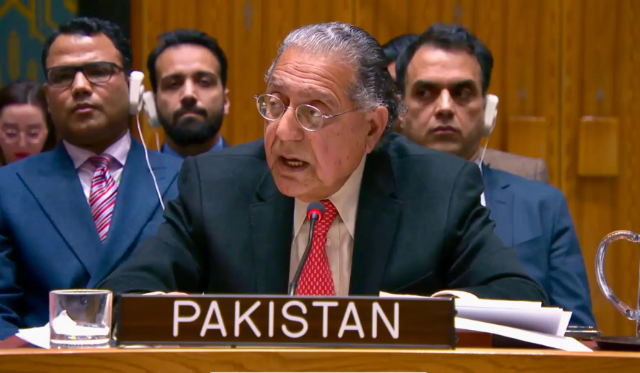
Former Pakistan ambassador to the United Nations Munir Akram urged Islamabad to continue observing the treaty despite the current tensions, maintaining that India’s decision to place the agreement in abeyance did not change its legal status.
“Pakistan shouldn’t depart from the letter and spirit of the treaty,” he said.
Mr Akram called for a proactive diplomatic response to India’s position and urged Pakistan to continue participating in the treaty’s mechanisms even if New Delhi declined to engage.
He also suggested exploring an impartial international mechanism, including a possible role for the United Nations, while recommending consultations with China, which he said could potentially influence the situation.
The importance of preserving the treaty’s legal and institutional framework was a recurring theme during the discussion. Participants noted that the agreement had survived wars, political crises and prolonged tensions, helping keep water cooperation insulated from wider disputes.
Pakistan’s Ambassador to the United States Rizwan Saeed Sheikh said Islamabad had consistently supported dialogue, diplomacy and peaceful coexistence, citing its efforts to facilitate negotiations on other regional disputes.
“If we can do it for others, we will do it for ourselves,” he said, referring to Pakistan’s efforts to help resolve the Iran-US dispute.
He also called on India to maintain engagement with Pakistan, saying: “You cannot change neighbours, so we want to engage in constructive dialogue.”
In his concluding remarks, Ambassador Sheikh said the main problem with the Indus Waters Treaty was not its provisions but their implementation.
“There is no crisis of content in the Indus Waters Treaty … there is a crisis of intent in implementation,” he said.
Adil Najam, professor of international relations and dean emeritus at Boston University, said the treaty would remain central to the future of water cooperation in South Asia.
He stressed that climate change and increasing water scarcity should serve as incentives for greater cooperation among countries sharing water resources rather than further strain relations.
Participants also warned against portraying the other side in dehumanising terms, with one speaker noting that there were “many sensible people in India” and calling for practical solutions despite political differences.
The dialogue also examined whether the dispute was primarily political or legal. Legal experts stressed the importance of international law and existing mechanisms for resolving disputes under the treaty.
Speakers cautioned against using water as a tool of political or military pressure, noting that a significant portion of Pakistan’s population and economy depends on the Indus river system. Any attempt to weaponise water, they warned, could have serious regional consequences.
The nuclear dimension of India-Pakistan tensions also came under discussion, with participants cautioning against assuming that nuclear deterrence alone would prevent escalation.
Mr Najam noted that despite deep mistrust between the two countries, the treaty had functioned for decades and said the immediate priority should be preventing the existing framework from collapsing.
Participants also called for the restoration of technical engagement, transparency and data-sharing between the two countries under the treaty, particularly as climate change and growing water shortages place increasing pressure on shared water resources.
Separately, PPP Vice President and parliamentary leader in the Senate Sherry Rehman urged India to fully comply with the Indus Waters Treaty, warning that politicising water resources and using them as a diplomatic pressure tool could threaten regional stability.
Senator Rehman said India could not unilaterally suspend, disregard or reinterpret the decades-old bilateral water management framework.
She maintained that any decision to withdraw from or suspend an international agreement must follow established procedures under international law rather than being made through a unilateral declaration.
“The Indian government’s recent actions cannot, in any manner, undermine Pakistan’s legitimate rights and interests concerning its water resources,” she said.
Senator Rehman said taking the dispute to international forums was not an obligation for Pakistan but a lawful right available under the existing international framework.
She also argued that India could not use water and hydropower projects as a pretext to disregard internationally agreed principles and restrictions governing the shared river system.