More than six months after the war began on February 28 with US-Israeli strikes that killed Iran’s Supreme Leader Ayatollah Ali Khamenei, Tehran is escalating its confrontation rather than pursuing diplomacy, raising fears of a return to full-scale fighting.
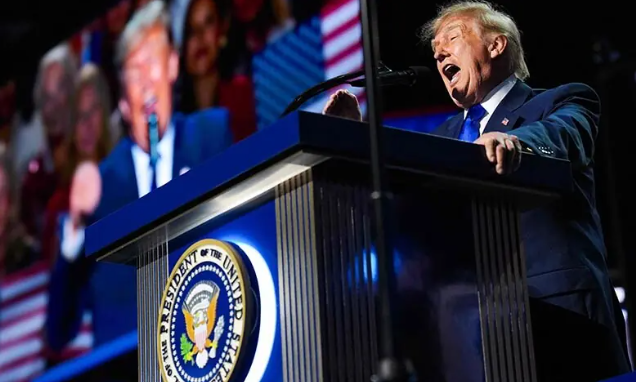
With US midterm elections scheduled for November 3, President Donald Trump is under growing pressure to bring the conflict to an end. On Wednesday, he said he believed the war would end “immediately after the election”, arguing that Iran could no longer sustain the confrontation.
However, despite uncertainty surrounding Iran’s leadership, with Khamenei’s son and successor, Ayatollah Mojtaba Khamenei, yet to make a public appearance, Tehran has intensified its traditional policy of confrontation with Washington.
Iran has also expanded a prohibited zone around the Strait of Hormuz, a critical global energy route through which roughly one-fifth of the world’s oil and liquefied natural gas normally passes, rather than facilitating the resumption of unrestricted shipping.
University of Ottawa professor Thomas Juneau said Iran appeared to believe it was gaining the upper hand in the conflict and viewed US vulnerabilities as an opportunity to reshape the regional order in its favour.
Sanam Vakil, director of the Middle East and North Africa programme at Chatham House, said Tehran was attempting to turn the escalation into greater political leverage by exploiting the potential economic and political costs of another Middle East crisis ahead of the US elections.
The Islamic Revolutionary Guard Corps (IRGC) said on Wednesday that it had targeted 10 vessels attempting to pass through the newly restricted area of the Strait of Hormuz.
The IRGC also claimed responsibility for striking a US military base in Jordan in retaliation for US forces destroying five Iranian oil tankers a day earlier. CBS News reported that around eight US F-15 fighter jets sustained light damage in the overnight Iranian strikes.
Juneau said Tehran appeared to believe Washington would be reluctant to further escalate the conflict before the midterm elections, allowing Iran to gain momentum.
Iran announced the new prohibited zone on state television on Sunday through Mohsen Rezaei, the newly appointed head of the Supreme National Security Council.
Rezaei said Tehran did not trust the United States and would not take further steps towards ending the conflict without confidence-building measures from Washington.
IRGC spokesman Hossein Mohebi subsequently outlined a series of demands for ending the war, including the withdrawal of Israeli forces from southern Lebanon and the release of around $24 billion in frozen Iranian assets.
Analysts say Iran may be seeking to increase political pressure on Trump ahead of the midterm elections, potentially contributing to Republican losses in Congress and weakening the president’s influence during the final two years of his term.
Ali Alfoneh, a senior fellow at the Arab Gulf States Institute, said Iran could not defeat the United States militarily but might seek to weaken Trump politically by contributing to a Republican defeat at the polls.
He said prolonged conflict and high gasoline prices could remind American voters that Trump had become involved in the type of “never-ending war” he had previously pledged to avoid.
Trump’s confidence that the conflict could end soon contrasts with reports that his advisers have warned him Iran could continue resisting the United States until, or even beyond, the end of his presidency in January 2029.
Vakil said Iran could be overestimating Washington’s tolerance for further escalation but viewed the strategy as its main means of putting pressure on Trump.
Tehran is also confronting serious domestic challenges. The continued public absence of its supreme leader has added to uncertainty, while the country is grappling with an economic crisis that triggered protests in January. A subsequent crackdown reportedly left thousands dead.
Juneau warned that Iran risked overplaying its hand, saying the leadership remained highly vulnerable domestically and that public anger could increase as economic conditions deteriorated.