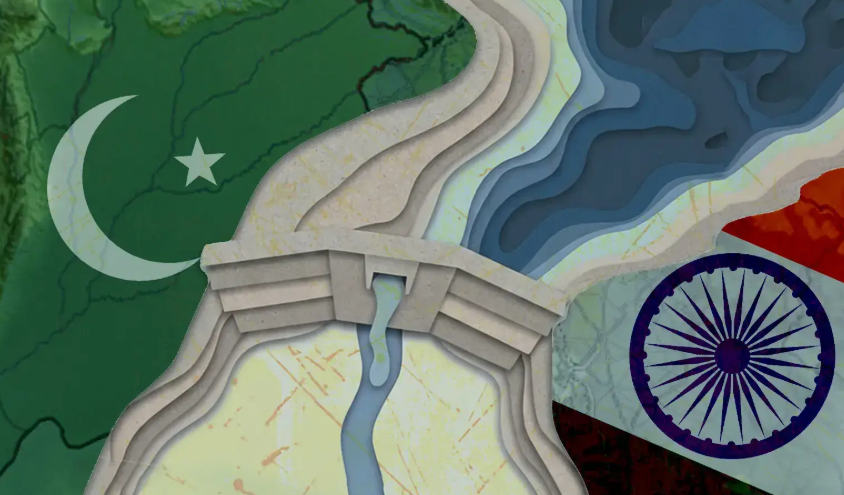
The immediate legal implication of the ruling is clear: India remains bound by the obligations it undertook under the 1960 Indus Waters Treaty (IWT). However, the decision carries broader significance as water scarcity intensifies and upstream infrastructure expands across shared river basins.
The ruling reinforces the principle that geographical control over rivers does not give an upstream state unlimited political discretion. Binding treaty obligations cannot simply be suspended through unilateral declarations.
The decision also has wider implications for international law. In April 2025, India linked the continued operation of the IWT to allegations of cross-border terrorism, saying the treaty would remain in abeyance until Pakistan “credibly and irrevocably” ended its alleged support. The Court considered this argument alongside India’s other claims, including sovereignty, alleged material breach, changed circumstances and armed conflict, but found no legal basis for suspending or terminating the treaty.
The ruling is significant because allowing treaty obligations to depend on unilateral accusations arising from separate disputes could undermine the stability of international law.
While terrorism remains a serious security concern and states have rights under international law to respond to security threats, a water-sharing agreement cannot be suspended simply because one party links it to allegations concerning a separate area of bilateral relations.
Such an approach could allow contested political claims to become grounds for unilaterally escaping international commitments.
The chronology of the dispute also weakens the connection between the IWT and the security allegations. Disagreements over India’s Kishenganga and Ratle hydroelectric projects predated the April 2025 attack cited by New Delhi when it placed the treaty in abeyance. Pakistan initiated the current arbitration in August 2016, while disputes over the Ratle project had already emerged years earlier. Kishenganga, meanwhile, had previously been considered through international adjudication.
The Court’s consideration of this chronology highlights the importance of separating established legal obligations from political disputes and security allegations.
Allowing allegations from one dispute to determine whether a separate treaty remains binding could weaken legal certainty and increase the scope for political discretion, particularly where one state has greater control over shared water resources.
The issue is becoming increasingly important as global water demand and water stress rise. A World Resources Institute report has projected that global water demand could increase by 20-25 per cent by 2050, while another billion people could face very high water stress. More than three billion people already depend on transboundary water systems.
Shared river basins often create an inherent imbalance, with upstream states controlling infrastructure while downstream countries depend on reliable water flows.
Hydrological leverage does not necessarily require an upstream country to completely halt river flows. Reservoir operations, release schedules, infrastructure decisions and control over hydrological data can affect agriculture, power generation, flood management and economic activity downstream.
The Mekong basin provides an example of this dynamic. Research by the Stimson Centre’s Mekong Dam Monitor has documented the impact of upstream dam operations on downstream flows, particularly during periods of water scarcity.
A similar challenge exists in the Nile basin, where Ethiopia’s Grand Ethiopian Renaissance Dam has altered political calculations among countries dependent on the river, highlighting the competing interests of upstream development and downstream water security.
These developments suggest that future water disputes may not necessarily take the form of conventional “water wars”. Instead, coercion could occur through infrastructure, uncertainty, technical decisions and political pressure without crossing the threshold of armed conflict.
This makes the durability of the Indus Waters Treaty particularly important. For more than six decades, the agreement has provided a legal framework for managing one of the world’s most sensitive transboundary river systems, surviving wars, military confrontations and prolonged diplomatic tensions.
The latest ruling reinforces the principle that treaty obligations cannot depend solely on changing political circumstances.
The issue of sovereignty presents a similar challenge. Entering into a treaty is itself an exercise of sovereignty, with states voluntarily accepting mutual restrictions in exchange for greater predictability and stability.
Sovereignty, therefore, cannot subsequently be invoked as a basis for selectively suspending treaty commitments. Accepting such a principle could make international agreements least reliable during periods of crisis, when legal frameworks are most needed.
The Court’s interim measures concerning the Ratle project also reflect this approach. By restricting specified construction activities pending further proceedings, the Court sought to prevent irreversible developments from affecting the ongoing legal process.
In disputes over shared rivers, physical infrastructure can create irreversible realities faster than legal proceedings can resolve them. Preserving the status quo can therefore have significant strategic importance.
The Indus ruling carries a broader message for an increasingly water-stressed world. Geography will continue to give upstream states significant advantages, while technology will expand their ability to control water infrastructure. Political disputes will also continue to generate accusations, retaliation and pressure.
The key challenge is to ensure that these realities do not override binding international commitments.
The Court’s ruling establishes an important boundary: security allegations cannot unilaterally determine the validity of a water-sharing treaty, sovereignty cannot erase voluntarily accepted obligations, and upstream geographical control cannot automatically justify the coercive use of shared water resources.
As competition over transboundary rivers increases, these principles could become increasingly important for international water governance.