An unprecedented surge of ice, rocks, mud and debris struck the Nepal-Tibet border on Wednesday, following what authorities believe was a glacier collapse. The disaster has killed more than 900 people, while nearly 5,000 remain missing.
Hundreds of bodies, many of them yet to be identified, have been buried in shallow graves as authorities struggle to cope with the rapid decomposition of remains in the humid conditions of Nepal’s lowlands. Many victims were swept down the mountains by the powerful floodwaters.
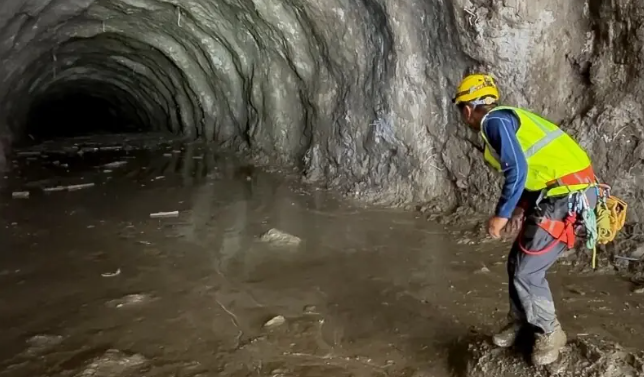
Nepali authorities said rescue efforts were now focused on reaching hundreds of workers believed to be trapped inside around six hydropower project tunnels that were blocked by mud and rocks.
Images and videos released by rescue teams showed earth-moving machinery clearing mud and debris during nighttime operations. Soldiers were also seen using torches to search through a large excavation for possible access to one of the tunnels.
Nepal’s disaster management authority said 933 people linked to hydropower projects in the affected region were missing. The Red Cross estimated that more than 90,000 people had been affected by the disaster, which China has linked to the impacts of climate change.
Nepali authorities said on Monday that 903 people had died and 4,247 remained missing, including the 933 people associated with hydropower projects. On the Chinese side of the border, authorities reported 16 deaths and 546 missing people in Gyirong County.
Nepal Army spokesperson Raja Ram Basnet said a large volume of debris had accumulated inside the affected areas, making it difficult to access the tunnels.
“Our main focus is on opening the tunnels,” he told Reuters.
Prime Minister Balendra Shah described the floods as an unprecedented and devastating natural disaster and said authorities were still facing difficulties in assessing the full extent of the damage.
Despite challenging weather conditions, difficult terrain and continuing risks, the government was continuing rescue operations, Shah said in a Facebook post late Sunday. He added that nearly 21,000 security personnel, along with civilian workers and volunteers, were involved in the relief and rescue efforts.
Chinese President Xi Jinping, who was visiting Kyrgyzstan, said Beijing was making every effort to locate people missing after the disaster, according to state news agency Xinhua.
China has said 261 foreign nationals from 23 countries were unaccounted for in Tibet near a key border crossing with Nepal.
China’s state broadcaster CCTV reported that Beijing had deployed more than 2,100 rescue workers and allocated at least 220 million yuan for relief operations. Equipment and supplies were also being delivered by air to rescue teams, while Chinese soldiers used life-detection equipment to search for missing people.
Although Nepal has said it does not require foreign assistance for overall search and rescue operations, it has sought technical support from neighbouring China and India, particularly for tunnel rescue operations.
Rescue efforts have been suspended several times since Friday because of adverse weather and concerns over a lake formed along the Nepal-China border. Authorities fear that further overflow could trigger additional flooding in rivers in Nepal.
CCTV reported that another lake created upstream by a landslide had largely drained after water began flowing out naturally.
The landslide occurred about 2.8 kilometres downstream from the first lake created by debris from the suspected glacier collapse.
Authorities are also monitoring a large impact crater near the site of the glacier collapse on the Nepalese side. State media reported that the crater had expanded to around 174,000 square metres by Saturday evening.
The crater was estimated to contain about 2.5 million cubic metres of water. Authorities warned that a breach could trigger a chain reaction affecting lakes further downstream.
CCTV also reported a risk of additional landslides along the river, potentially creating more lakes. Investigators have identified eight locations considered particularly vulnerable to geological hazards.
The disaster was attributed by Chinese state media to glacier instability linked to the long-term effects of global warming. The broadcaster described the incident as an emerging form of cryosphere-related disaster on the Tibetan Plateau.
Two Nepali officials told Reuters that China had provided limited information on glacier-related risks and water levels following a meeting earlier this year aimed at strengthening bilateral cooperation.
The officials expressed concern that insufficient data sharing could complicate future disaster preparedness and response efforts. China’s Foreign Ministry did not respond to Reuters’ request for comment regarding the meeting.