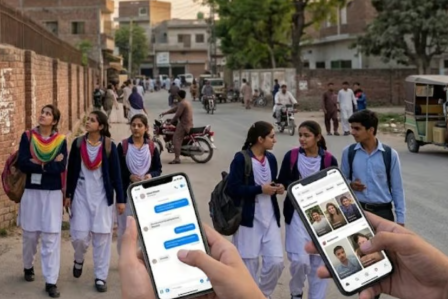
A legal push to restrict children’s access to social media platforms has gained momentum in Pakistan, with a petition filed before the Islamabad High Court seeking to bar users under 16 from platforms including TikTok, Instagram and Facebook.
The petition calls for legislation to protect children from cyberbullying, online harassment, blackmail, exploitation and exposure to harmful content. The case is scheduled to be heard by the Islamabad High Court next month.
Lawyers Yahya Fareed Khawaja and Jalal Haider Malik filed the petition, seeking a comprehensive legal framework requiring social media companies to introduce stronger safeguards for minors.
The proposed measures include strict age-verification mechanisms, greater parental oversight and clear legal responsibilities for social media platforms. Under the proposed framework, companies would be required to prevent children below 16 from creating or maintaining accounts on conventional social media services.
The petition has also revived debate over a similar legislative proposal introduced in the Senate last year.
In July 2025, PPP senators Sarmad Ali and Masroor Ahsan introduced the Social Media (Age Limit for Users) Bill, 2025. The proposed law sought to prevent platforms including Facebook, Instagram, TikTok, WhatsApp, Bigo Live, Snapchat, YouTube and Threads from allowing users under 16 to create accounts.
The bill also proposed substantial fines for platforms that failed to comply. However, it was later withdrawn without becoming law.
Senator Masroor Ahsan said the legislation could be reintroduced in Parliament following consultations with relevant stakeholders. He acknowledged that the previous version required further revisions, including a review of the proposed minimum age.
The petition argues that Pakistan needs specific legislation to address risks faced by children in the digital environment. It maintains that existing laws dealing with offences such as child marriage and sexual exploitation do not provide sufficient protection against emerging online threats.
The petition also refers to the United Nations Convention on the Rights of the Child and General Comment No. 25, adopted by the UN Committee on the Rights of the Child in March 2021.
The UN framework recognises that children’s fundamental rights apply in the digital environment as well, including their rights to privacy, safety and protection of their best interests.
The petitioners have argued that protecting these rights online falls within the state’s constitutional and legal responsibilities.
The move comes amid growing international efforts to regulate children’s access to social media. Australia passed legislation in 2024 aimed at restricting social media access for users under 16, requiring platforms to take reasonable measures to prevent children below the age limit from maintaining accounts. The law came into effect at the end of 2025.
In the United Kingdom, major social media platforms generally maintain minimum age requirements of 13 years, although the rules and enforcement mechanisms vary between services.