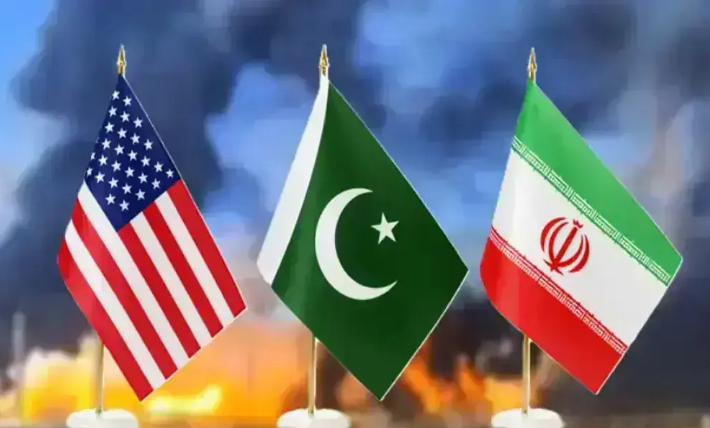
Deputy Prime Minister and Foreign Minister Ishaq Dar has called for continued dialogue and diplomatic engagement to address regional tensions during a telephone conversation with Iranian Foreign Minister Abbas Araghchi on Sunday.
According to Pakistan’s Foreign Office, the two leaders discussed the changing regional situation amid escalating tensions between Iran and the United States, renewed fighting in Yemen and the ongoing meeting of the Organisation of Islamic Cooperation (OIC) Council of Foreign Ministers in Baghdad.
Dar emphasised that sustained dialogue and diplomacy were essential to resolving regional challenges. Both ministers also agreed to maintain close contact as developments unfolded.
Dar also spoke by telephone with Egyptian Foreign Minister Badr Abdelatty to exchange views on recent regional developments.
During their conversation, the two ministers strongly condemned Houthi attacks against Saudi Arabia and expressed solidarity with the kingdom. They reaffirmed their support for Saudi Arabia’s sovereignty, territorial integrity and security.
The discussions also covered cooperation under the Regional Four (R-4) framework, which brings together Pakistan, Egypt, Türkiye and Saudi Arabia to coordinate on regional matters. Both sides expressed their willingness to continue consultations and looked forward to the next R-4 meeting.
Addressing the OIC foreign ministers’ meeting in Baghdad, Araghchi declared that Tehran would not accept coercion, threats or intimidation from Washington, nor abandon its sovereign rights under external pressure.
However, he said Iran remained open to negotiations based on mutual respect and credible guarantees.
Speaking to reporters in Baghdad, the Iranian foreign minister said Tehran’s proposal to reopen the strategically important Strait of Hormuz within seven days remained under consideration. He explained that the United States had submitted comments on the proposal, which Iranian officials were currently reviewing.
Araghchi maintained that a path towards reopening the vital waterway was available if Washington demonstrated sincerity in its approach.
Iran’s stated conditions include lifting the US blockade on Iranian ports, removing restrictions on its oil exports and ending hostilities across regional fronts. According to Araghchi, an agreement on these terms could allow the Strait of Hormuz to reopen within six days, with negotiations resuming the following day.
The strait is a crucial international shipping route for global energy supplies, making its potential reopening significant for regional stability and international trade.
Meanwhile, Iran’s newly appointed Defence Minister Mehrdad Akhlaghi warned that any fresh US military strike would inflict substantial damage on Washington and its regional allies.
Speaking to reporters after receiving parliament’s vote of confidence, Akhlaghi expressed confidence in Iran’s ability to respond to renewed military action.
He warned that another attack would carry serious consequences not only for the United States but also for the wider region.
The latest statements highlight continuing tensions between Washington and Tehran, even as diplomatic contacts and regional consultations continue. Pakistan has meanwhile reiterated the importance of dialogue and cooperation to prevent further escalation.